






Hammered Copper Container
A hammered copper container brings warmth and enduring utility to a room, ranging from coal buckets to jardinières.
Hammered Copper Container
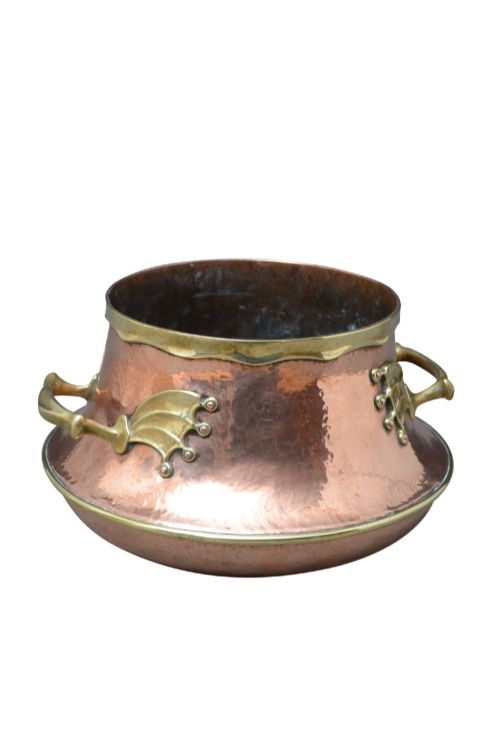
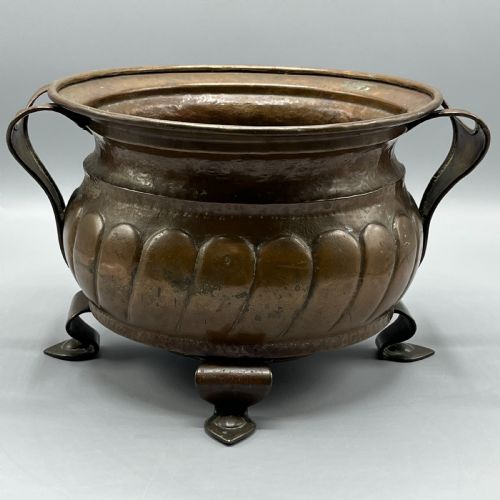
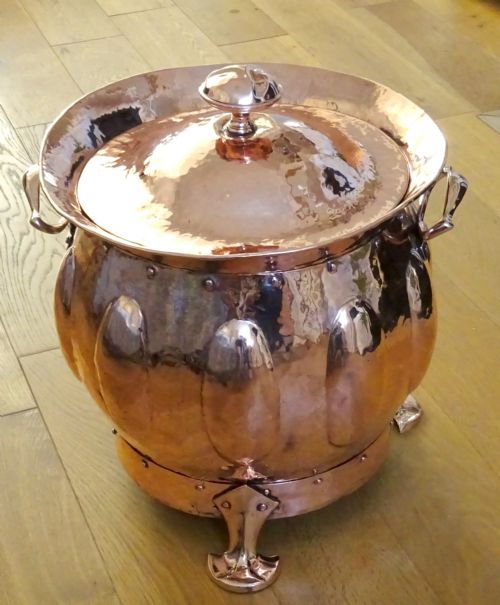
A hammered copper container serves as a practical vessel designed for hearthside service or interior planting, drawing from a rich tradition of utilitarian metalwork. When searching for a hammered copper container, buyers encounter domestic items shaped to hold coal, logs, or plants.
The pieces appearing here span from the George III period through the Victorian era into the Arts and Crafts and Art Nouveau movements of the early twentieth century. Forms include coal scuttles, log bins, jardinières, wash tubs, and cauldrons.
Victorian utilitarian versions and Arts and Crafts examples dominate the selection, often combining heavy metal bodies with brass handles or iron mounts. These vessels transition easily from functional fireside accessories to decorative indoor planters.
How they were made
Makers shaped these vessels primarily from sheet copper, employing hand-hammering techniques that left distinct surface facets across the metal. Rivets secure seams and handles, utilising iron and brass for structural strength and contrast.
Hammered Copper Container Retail Price Guide 2026
Typical asking prices for hammered copper container among the pieces listed under this phrase on Sellingantiques today, from the lower quarter to the upper quarter. They describe what is for sale here now, not the wider market.
Object forms span utility items like coal scuttles and wash tubs to decorative indoor planters and log bins.
What varies in quality
Quality rests in the weight of the metal gauge and the integrity of the hand-hammered surface. Substantial copper sheets and secure, hand-beaten riveted joints distinguish superior vessels from lighter, purely decorative items.
The integration of brass mounts, handles, and feet contributes to a piece's distinction. Well-proportioned forms with clean lines and authentic period patination command greater interest than plain or heavily restored examples.
The Hammered Copper Container Glossary
- Jardiniere
- An ornamental pot or stand for holding flowers and plants. These vessels often feature detailed hammered textures and brass feet.
- Coal scuttle
- A container used for holding a small supply of coal close to a fireplace. They frequently take helmet shapes with swing handles.
- Arts and Crafts
- A design movement valuing traditional craftsmanship and simple forms. Objects from this period display visible handmade hammered details.
- Art Nouveau
- A style characterised by fluid, organic lines and natural motifs. Copper buckets from this era often show softer, sinuous curves.
- Patina
- The surface sheen developed through age and use. This natural oxidation gives antique copper its characteristic warm tone.
Hammered Copper Container: Frequently Asked Questions
How do I clean a copper container?
Wash the surface gently with warm soapy water and a soft cloth to remove dust and dirt. Avoid harsh abrasives that strip away the historical patina.
Dry the metal thoroughly with a soft towel to prevent water spots. Many collectors prefer leaving the aged surface untouched rather than polishing it to a bright shine.
Can I use these containers for real plants?
Most antique jardinières and buckets were not originally made with modern waterproof linings. Placing a plastic pot inside protects the historic metal from moisture and soil.
Check the interior for old repairs or drainage holes before adding damp contents. Lining the vessel preserves the copper base from active corrosion.
How do I tell Victorian from Arts and Crafts pieces?
Victorian examples often lean towards formal helmet coal scuttles and heavy brass-mounted coal buckets. Their design prioritises domestic utility within traditional domestic interiors.
Arts and Crafts pieces emphasise hand-beaten surfaces and simpler, honest construction. These vessels celebrate the labour of the maker through visible hammer marks.
Are these containers safe for log storage?
Log bins and coal buckets function well for holding firewood beside a fireplace. Ensure the base remains sturdy enough to bear the weight of heavy logs.
Keep the metal away from direct moisture to protect the iron rivets from rusting. Regular dusting maintains the appearance of the copper during daily use.