


Hammered Copper Bin
A hammered copper bin brings honest texture and warmth to a fireside, serving as a robust container for coal, logs, or kindling.
Hammered Copper Bin
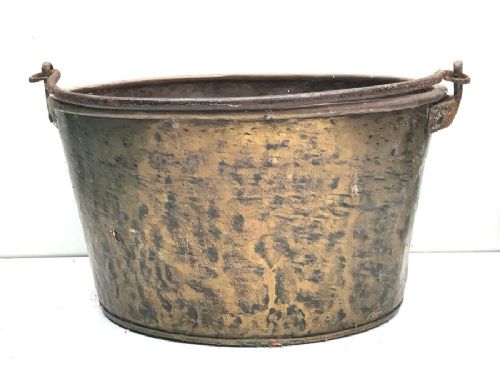
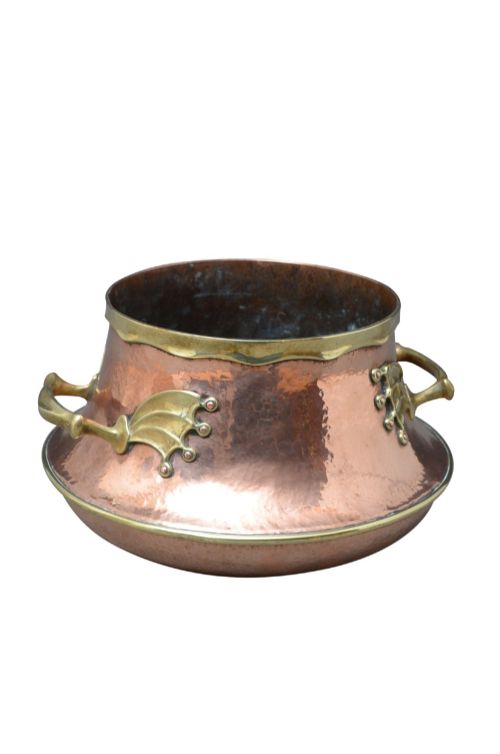
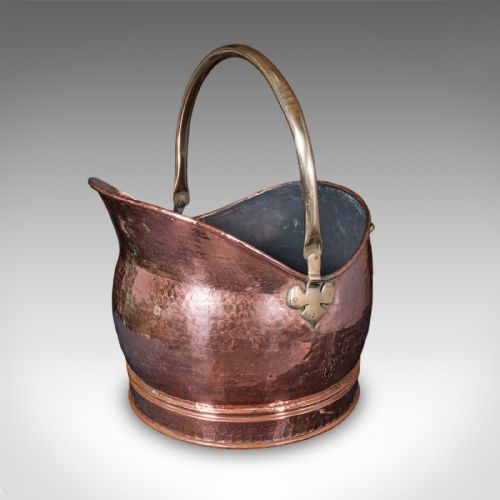
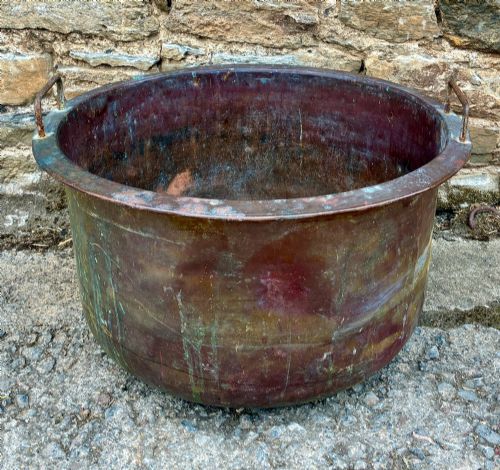
A hammered copper bin is a functional fireside vessel designed to hold coal, logs, or kindling while adding a distinct metallic sheen to a room. You will most frequently encounter Victorian and Arts and Crafts examples on this page, often taking the form of coal buckets, log boxes, or cylindrical bins.
The materials span from plain copper to combinations involving brass, wrought iron, and oak, reflecting utilitarian origins alongside decorative ambitions. Makers across the eighteenth, nineteenth, and early twentieth centuries produced these items for domestic hearths, utilising durable metals that could withstand daily use.
Forms range from simple riveted vessels and helmet-shaped scuttles to elaborate planters and lidded storage boxes. These pieces bridge the gap between heavy-duty utility and hand-finished craftsmanship, suiting both traditional country settings and more styled period interiors.
Materials and construction methods
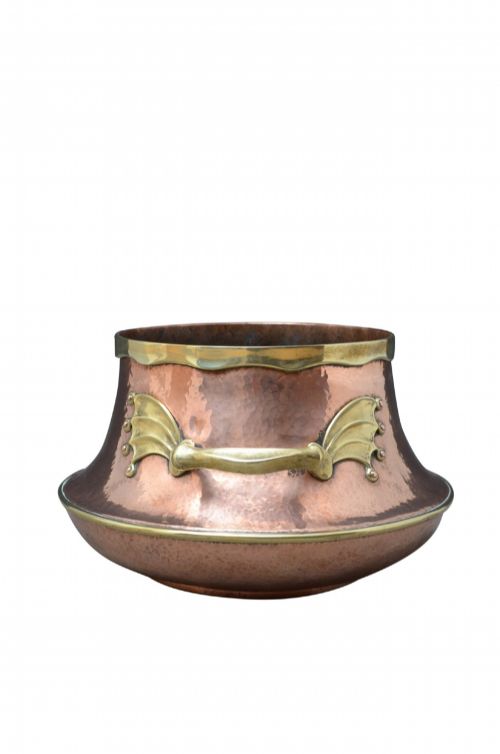
Craftsmen built these bins primarily from sheet copper, frequently hammering the surface by hand or utilising machine assistance to create distinctive hand-beaten textures. This working of the metal hardened the copper while leaving rhythmic facets that caught the light of the hearth.
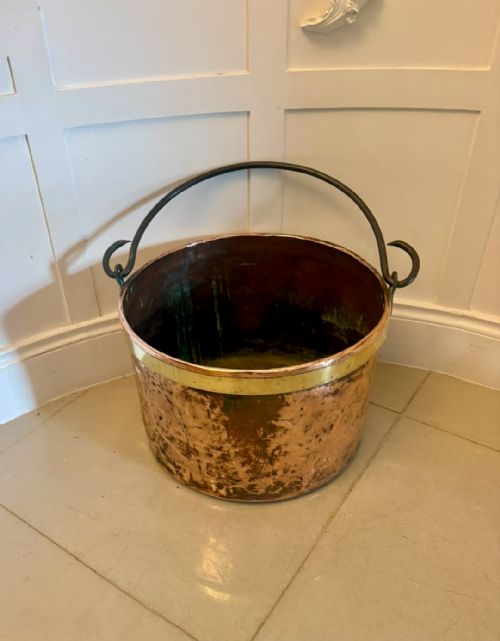
Structural integrity was often reinforced with brass trim, iron handles, and occasionally sturdy oak or wrought iron frames. Rivets held the seams together securely, turning necessary fastenings into decorative details along the body of the bin.
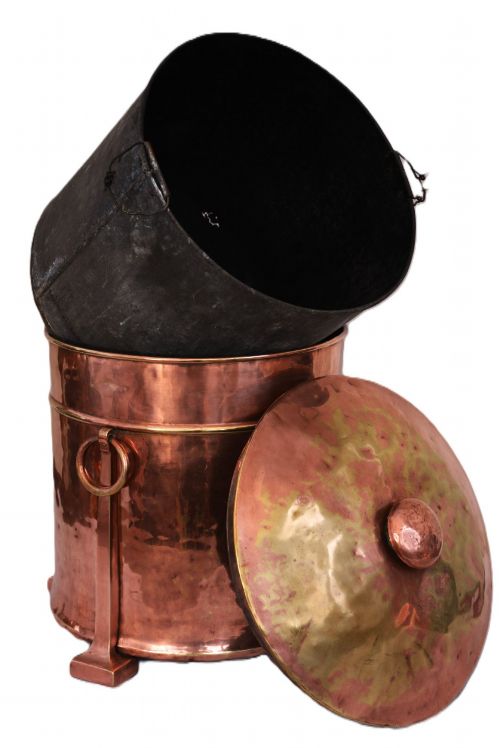
Some examples incorporated wooden panels or interior linings to support the weight of heavy coal and logs without denting the outer metal skin. Surface finishes varied from polished brightness to patinated dark tones achieved through age and handling.
Materials paired with copper across these selections include brass, wrought iron, oak, and tin.
Distinguishing quality in copper bins
Quality rests in the weight of the metal gauge and the deliberate regularity of the hand-beaten or hammered marks across the surface. Thicker copper resists denting and holds its structural form better under the heavy load of logs or coal.
The articulation of decorative elements, such as riveted joints, brass handles, and wrought iron mounts, distinguishes superior workshop production from mass-manufactured items. Well-executed handles and sturdy feet indicate a higher standard of fireside furniture.
The preservation of the natural surface patination also plays a role, where honest age enhances the character of the piece without obscuring the original craftsmanship.
The Hammered Copper Bin Glossary
- Coal scuttle
- A bucket or container specifically shaped for carrying and storing domestic coal, often featuring a hinged lid and a tilted opening or shovel attachment.
- Arts and Crafts
- A design movement valuing handcraft, natural materials, and simple forms over mass production, prominent in many hammered metal vessels.
- Dinanderie
- A term for objects made of hammered brass, copper, or bronze, often associated with decorative vessels and domestic metalwork.
- Purdonium
- A specific type of coal box or bin, typically featuring a sloping front and a hinged lid, designed to sit neatly by the fireplace.
- Cauldron
- A large rounded pot or basin with a wide rim, sometimes adapted for use as a log bin or planter by the fireside.
Hammered Copper Bin: Frequently Asked Questions
What were hammered copper bins originally used for?
These bins were primarily utilised beside the hearth to store and transport coal, logs, or peat for domestic fires. Their robust metal construction contained soot and debris while keeping fuel close at hand.
Over time, many of these vessels transitioned into general storage pieces or decorative planters as central heating changed how homes managed fireside fuel.
How do I clean a copper bin?
Cleaning depends entirely on whether you prefer a bright polished shine or the deep, dark patination accumulated over a century. Gentle washing with warm soapy water removes accumulated soot and dust without harming the metal.
Avoid harsh abrasive compounds unless you specifically wish to strip the aged surface back to raw, bright copper. Most collectors prefer to leave a natural, undisturbed patina intact.
How can I tell the period of a copper bin?
Dating relies on observing construction techniques like hand-beating patterns, riveted seams, and associated materials like oak or wrought iron. Victorian and Arts and Crafts examples often display distinct stylistic motifs, such as stylized plant forms or exposed hand-hammered facets.
Georgian and earlier pieces tend toward heavier, simpler forms with hand-forged iron handles and heavy gauge riveted sheets.
Are these bins safe to use for real fires?
Most antique copper bins are structurally capable of holding dry logs, kindling, or bagged coal just as they did in the past. Moisture from damp wood can sometimes accelerate internal corrosion, so lining the base is wise.
Care should be taken not to drop heavy logs forcefully against thin-gauge metal to avoid denting the historic body.