
Hallway Wall Coat Hooks
These hallway wall coat hooks bring solid Victorian and Edwardian build quality to daily storage.
Hallway Wall Coat Hooks
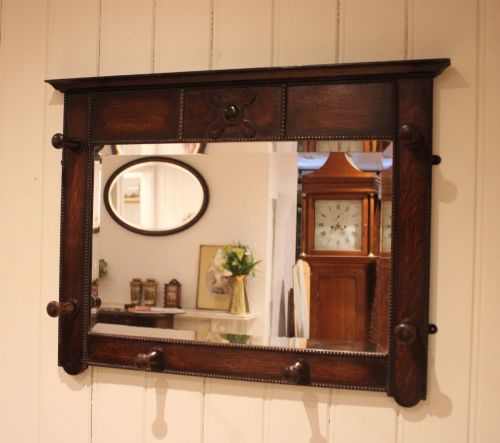
Hallway wall coat hooks provide sturdy hanging space for coats, hats and everyday items using period materials. These pieces range from simple mounted hooks to long racks and mirror-backed hall stands.
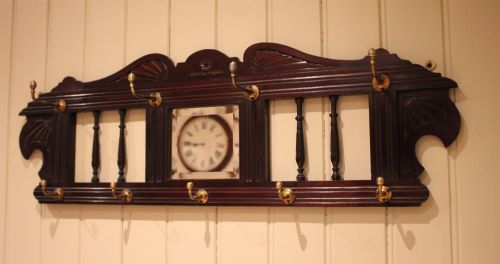
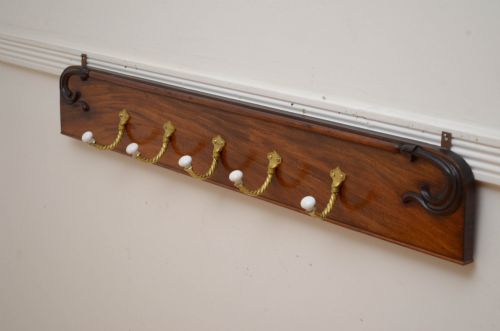
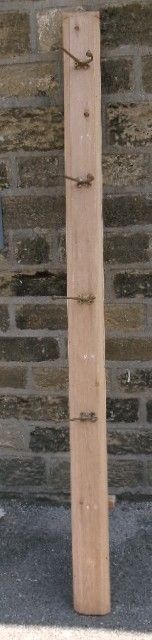
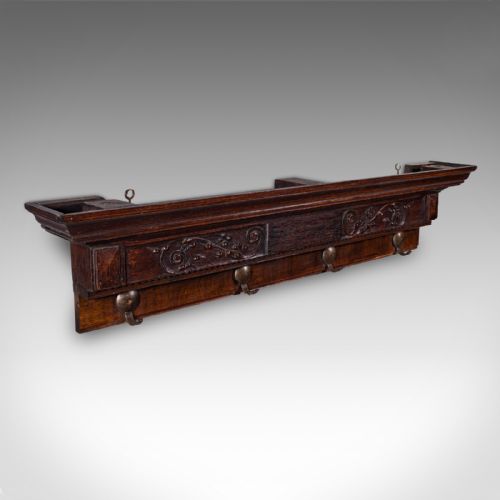
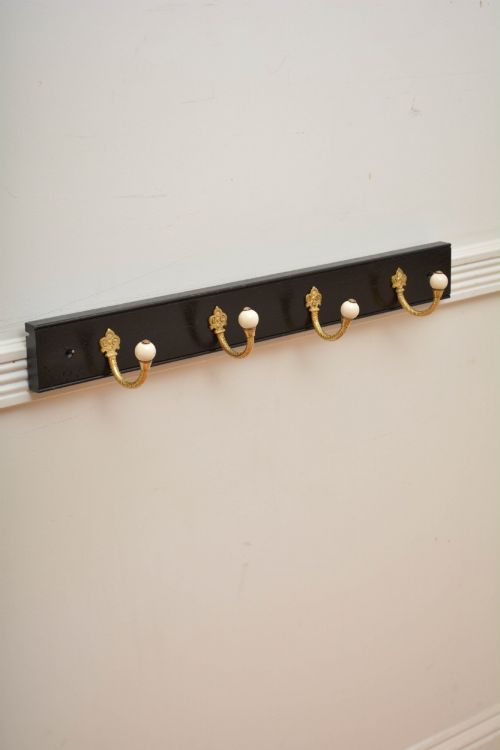
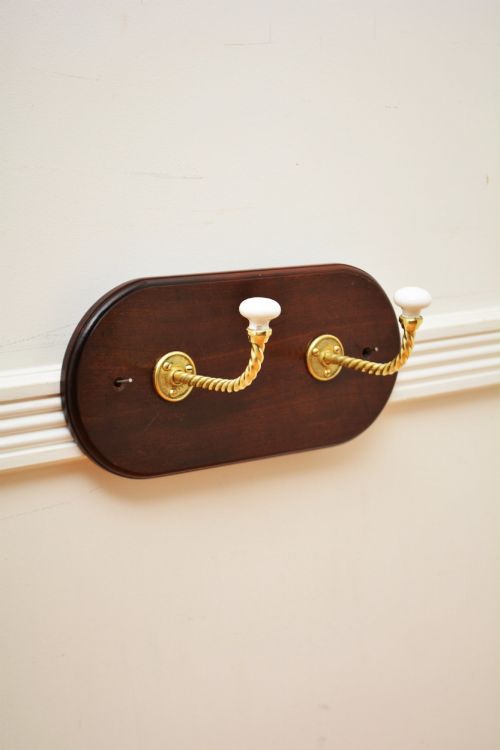
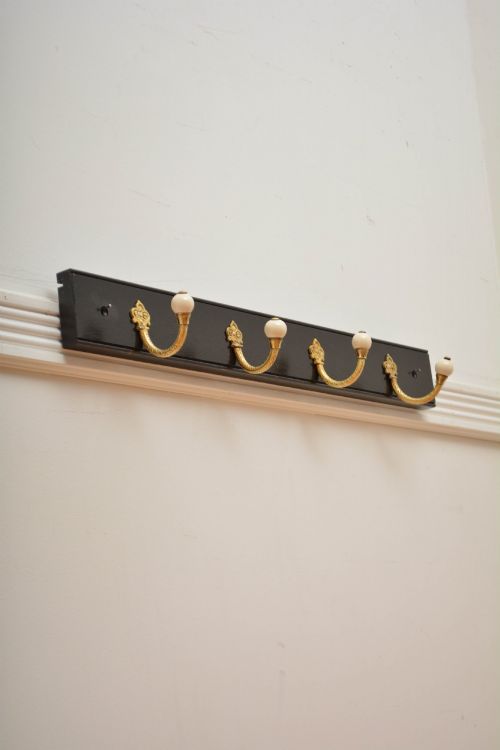
Victorian and Edwardian examples dominate the selection, often pairing timber backboards with durable metal hardware. Buyers frequently encounter mahogany, oak and pine boards fitted with cast brass hooks.
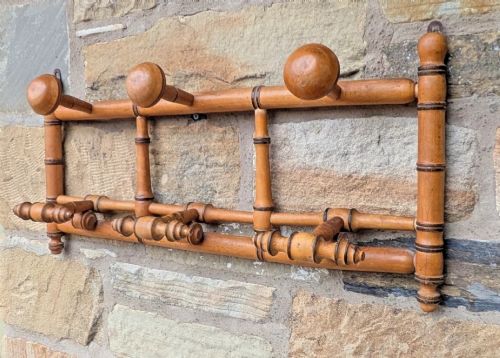
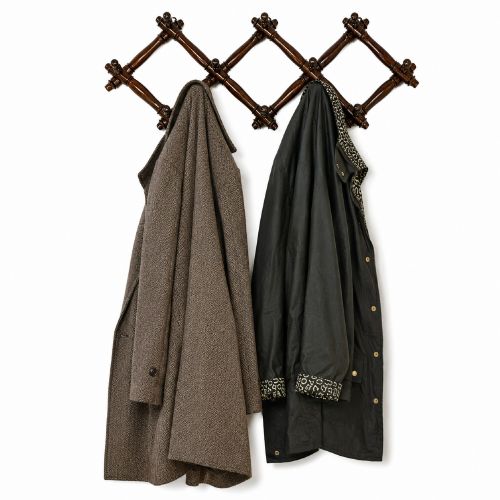
French styles also appear, including faux bamboo and bronze designs alongside British cloakroom pieces. The common purpose across all versions remains practical wall-mounted hanging for the entrance.
Materials and construction
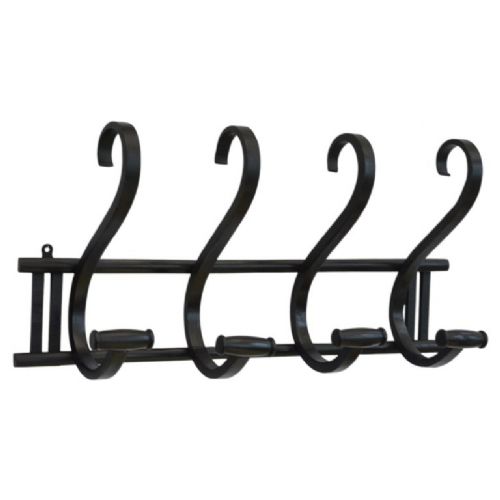
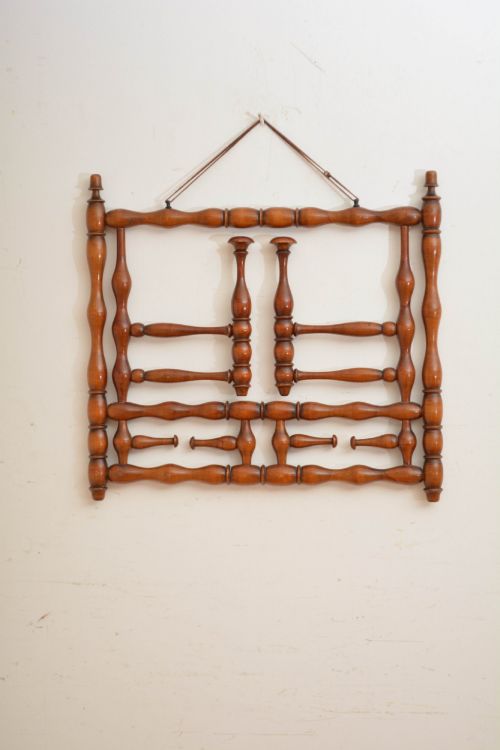
Makers utilised dense hardwoods such as mahogany and oak for backboards to support heavy winter garments. Turned wood, beech and bentwood also feature in the construction of racks and frames.
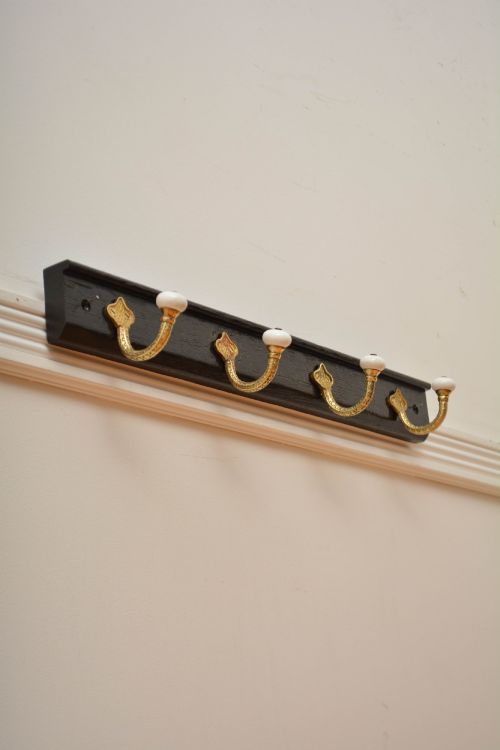
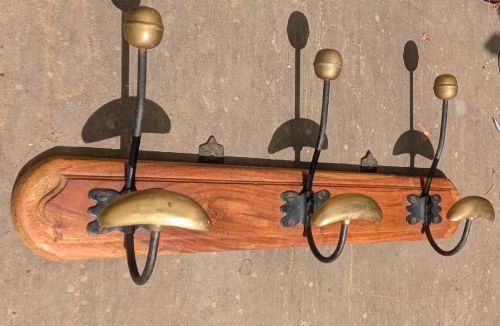
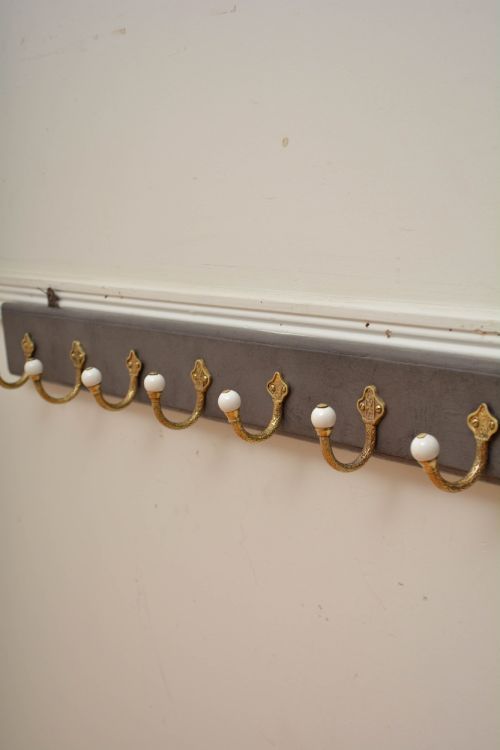
Metal hardware relies heavily on cast brass, bronze and iron for the hooks themselves. Many hooks incorporate ceramic, porcelain or glass knobs to prevent garments from catching.
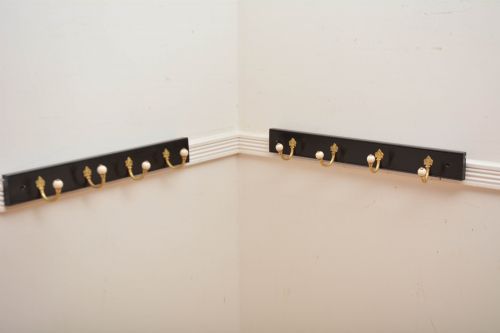
Backboards often display ebonised finishes, carved details or applied mouldings. Fixing points and screw holes form an integral part of the mounting design for direct wall installation.
Some Victorian brass hooks sport tiny ceramic knobs like miniature door handles for your overcoat.
Evaluating the pieces
Quality rests upon the original casting of the metal hooks and the stability of the timber backboard. Finer examples show crisp chasing on brass work and substantial mounting plates.
The integrity of the timber affects longevity, particularly around screw holes and mounting points where weight bears down. Matching sets of hooks mounted to original backboards hold greater authority than assembled combinations.
The Hallway Wall Coat Hooks Glossary
- Backboard
- The horizontal or vertical strip of wood that carries the individual hooks. This timber mounts directly to the wall and distributes the weight of hanging garments.
- Ebonised
- Wood treated with a dark stain or finish to imitate ebony. This dark surface creates a sharp contrast against polished brass hooks.
- Bentwood
- Timber heated and bent into curved shapes, commonly utilised in nineteenth-century racks. This technique creates strong, flowing forms without traditional joints.
- Portmanteau
- A larger wall-mounted rack or bracket system designed to hold hats, coats and accessories. These pieces often feature multiple tiers or scalloped hooks.
- Bevelled plate
- A mirror glass with angled edges set into a frame. This feature frequently accompanies coat hooks on hallway mirrors and valet stands.
Hallway Wall Coat Hooks: Frequently Asked Questions
How do I mount a coat rack securely?
Heavy period timber racks require direct fixing into wall studs or suitable masonry plugs. Using the original mounting holes ensures the weight distributes evenly across the backboard.
Check the stability of individual hooks before hanging heavy coats. Solid brass and iron fixtures mounted to hardwood will support substantial daily wear.
Are these coat hooks strong enough for daily use?
Nineteenth and early twentieth-century hooks were built for heavy overcoats, hats and cloaks. Solid brass and bronze construction offers high durability for modern hallways.
Ensure the wall fixings match the weight of the timber board and the garments you intend to hang. Most multi-hook racks handle daily household use without difficulty.
How do I date a wooden coat rack?
Dating relies on timber selection, fixing types and design styles such as Victorian ebonising or Edwardian oak framing. Hand-cut screws or specific brass casting methods offer additional clues to the era.
Compare the backboard construction and hook profiles with known period examples. Simple pine boards often date to the nineteenth century, while mahogany and oak span both Victorian and Edwardian periods.
What is the difference between a rack and a valet?
A coat rack consists primarily of a backboard and a row of hooks for hanging garments. A hallway valet or hall stand often integrates a mirror, shelf or small storage space alongside the hooks.
Valets provided space for hats, letters and personal items in traditional entrance halls. Both serve a similar practical function for organising hallway entryways.