

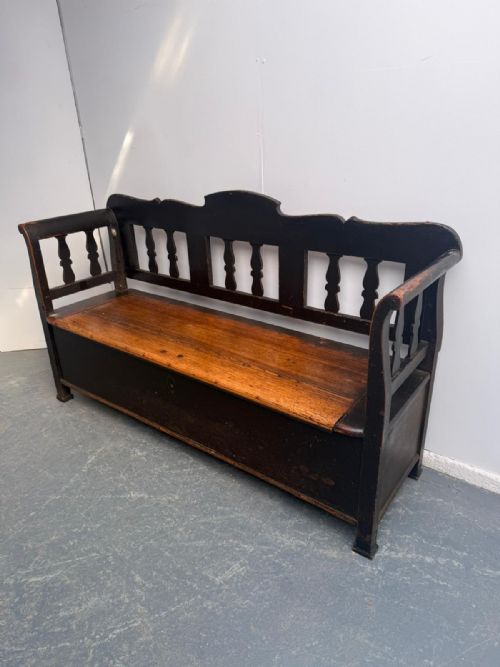
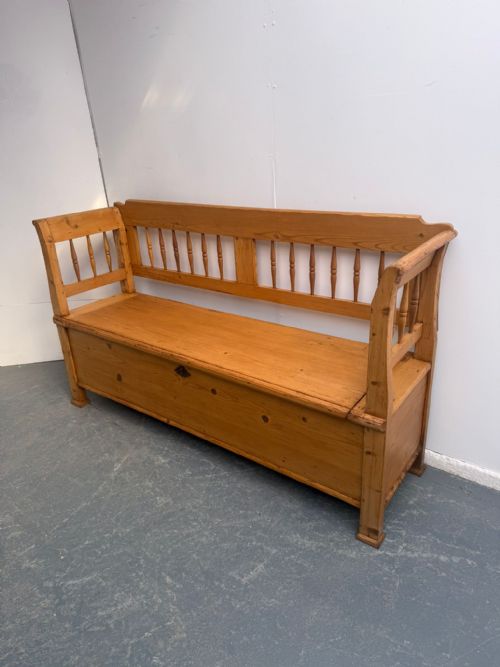
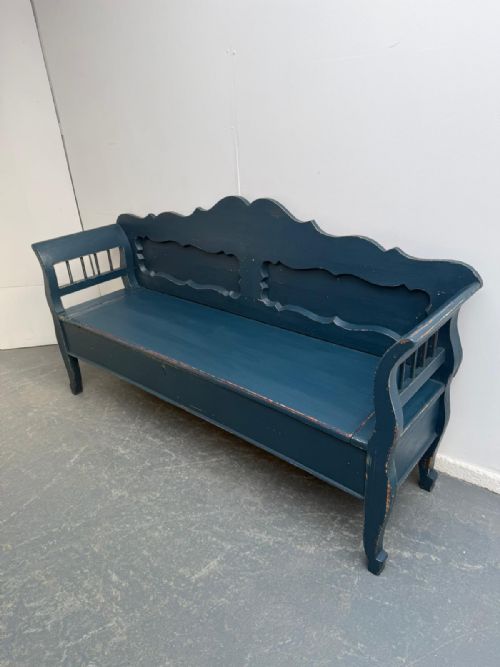
Hallway Pine Settle
A hallway pine settle offers practical seating and storage in a narrow entrance space, drawing interest for its sturdy character and utility.
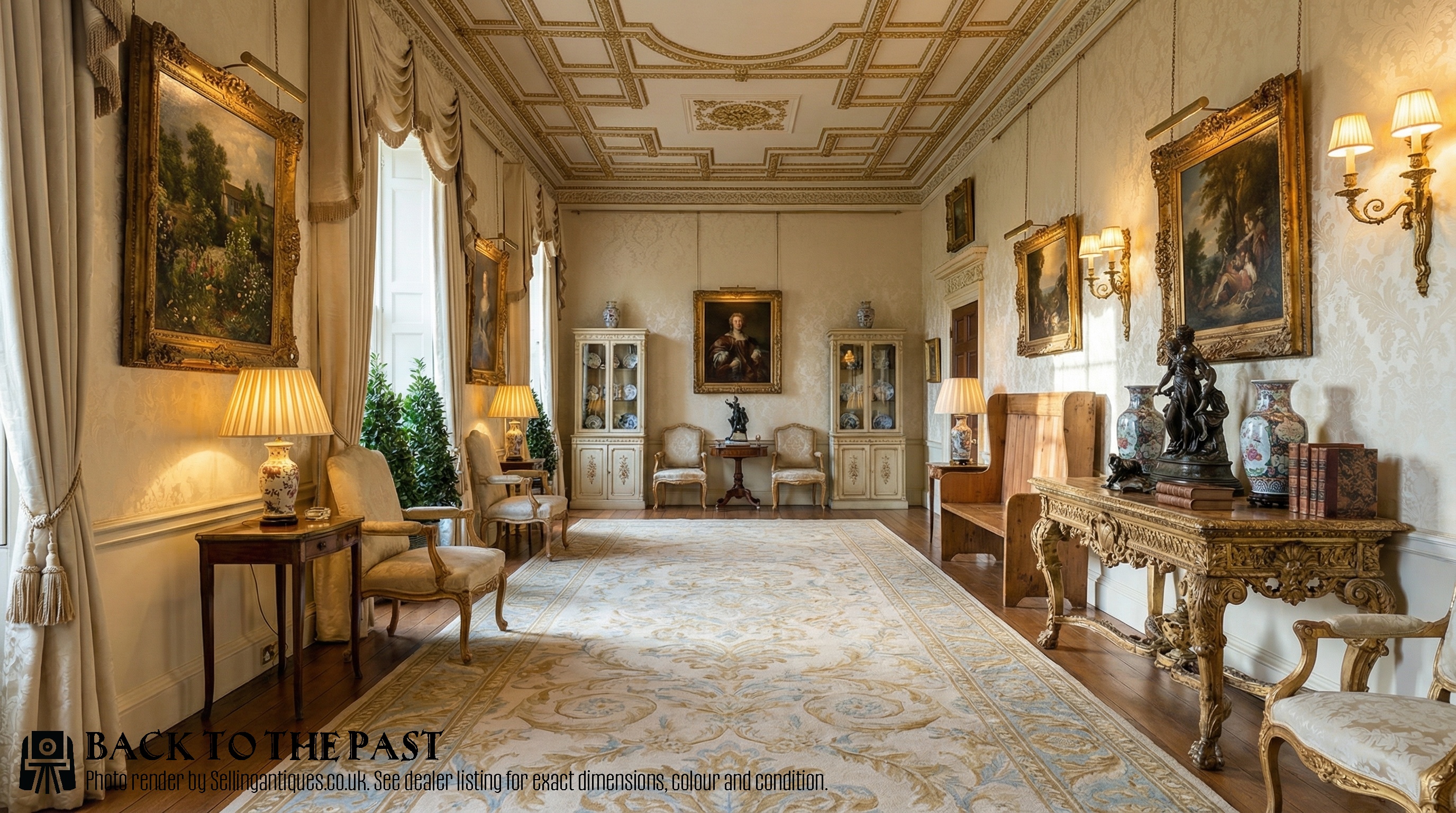
Hallway Pine Settle
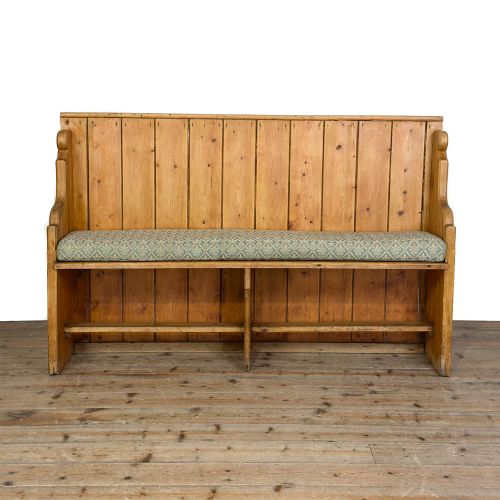
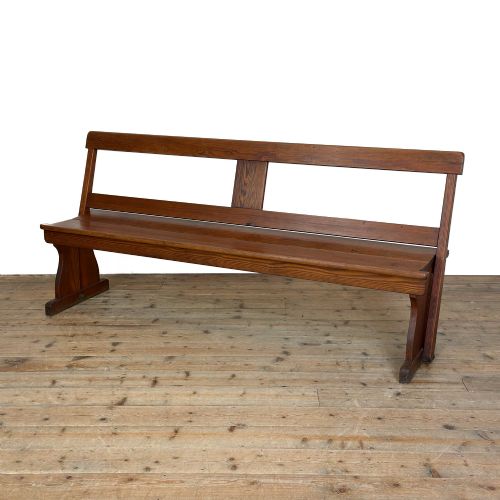
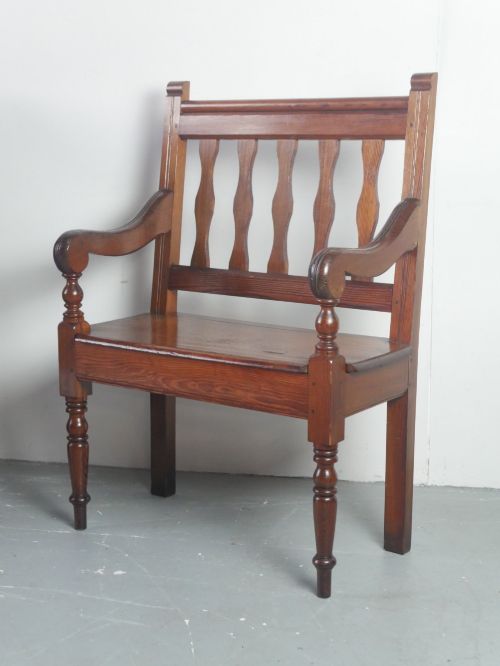
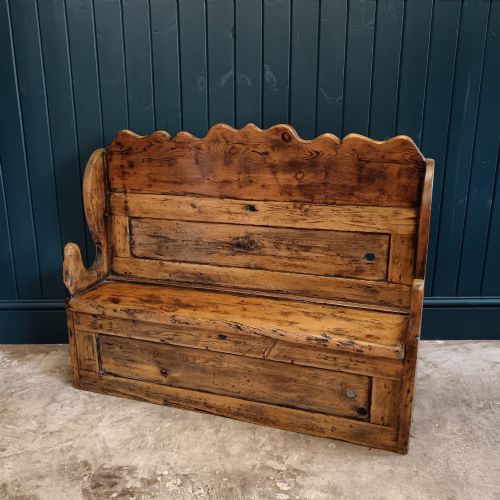
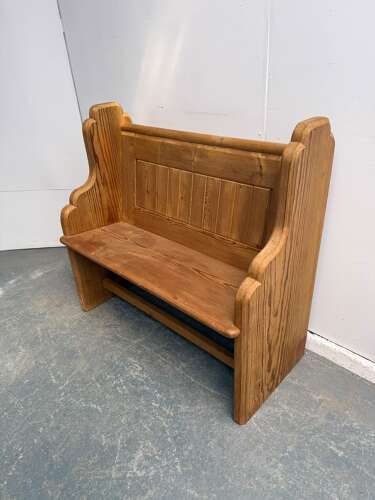
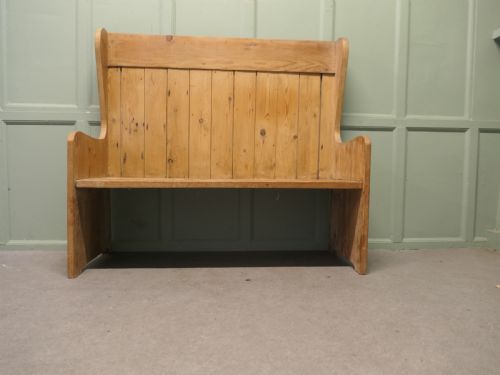
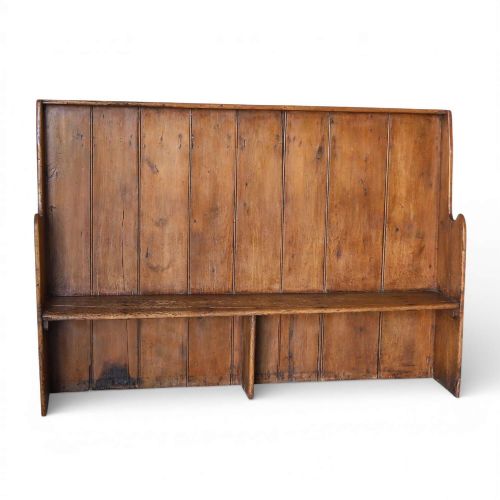
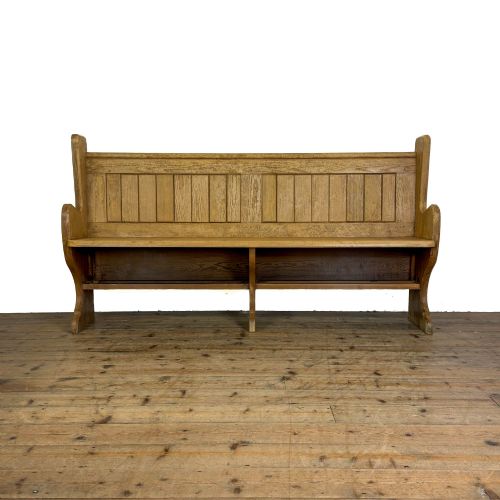
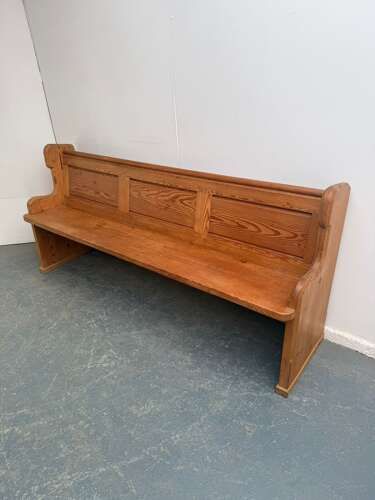
A hallway pine settle is a robust wooden seating unit designed for passages and entries, taking the form of high-backed benches or box benches with integrated storage beneath the seat. The pieces gathered here span Georgian, Victorian, and later periods, encompassing English country, Welsh, Swedish, Austrian, and Hungarian folk art traditions.
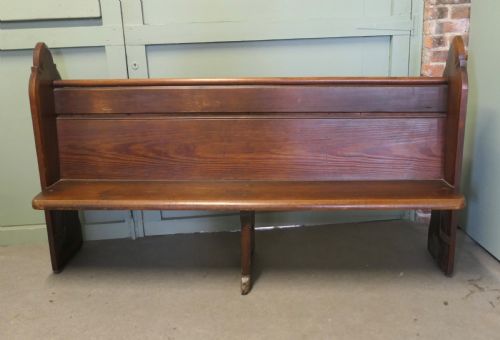
Most examples found on this page are high-back pews, box settles, or slim hallway benches made from pine, pitch pine, or elm. These items serve both as practical hallway furniture and as decorative country pieces originating from domestic, church, or tavern settings.
How they were made
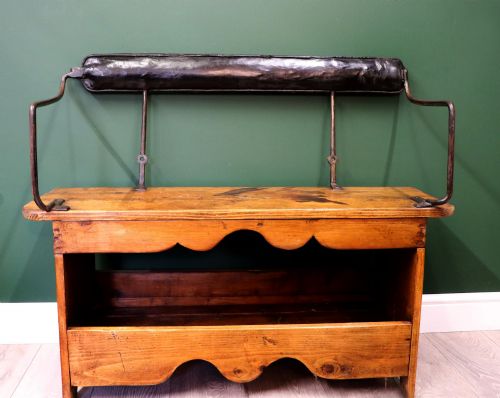
Constructed primarily from solid pine, pitch pine, and elm timbers, these settles rely on traditional joinery designed to withstand heavy daily use. Many examples incorporate iron hardware for hinges and fixings, supporting flip-over mechanisms or box lids.
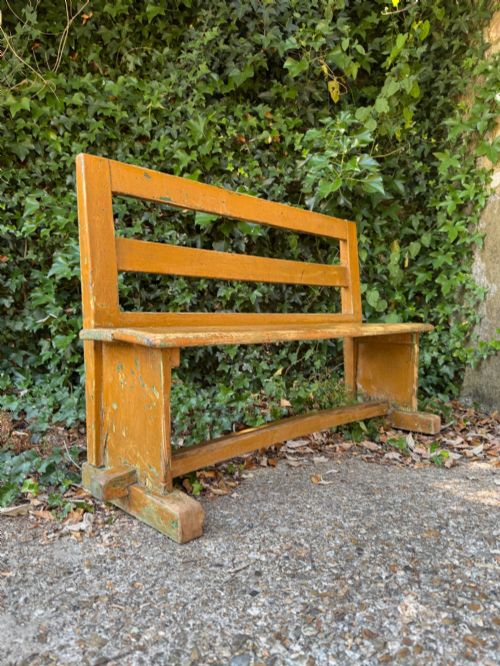
Surface treatments vary between waxed finishes that highlight the honey brown patina of the timber and original painted finishes in blue, black, grey, and cream. Some pieces retain distinct folk art painting traditions from European workshops.
Listings feature pine, pitch pine, and elm timbers, spanning Georgian, Victorian, and Edwardian periods across English, Welsh, Swedish, Austrian, and Hungarian origins.
What varies in quality
The distinction between ordinary and superior settles lies in the integrity of the original construction and the survival of early painted surfaces. Pieces retaining their original blue, grey, black, or cream paint carry greater historical interest than stripped or later painted examples.
Proportion and timber selection also divide the range, with slim hallway footprints and honey brown waxed pitch pine or elm combinations showing more refined country craftsmanship than utilitarian utility pieces.
The Hallway Pine Settle Glossary
- Settle
- A wooden bench with a high back and solid arms, often featuring a box seat for storage. This form kept draughts away from people sitting in hallways or by firesides.
- Box Settle
- A bench fitted with a hinged seat that lifts to reveal a storage compartment underneath. This dual-purpose design was common in domestic country interiors.
- Pitch Pine
- A dense, resinous softwood sourced from pine trees, known for distinct grain patterns and durability. It was frequently utilised in nineteenth-century church pews and institutional seating.
- Patina
- The surface sheen and colour acquired by timber over decades of handling, exposure to light, and waxing. A honey brown patina indicates age and regular polishing.
- Folk Art
- Decorative painting and construction traditions rooted in regional rural communities. Pieces from Hungary and Sweden often display characteristic colours and spindle details.
Hallway Pine Settle: Frequently Asked Questions
What is a hallway pine settle used for?
A hallway pine settle provides a functional seating option in an entrance hall while offering concealed storage beneath the seat for boots, scarves, and household items. The high back acts as a barrier against draughts near an exterior door.
Historically, these benches served communal and domestic roles in farmhouses, cottages, and taverns before finding a place in modern hallways.
How do I date an antique pine settle?
Dating relies on examining the construction methods, nail types, timber choice, and surface wear visible on the piece. Georgian examples often display hand-sawn boards and pegged joinery, whereas Victorian pieces may utilise machine-sawn timber and different fastening techniques.
Paint layers and patination also provide clues to age, though many country pieces remained in use for generations with minimal alteration.
Are these settles comfortable to sit on?
Most antique pine settles feature upright wooden backs and solid seats designed for utility rather than lounging. Adding a loose cushion or pad makes them suitable for daily sitting in a busy hallway.
The high wooden back and enclosed sides offer an upright, supportive posture.
What is the difference between a settle and a church pew?
A settle typically includes enclosed sides and often incorporates a box base for storage beneath the seat. Church pews are generally open at the sides and designed as long rows of connected seating without under-seat compartments.
Both forms appear frequently in pine and serve similar decorative functions in domestic hallways.