
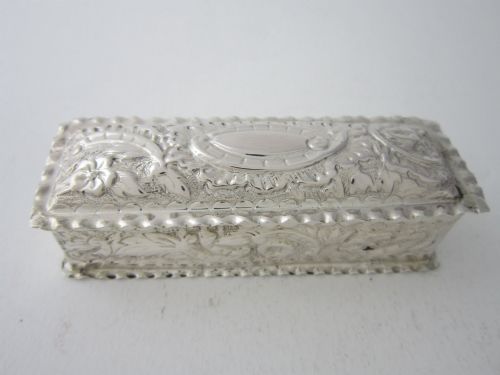
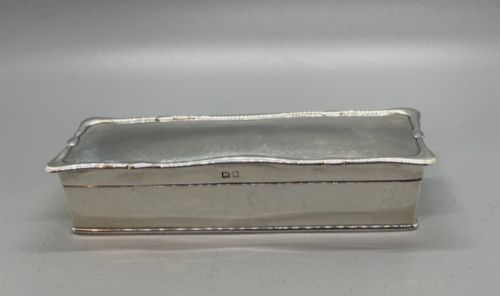
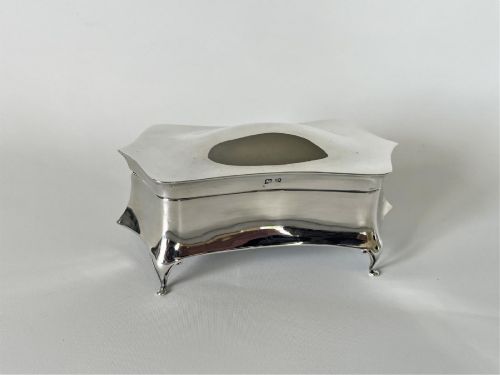
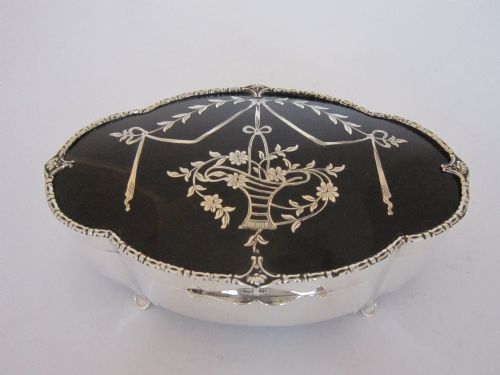
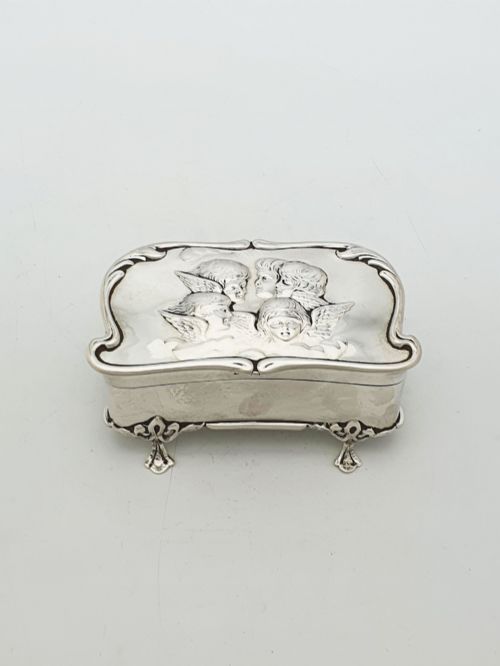
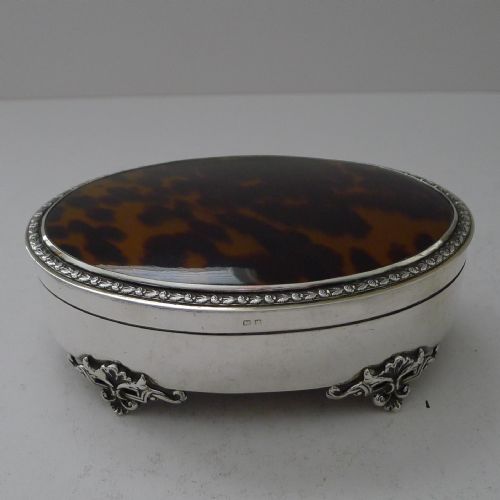
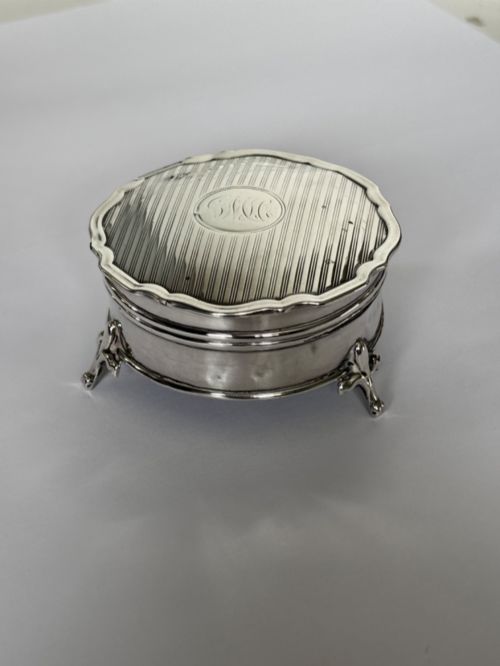


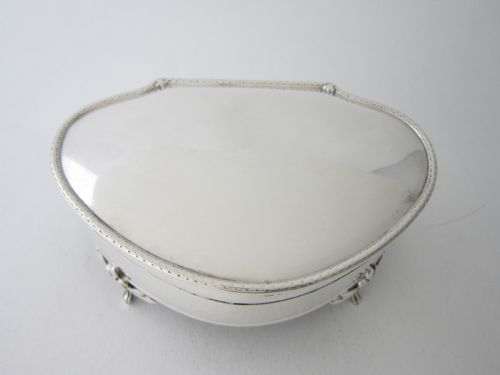


Hallmarked Silver Trinket Casket
A hallmarked silver trinket casket is a small, precious receptacle designed for dressing tables, fashioned from sterling silver to hold keepsakes.
Hallmarked Silver Trinket Casket
A hallmarked silver trinket casket serves as a dressing table repository for rings, cufflinks, and small keepsakes, appearing frequently in Victorian, Edwardian, and George V forms. These vessels take shapes ranging from simple oval boxes to larger fitted jewellery caskets and potpourri containers.
The pieces on this page span the late nineteenth century through the early nineteen-twenties, originating from assay offices in Birmingham, London, and Chester. Buyers encounter various designations including jewellery boxes, ring boxes, and dresser caskets within these periods.
Makers utilised distinct regional styles, moving from Victorian Rococo Revival and Neoclassical Revival motifs toward flowing Art Nouveau lines. Each casket reflects the domestic habits of its era, intended for display upon a dressing table or vanity surface.
What varies in quality
The substance of quality rests upon the thickness of the sterling silver sheet, the crispness of the chased or embossed ornamentation, and the structural integrity of the hinges and clasps. Heavier gauge metal resists denting and maintains sharper definition in revivalist or Art Nouveau motifs.
Internal elements such as original velvet linings and properly fitted tortoiseshell panels elevate a piece, alongside clear, legible hallmarks from Birmingham, London, or Chester assay offices.
A good dressing table casket has spent a century guarding stray collar studs and forgotten cufflinks.
William Neale & Sons·William Comyns & Sons
The Hallmarked Silver Trinket Casket Glossary
- Hallmark
- An official mark stamped onto precious metals to indicate the purity standard, the assay office of origin, and the date letter. These stamps provide the primary evidence for dating English silver.
- Sterling Silver
- An alloy consisting of ninety-two point five percent silver and seven point five percent other metals, typically copper. This standard forms the baseline material for these caskets.
- Silver Gilt
- Silver that has been coated with a thin layer of gold on its interior or exterior surfaces. This technique protects the silver from tarnishing in specific areas and creates a rich internal contrast.
- Tortoiseshell
- The mottled brown shell of certain sea turtles, utilised historically as an inlaid panel on silver boxes and caskets. It provides a dark, glossy contrast to the surrounding metal.
- Repoussé
- A metalworking technique where the silversmith hammers the metal from the reverse side to form raised decorative patterns in high relief. This method defines many Victorian Rococo Revival caskets.
Hallmarked Silver Trinket Casket: Frequently Asked Questions
How do I date a silver casket?
Dating relies upon the stamped hallmarks, which include a specific date letter corresponding to the assay year of the office that tested the metal. Additional clues emerge from the prevailing style, such as Art Nouveau curves or Victorian revival motifs.
Makers' marks also point to specific workshops active during periods like the Edwardian era or the reign of George V. Comparing these stamped letters against official assay records reveals the exact year of manufacture.
What were these boxes used for?
These caskets functioned as secure containers on dressing tables for daily accessories such as rings, cufflinks, studs, and small brooches. Their velvet interiors cushioned delicate items against the hard silver structure.
Larger versions accommodated fitted compartments for varied jewellery pieces, whilst smaller pots held potpourri or pins. They sat visibly on dressing surfaces as both practical storage and ornamental objects.
How should I clean silver caskets?
Cleaning requires a soft microfibre cloth and a mild, non-abrasive silver polish formulated specifically for sterling surfaces. Care must be taken around inset tortoiseshell panels and internal velvet linings to avoid moisture damage.
Frequent, gentle wiping preserves the chased details and hallmarks better than aggressive scrubbing. Professional cleaning is rarely necessary if tarnish is managed with regular, careful maintenance.
What is the difference between a trinket box and a casket?
Trinket boxes generally refer to smaller, shallower receptacles intended for loose pins, coins, or single rings. Caskets denote larger, deeper boxes, often fitted with internal trays and hinged lids designed for comprehensive jewellery storage.
Both terms appear across Victorian and Edwardian listings, though caskets frequently feature more substantial construction and decorative detailing. The distinction rests primarily on scale and internal capacity rather than material.