


.JPG)
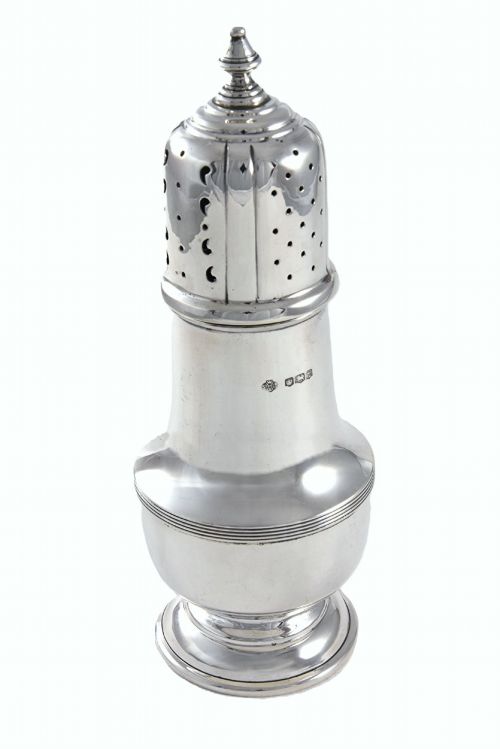
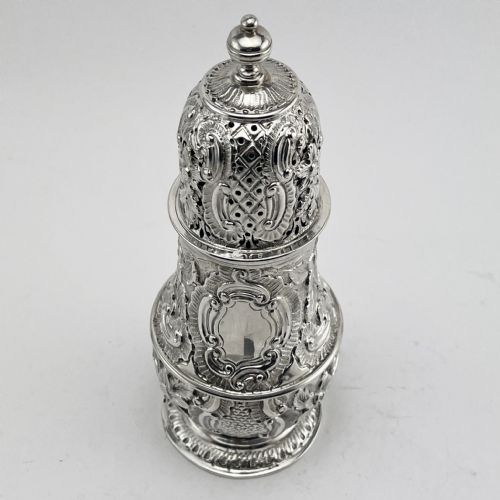
Hallmarked Silver Sifter
A hallmarked silver sifter brings elegance to the table, filtering sugar onto desserts with a perforated dome and precious metal gleam.
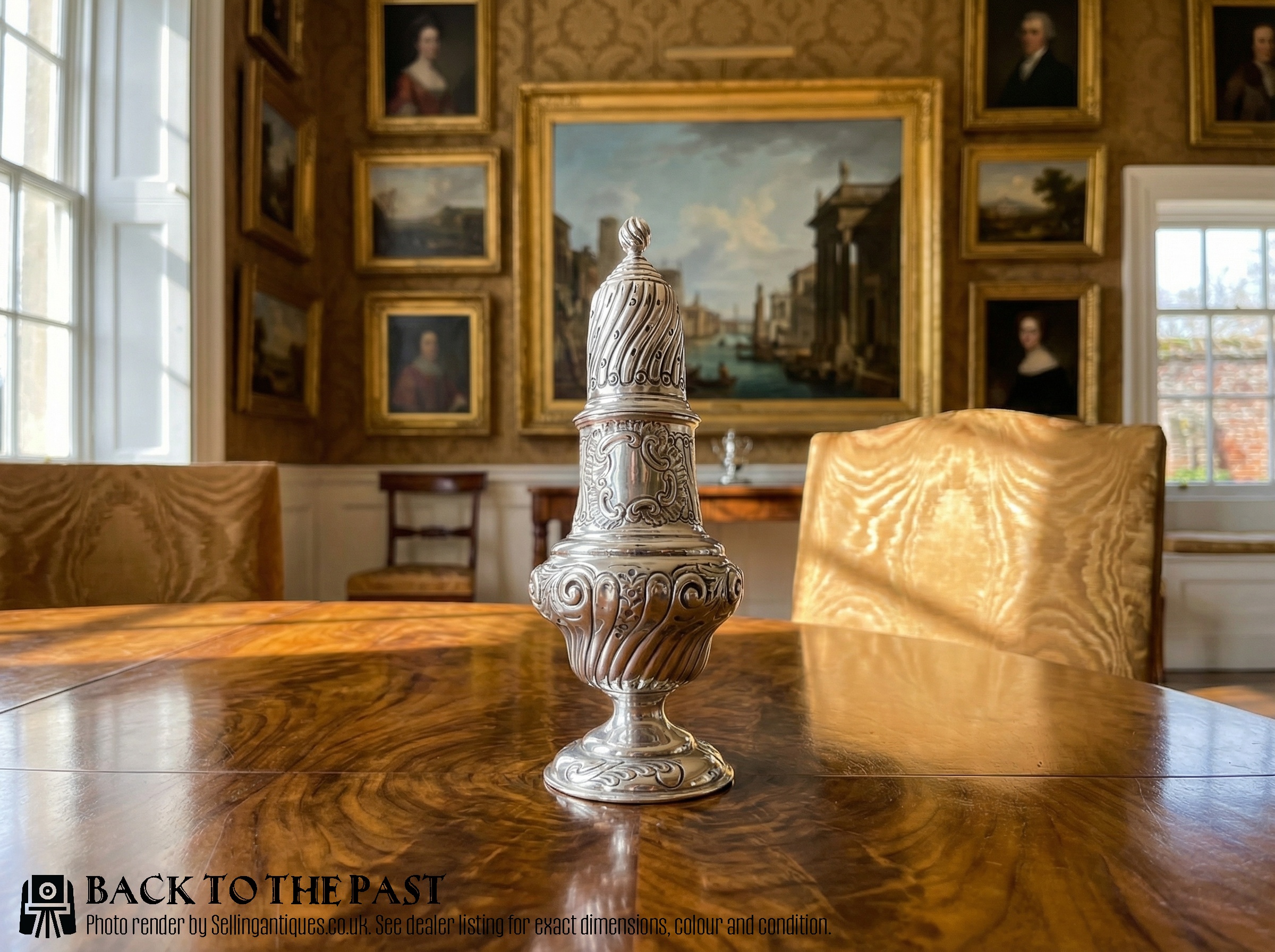
Hallmarked Silver Sifter
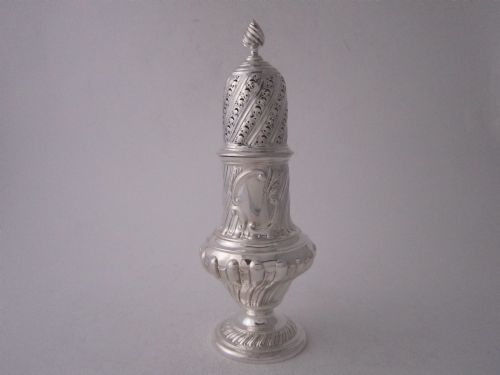
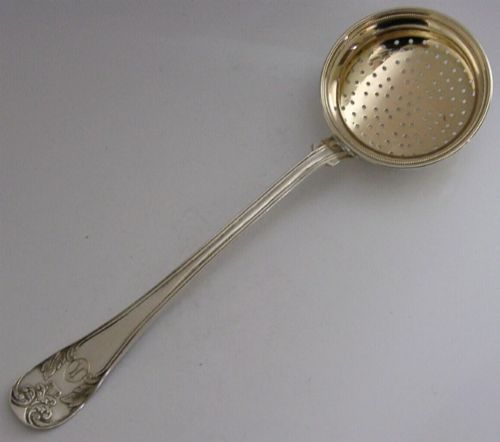
A hallmarked silver sifter is designed for sprinkling powdered sugar or spices over food, appearing most often as a freestanding caster or a dedicated spoon. The pieces gathered here span from the eighteenth century through the mid-twentieth century, capturing shifts in domestic dining habits.
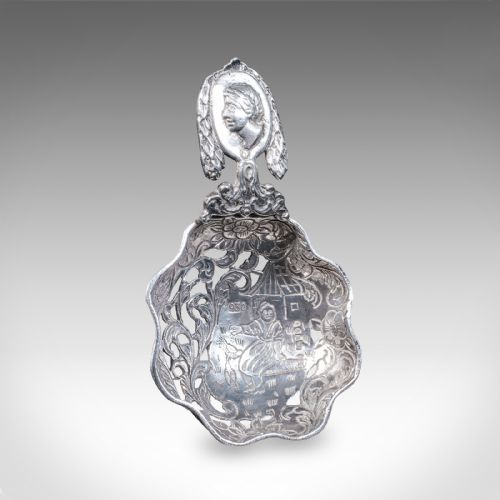
Casters dominate the selection, appearing alongside sifter spoons, caddy spoons, and sugar bowls. Buyers frequently encounter Victorian and Edwardian examples alongside Art Deco geometric forms and Georgian revival pieces.
Makers utilised sterling silver, solid silver, and silver gilt, occasionally combining the metal with cut glass or blue glass liners. These serving pieces reflect the evolution of tableware across British and continental workshops.
Materials and technique
Silversmiths shaped solid silver and sterling silver through spinning, casting, or hammering, creating sturdy bodies capable of holding powdered sugar. Pierced work on the lids required precise hand-sawing or punching to form regular patterns for sifting.
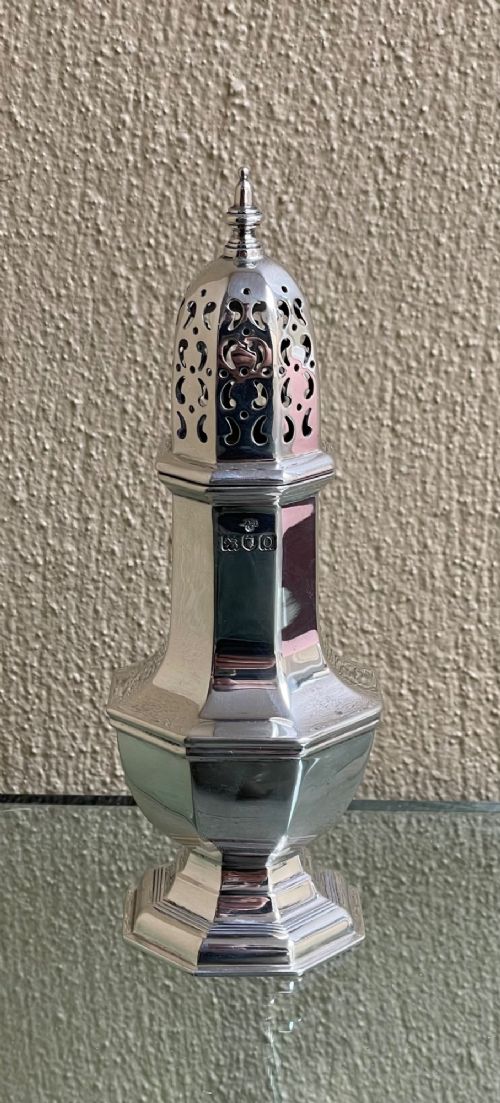
Some items received a layer of silver gilt to the interior or surface for decorative contrast, while others paired silver mounts with cut glass bodies. Hallmarks stamped directly into the metal recorded the assay office, year, and maker.
Some Victorian casters take the whimsical shape of a cornucopia, ready to pour sweetness upon the table.
Assessing craftsmanship
The crispness of the pierced pattern on the sifter lid distinguishes superior examples from simpler ones, demanding steady handwork from the silversmith. Weight and gauge of the silver also dictate quality, as heavier vessels resist denting during daily use.
Clarity of the hallmarks stamped into the metal provides assurance of origin and date, while retained gilding or undamaged glass liners elevate the desirability of a piece.
The Barker Brothers·James Dixon And Sons Ltd·Horace Woodward And Co Ltd·Roberts And Belk·Berthold Muller·Henry George Murphy·Henry Williamson·Chawner And Co·S Blanckensee And Co Ltd·Haseler Brothers
The Hallmarked Silver Sifter Glossary
- Hallmark
- Official marks stamped on precious metals indicating the standard of purity, assay office, and date letter. These stamps provide a reliable method for dating British silver.
- Caster
- A small container with a perforated top used for shaking sugar or spices onto food. They often feature pear-shaped or lighthouse silhouettes.
- Silver Gilt
- Silver that has been coated with a thin layer of gold on its surface. This technique adds a rich, warm tone to the interior or exterior of tableware.
- Sifter Spoon
- A specialised spoon with a perforated bowl designed to sprinkle sugar while leaving lumps behind. They appear in various regional styles including Swedish and British designs.
- Assay Office
- An official body that tested and marked the purity of precious metals. Towns such as London, Birmingham, and Sheffield operated distinct offices.
Hallmarked Silver Sifter: Frequently Asked Questions
What is a hallmarked silver sifter?
A hallmarked silver sifter is a specialised serving piece designed to sprinkle powdered sugar onto food through a pierced lid or a perforated spoon bowl.
These items were staple accessories for formal dining tables, particularly during the Victorian, Edwardian, and Art Deco periods when afternoon tea and dessert courses gained popularity.
How do I read silver hallmarks?
Silver hallmarks typically consist of a maker's mark, a standard mark indicating metal purity, a city sign for the assay office, and a date letter.
These tiny stamped symbols allow collectors to trace the exact year and location where a sifter was tested and approved.
What is the difference between a caster and a shaker?
The terms caster and shaker are often used interchangeably to describe upright vessels with perforated tops used for dispensing sugar.
Historically, caster referred specifically to containers used for casting or sprinkling fine particles, while shaker is a more modern descriptor for the same functional form.
Can I use an antique sifter today?
Antique silver sifters remain fully functional for serving powdered sugar over desserts or pastries at the dining table.
Careful hand washing with mild soap and immediate drying will preserve the silver surface and prevent damage to any internal glass liners.