


Hallmarked Silver Serving Utensils
Hallmarked silver serving utensils bring traditional dining elegance to the table, offering solid sterling construction and period craftsmanship.
Hallmarked Silver Serving Utensils
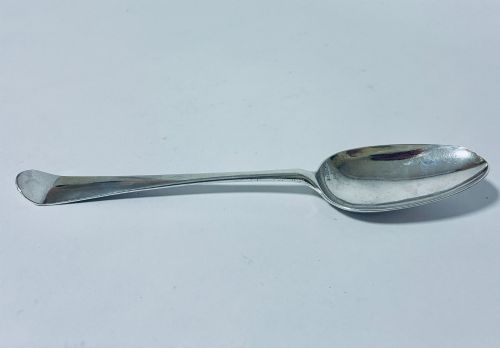
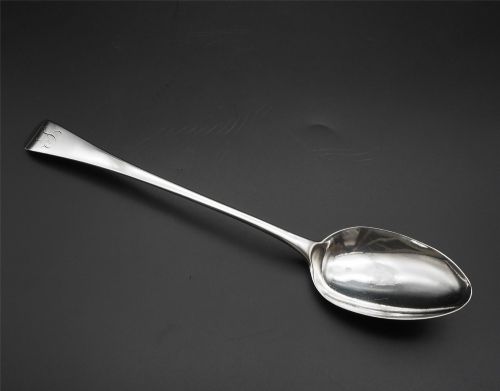
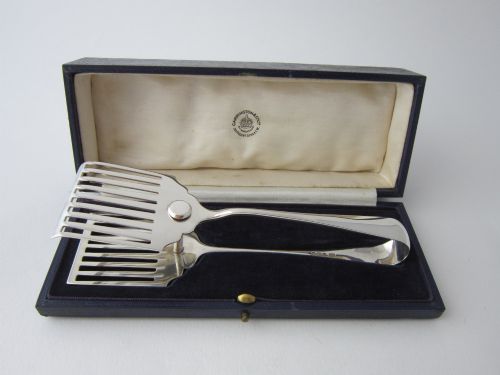
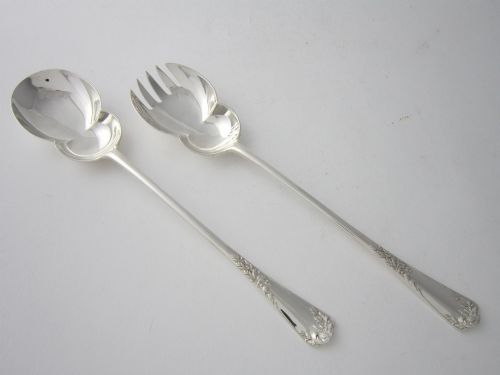
Hallmarked silver serving utensils comprise specialised pieces designed for formal dining, including basting spoons, fish servers, asparagus tongs, and marrow scoops. These implements reflect the distinct domestic requirements of Georgian, Victorian, and Edwardian households, where specific food items demanded dedicated cutlery.
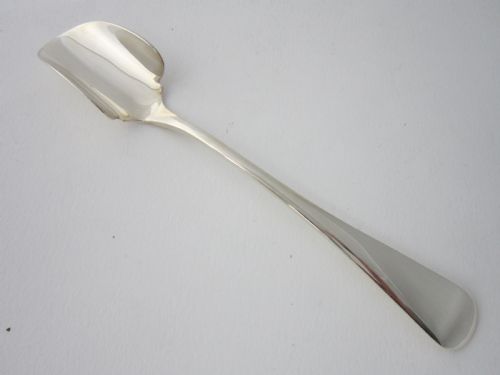
The selection here ranges from large Georgian basting spoons and Hester Bateman ladles to Edwardian salad servers and George V stilton scoops. Buyers will encounter both individual serving pieces and matched pairs, often fashioned from solid sterling silver with period stylistic motifs.
Originating predominantly from British workshops alongside Scandinavian examples, these items demonstrate the evolution of nineteenth and early twentieth century table service. The forms vary from pierced fish slices and grape shears to heavy gravy spoons and ice cream servers.
Materials and construction
These utensils are forged primarily from sterling silver, occasionally accented with parcel gilt highlights to enhance decorative elements. Manufacturing techniques combine traditional smithing methods with piercing and engraving, particularly evident in fish slices and berry spoons.
Many items incorporate official town and maker hallmarks struck directly into the metal, confirming their silver standard and origin. Fitted cases lined with velvet or silk accompany specific delicate items such as grape shears, protecting the polished metal surfaces.
Grape shears arrived in velvet cases just in case the fruit demanded a delicate snip.
Assessing quality in silver service
Quality rests upon the weight of the metal and the crispness of the original chasing, engraving, or piercing. Substantial gauge silver resists bending during use, whilst well-preserved hallmarks ensure the piece retains its historical identity.
The integrity of the design, whether Queens Pattern, Old English, or a decorative berry spoon conversion, dictates the refinement of the utensil. Preservation of the original surface finish without excessive polishing distinguishes superior examples.
Hester Bateman·Jonathan Hayne·Charles Boyton
The Hallmarked Silver Serving Utensils Glossary
- Hallmark
- Official stamps applied to precious metals indicating the standard of silver, the assay office, and the year of manufacture. These marks provide the primary evidence for dating British antique silver.
- Sterling silver
- An alloy containing a high proportion of pure silver combined with small amounts of other metals to increase durability. This standard is fundamental to British hallmarked silverware.
- Parcel gilt
- Silver objects that feature areas selectively coated in a thin layer of gold, often highlighting the interior bowls of spoons or specific decorative motifs. This technique creates a striking visual contrast.
- Basting spoon
- A large utensil originally utilised for spooning juices over roasting meat. In later periods, these substantial spoons found wider application across general table service.
- Marrow scoop
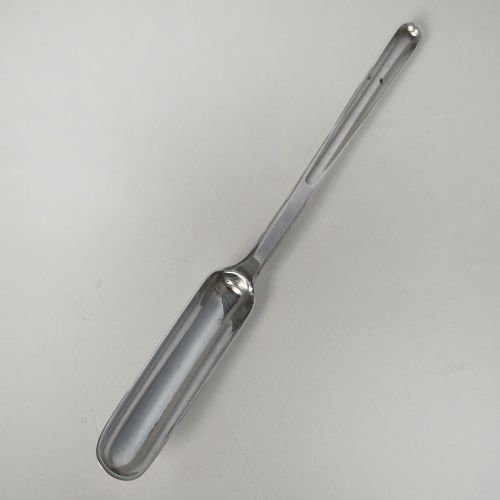
- A narrow, elongated silver implement featuring small concave sections at each end designed for extracting bone marrow. They represent a specialised form of antique dining cutlery.
Hallmarked Silver Serving Utensils: Frequently Asked Questions
How do I clean hallmarked silver serving utensils?
Use a soft microfibre cloth and a reputable silver polish formulated to lift tarnish without removing the underlying metal. Avoid abrasive pads or harsh chemical dips that can damage intricate engravings and soft parcel gilt highlights.
Store clean pieces in dry environments away from direct sunlight, and utilise fitted cases with velvet or silk linings when available to prevent surface scratches between uses.
What is the difference between a basting spoon and a gravy spoon?
Basting spoons are typically the largest spoons in a service, originally manufactured for kitchen or dining room meat preparation. They possess long handles and deep bowls designed to hold substantial volumes of liquid.
Gravy spoons are slightly smaller counterparts intended for passing sauce at the table rather than heavy kitchen baster use. Both forms frequently appear in Georgian and Victorian cutlery services.
How do I read silver hallmarks?
British hallmarks typically consist of a standard mark such as a lion passant for sterling, a city mark indicating the assay office, and a date letter corresponding to the exact year of production. A maker's mark is also included.
Reference guides match the specific letter shape and shield outline to date tables compiled for London and provincial assay offices. This system allows collectors to trace the exact origin of each piece.