




Silver Asparagus Servers
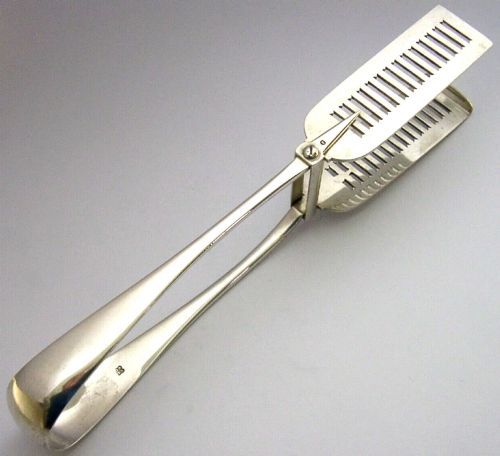
Silver asparagus servers are specialist dining implements designed to lift delicate stalks cleanly from dish to plate without damage.
Silver Asparagus Servers
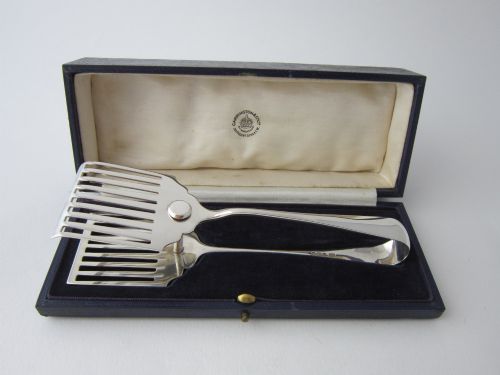
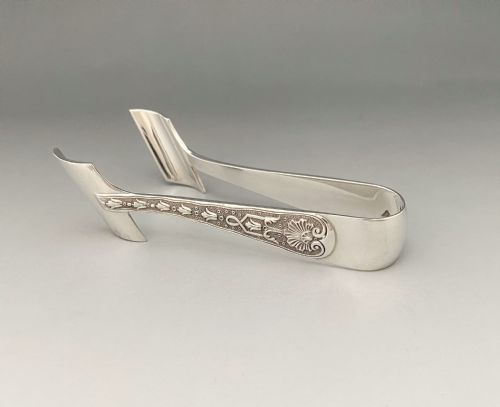
Silver asparagus servers encompass specialised tongs, serving sets, and dedicated dishes originating across the Georgian, Victorian, and Edwardian eras. Buyers searching for silver asparagus servers encounter utilitarian tongs alongside elaborate serving dishes paired with dedicated utensils.
The forms span robust nineteenth-century sterling designs bearing family crests to twentieth-century plated serving sets and solo tongs. Makers produced these items to accommodate the Victorian and Edwardian obsession with specialised table service for seasonal vegetables.
How they were made
Silversmiths constructed these pieces using sterling silver and base metals finished with silver plate, including electroplated nickel silver. Manufacturing techniques combined hand-forging with ornate piercing to create blades that drained butter while securely gripping slender stems.
Pattern work relied on traditional designs such as the King's pattern and Albany pattern for handles, often finished with engraved crests or armorial bearings. Makers like Walker and Hall and Mappin and Webb utilised durable plating methods alongside solid silver casting.
Victorian diners clearly took their greens seriously enough to commission spring-loaded metal geometry solely for preventing slippery asparagus disasters.
What varies in quality
Quality rests upon the gauge of the silver or the resilience of the plating across high-wear areas like pivot pins and grip ends. Heavier solid silver items maintain structural integrity better than lighter plated equivalents over decades of use.
The refinement of the piercing on the blades and the crispness of engraved crests distinguish superior examples from standard production pieces. Maker attribution to established silversmiths further elevates the standing of an individual pair.
Wilkes Booth·Garrard and Co·Walker and Hall·Mappin and Webb·Henry Atkins
The Silver Asparagus Servers Glossary
- Sterling silver
- A silver alloy containing 92.5 percent pure silver by mass, with the remainder consisting of copper or other metals. This standard guarantees the metallic purity of solid silver servers.
- EPNS
- Electroplated nickel silver, a form of silverware where a base metal of copper, nickel, and zinc is coated with a thin layer of pure silver. It provides the visual appeal of silver at a different cost point.
- Piercing
- The decorative technique of cutting openings through the metal of a serving blade. This allows excess butter and water to drain away from the vegetable.
- Armorial crest
- A design derived from heraldry, engraved onto the handle of silver items to denote family ownership. These personalisations frequently aid in provenance research.
- King's pattern
- A ornate, traditional cutlery pattern featuring a shell and floral motif at the terminal of the handle. It was widely utilised during the Victorian period.
Silver Asparagus Servers: Frequently Asked Questions
How do you use asparagus tongs?
Asparagus tongs are engineered with a wide, flat blade and a sprung handle to grip a bundle of stalks firmly without crushing the tips. The user pinches the handles to lift the vegetables from a serving dish.
The pierced blade design ensures any butter or cooking water drains back into the dish before the asparagus reaches the dinner plate.
What is the difference between tongs and servers?
Tongs are typically constructed as a single sprung piece or hinged implement designed to pinch and lift food from above. Servers can include broader multi-piece sets or dedicated dishes accompanied by specialised utensils.
Both forms served the same functional purpose at the formal dining table during the height of seasonal vegetable courses.
How do I clean antique silver servers?
Cleaning requires warm water, a mild non-abrasive washing liquid, and a soft microfiber cloth to remove everyday tarnish and oils. Avoid harsh chemical dips that strip away desirable patination and historic finishes.
Storage in a dry, tarnish-resistant wrap helps preserve the metal surface between uses at the dining table.
Are silver plated servers usable today?
Silver plated items function well for modern dining provided the underlying base metal remains covered by an intact silver layer. Careful hand washing prevents premature wear to the electroplated finish.
They bring an authentic period aesthetic to contemporary dinner parties and seasonal vegetable service.