
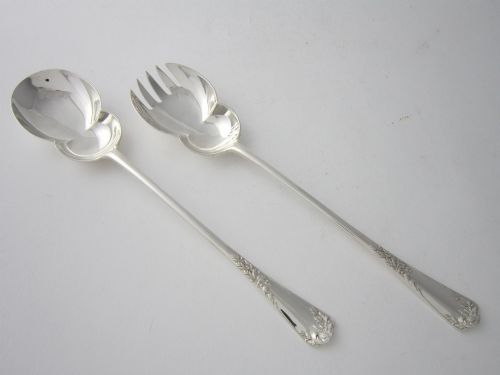


Hallmarked Silver Serving Set
A hallmarked silver serving set brings formal dining history to the table through matched spoons, forks, and servers.
Hallmarked Silver Serving Set
A hallmarked silver serving set comprises matched utensils designed for dishing food at the table, spanning periods from the eighteenth century to the twentieth century. These groupings include fish servers, salad spoons, gravy spoons, cake forks, and broader canteens of cutlery intended for twelve persons. Buyers seeking this phrase encounter Victorian, Edwardian, Art Deco, and Georgian examples fashioned from sterling silver.
The configurations vary from paired serving spoons and cased fish servers to boxed sets of cake forks and specialised pickle, jam, and butter sets. Materials extend beyond metal alone, incorporating velvet, silk, leatherette, bone, wood, vermeil, and cut crystal alongside sterling silver. Pieces emerge from distinct eras, notably showcasing Queen Anne, Georgian, Victorian, and Edwardian styles.
How they were made
Silversmiths shaped these serving utensils from sterling silver, frequently incorporating bone handles, wooden components, and cut crystal bowls. Specialised items combined vermeil washes or integrated delicate silk and velvet linings inside fitted cases made of leatherette.
Makers applied traditional manufacturing techniques to create patterned designs such as the Queens pattern or shell shapes, alongside engraved crests like the stag crest seen on early tablespoons. These methods combined durability with decorative elegance suitable for formal presentation.
An early eighteenth-century tablespoon bears a proud stag crest, reminding us that antique cutlery sometimes carries the quiet heraldry of long-forgotten dining rooms.
What varies in quality
The standard of a hallmarked silver serving set depends on the weight and integrity of the silver, the complexity of patterns like Queens or shell motifs, and the completeness of fitted cases lined with silk or velvet. Matching elements across a grouped service demonstrate greater care in assembly.
Condition is dictated by the preservation of hallmarks, the clarity of engraved crests, and the original pairing of components such as bone handles or cut crystal inserts.
J Ladyman
The Hallmarked Silver Serving Set Glossary
- Hallmark
- Official marks stamped on precious metals to guarantee fineness and origin. These stamps help verify the period and city of assay.
- Sterling silver
- An alloy containing ninety-two point five percent silver and seven point five percent other metals, primarily copper. This standard composition provides the necessary durability for functional cutlery.
- Vermeil
- Sterling silver plated with a thin layer of gold. This technique offers the visual warmth of gold while utilising silver as the base material.
- Dognose tablespoons
- An early English spoon form featuring a distinct notched or rounded terminal handle shape popular around the turn of the eighteenth century. They represent an important milestone in early dining silver evolution.
- Queens pattern
- An ornate nineteenth-century decorative cutlery pattern featuring shell and scroll motifs along the borders. It reflects the elaborate taste of the Victorian era.
Hallmarked Silver Serving Set: Frequently Asked Questions
What is included in a serving set?
A serving set contains utensils specifically fashioned for presenting food at the table, including salad servers, gravy spoons, fish servers, and cake forks. These tools handle large portions or specific dishes rather than individual dining.
Such groupings often arrive as pairs or complete canteens intended for twelve persons, sometimes housed in original fitted cases.
How do I care for silver?
Sterling silver requires gentle cleaning with specialised silver polishes to remove tarnish without scratching the metal surface. Avoiding abrasive materials preserves the original engraved details and hallmarks.
When storing cased sets, keeping them away from direct moisture and extreme temperature fluctuations protects delicate velvet, silk, and leatherette linings.
Were these sets used daily?
Many silver serving utensils and canteens saw regular use during formal family meals and grand dinner parties across the Georgian, Victorian, and Edwardian periods. Their robust construction from sterling silver ensured they withstood frequent handling.
Others remained safely stored in fitted presentation cases, emerging only for special seasonal occasions and holidays.
How do I identify the age?
Official hallmarks stamped onto the metal provide the primary evidence for dating, revealing the assay office and year letter associated with the maker. Stylistic indicators like the Queens pattern or dognose shape also point to specific historical eras.
Associated materials such as bone, wood, and cut crystal further align with the manufacturing practices of particular centuries.