


Edwardian Silver Serving Spoons
Edwardian silver serving spoons bring formal dining tables of the early twentieth century their distinctive weight, silver gilt wash, and cased presentation sets.
Edwardian Silver Serving Spoons
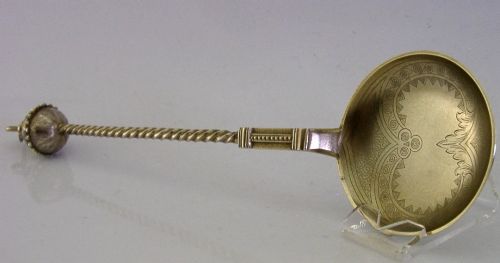
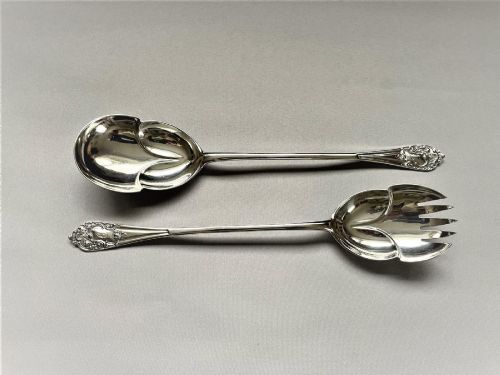
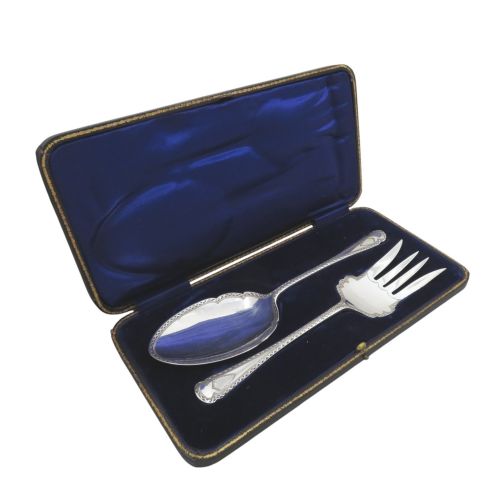
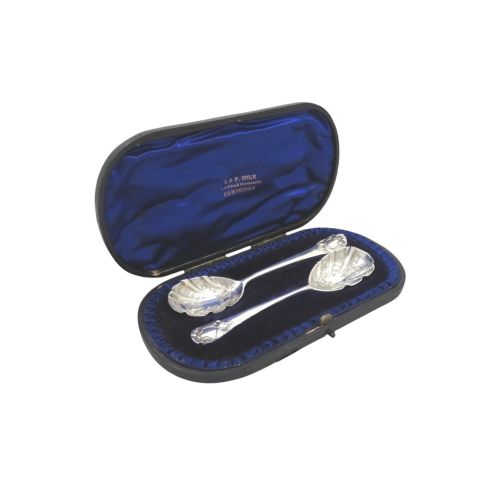
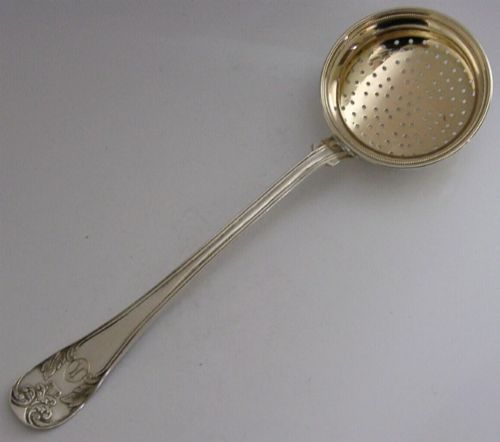
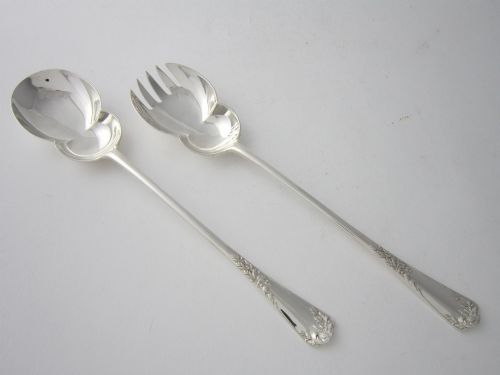
Edwardian silver serving spoons encompass large flatware pieces created during the 1900s, including dedicated salad servers, berry spoons, jam spoons, and sugar sifter ladles. These implements frequently appear as matched pairs housed in fitted velvet or leatherette cases.
While the dominant period is the Edwardian decade, the selection extends to Victorian and Art Nouveau examples alongside occasional Danish and Swedish solid silver designs. Specialised forms such as rat tail bowls, shell-shaped bowls, and apostle terminals reflect the stylistic variety available.
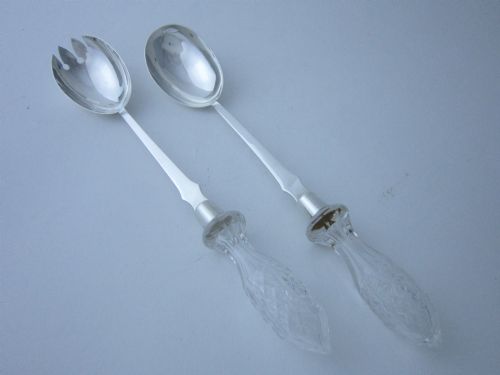
Makers working within this span produced both plain sterling silver and silver gilt versions, sometimes incorporating cut glass elements or pairing the spoons with matching forks and butter knives.
Materials and Technique
The primary material is sterling silver, shaped into heavy bowls and handles, often supplemented by a layer of silver gilt to enrich the interior of the bowl. Pieces incorporate fitted presentation boxes lined with velvet and leatherette to protect the metal.
Manufacturing techniques combine traditional silversmithing with specialised piercing, engraving, and rat tail reinforcement. Silver plate alternatives also occur alongside solid silver items bearing hallmarks from assay offices such as Sheffield and Chester.
Listings incorporate solid silver, silver gilt, and silver plate utensils alongside fitted velvet and leatherette presentation cases.
Craftsmanship and Weight
Quality rests in the gram weight of the solid silver and the crispness of any pierced or chased ornamentation on the bowl and handle. Heavier pairs indicate substantial metal content rather than thin gauge construction.
The presence of an original fitted case lined in velvet or leatherette preserves the set and elevates the overall standard. Finer execution shows in the precision of silver gilt application and the clarity of maker marks and assay stamps.
Oliver Barker·Whiting Co.·Robert Stebbings·Mappin & Webb
The Edwardian Silver Serving Spoons Glossary
- Silver Gilt
- Silver that has been coated with a thin layer of gold on the surface, commonly applied to the interior bowls of serving spoons. This technique provides a warm contrast to the polished sterling silver exterior.
- Rat Tail
- A tapering tongue-like ridge on the back of a spoon bowl where it joins the handle. This traditional feature provides structural reinforcement to larger serving implements.
- Sugar Sifter
- A specialised ladle featuring a pierced or perforated bowl designed for dusting powdered sugar over fruit or desserts. These items often appear in Scandinavian silver designs.
- Trefid Pattern
- An early style of flatware handle shape featuring a lobed terminal divided into three parts. This form appears on cased Edwardian serving pieces mimicking historical styles.
- Apostle Spoon
- A spoon decorated with the figure of an apostle or saint at the end of the handle. Edwardian examples occasionally emerge in cased pairs from regional assay offices.
Edwardian Silver Serving Spoons: Frequently Asked Questions
What are Edwardian silver serving spoons used for?
These implements were designed for serving specific foods at the dining table, such as salads, berries, jam, or preserves. Their larger scale and decorative bowls distinguished them from standard flatware.
Many sets include matching forks or ladles housed in fitted presentation cases for formal dining occasions.
How do I identify an Edwardian silver serving spoon?
Identification relies on examining the hallmarks stamped on the metal, which indicate the assay office, date letter, and sterling standard. Edwardian pieces generally date from the period surrounding the reign of Edward VII.
Stylistic cues such as Art Nouveau curves or traditional berry spoon embossing also help narrow down the production era.
Are these spoons usually found in pairs?
Many examples on the market survive as matched pairs, particularly salad servers and berry spoons. They frequently rest inside original velvet or leatherette lined presentation boxes.
Single spoons and larger boxed sets containing three or more pieces also occur within the selection.
What is the difference between solid silver and silver plate?
Solid silver items consist entirely of sterling grade metal throughout the handle and bowl, bearing official hallmarks confirming the silver standard. Silver plate items feature a base metal covered by a thin surface layer of silver.
Both categories appear across Victorian and Edwardian serving utensils.