





Hallmarked Silver Salts
Hallmarked silver salts sit upon dining tables to hold table salt, offering refined craftsmanship from past centuries for modern use.
Hallmarked Silver Salts
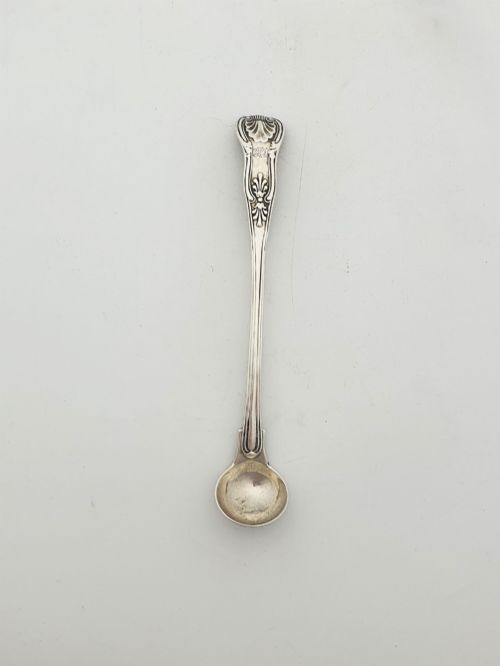
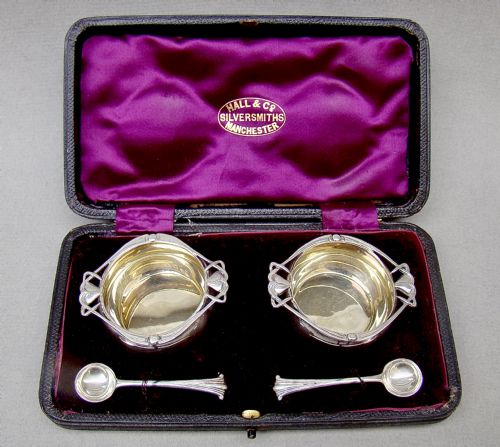
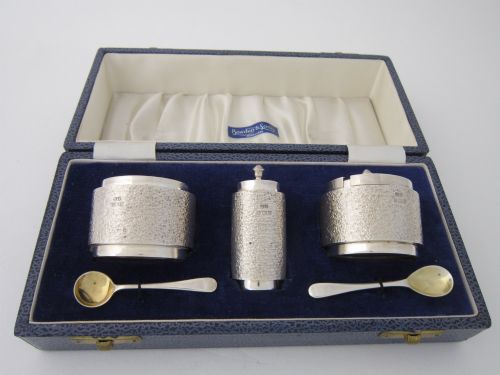
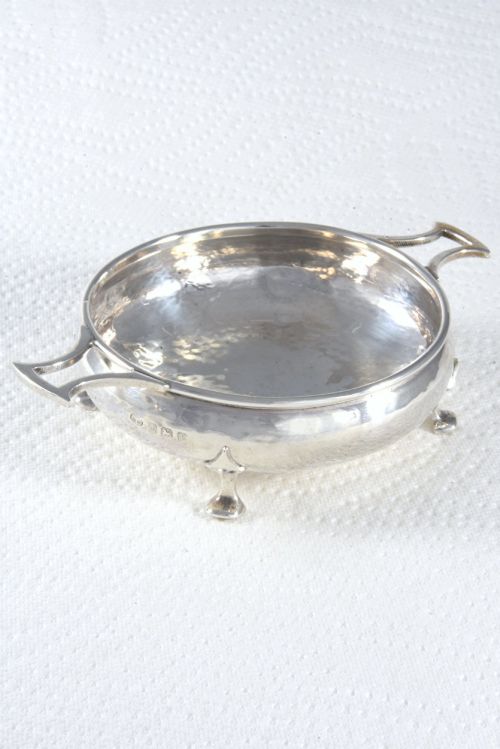
Hallmarked silver salts comprise small open vessels designed to hold salt on the dining table, appearing frequently as matched pairs from the Victorian and Edwardian eras. Makers shaped these pieces in open forms like cauldrons or bowls, alongside covered condiment pots and complete cruet sets. The evidence spans Georgian, Victorian, Edwardian, and George V periods, showing distinct shifts in domestic dining habits over time.
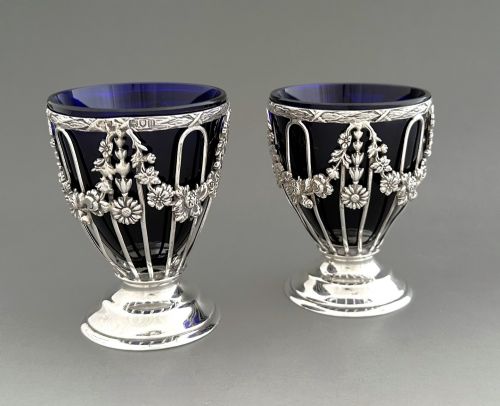
Buyers encounter various forms ranging from simple open salt cellars to elaborate novelty shakers shaped as owls or babies, accompanied by glass liners in cobalt or clear cut glass. These tableware items often arrive with matching pepperettes or mustard pots as part of larger condiment sets. The hallmarks stamped into the metal provide direct records of the assay office, city, and year of creation.
Materials and construction
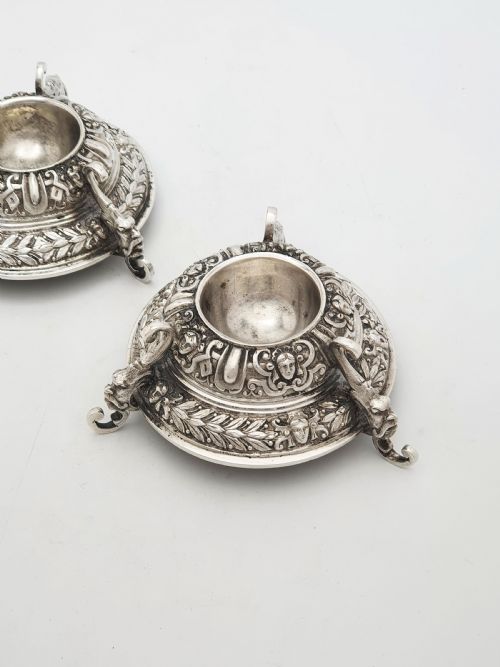
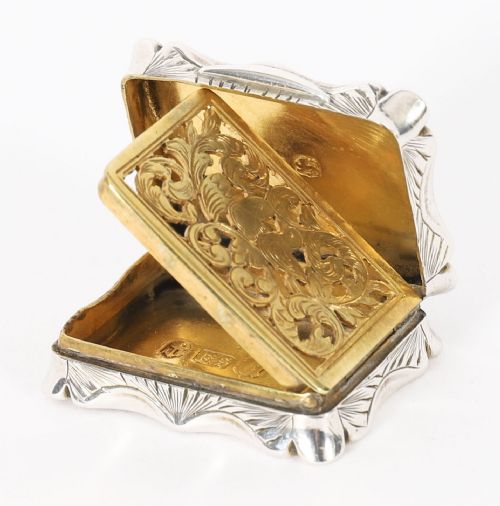
Silversmiths constructed these items primarily from sterling silver, occasionally applying silver gilt to the interior surfaces to protect the metal from corrosive salt. Many open salt cellars incorporate fitted glass liners in cobalt or clear hues, held securely within pierced silver wirework or solid metal bodies. Makers also utilised cast components for heavier cauldron salts and delicate hand-chasing for decorative floral or geometric motifs.
Makers utilised traditional techniques such as spinning, casting, and piercing to achieve sturdy yet ornamental dining accessories. Assay offices in London, Birmingham, Sheffield, and Chester stamped official hallmarks onto the silver to guarantee metal fineness and trace the piece to its workshop origin.
Hallmarked Silver Salts Retail Price Guide 2026
Typical asking prices for hallmarked silver salts among the pieces listed under this phrase on Sellingantiques today, from the lower quarter to the upper quarter. They describe what is for sale here now, not the wider market.
Victorian silversmiths fashioned diminutive novelty salt and pepper shakers shaped precisely like human babies and woodland owls.
Distinctions in quality
The clarity and completeness of the official hallmarks contribute significantly to the standing of a piece, ensuring verifiable age and origin. Intact cased sets and heavy gauge silver construction indicate higher initial manufacture standards and better preservation over time.
Samuel Pemberton·Horton and Allday·Edward Smith·G H James and Co·Thomas Johnson·Wilmot Manufacturing Co·Viners·Heath and Middleton·William Aitken·Daniel and Charles Houle
The Hallmarked Silver Salts Glossary
- Hallmarked silver
- Precious metal stamped with official marks indicating purity, maker, assay office, and year of production. These marks authenticate the silver content and provide historical provenance.
- Salt cellar
- An open vessel placed on the dining table to hold salt before the advent of mechanical shakers. They frequently require a small spoon to dispense the contents.
- Cruet set
- A matched assembly of bottles, casters, or pots holding condiments like oil, vinegar, salt, and pepper. They rest in a dedicated stand or frame.
- Silver gilt
- Sterling silver coated with a thin layer of gold on the surface. This technique prevents the salt from tarnishing the interior of open cellars.
Hallmarked Silver Salts: Frequently Asked Questions
How do I use antique salts today?
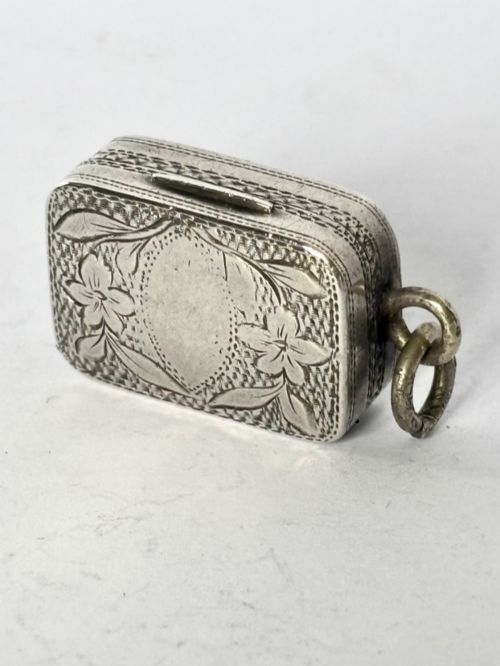
Antique hallmarked silver salts function well as open salt cellars on a modern dining table, or as small decorative dishes for rings and trinkets.
Their compact size allows them to sit easily on desks, dressing tables, or sideboards without occupying excessive space.
Why do some salts have glass liners?
Glass liners protect the sterling silver from the corrosive chemical reaction caused by direct contact with table salt over extended periods.
Cobalt glass inserts also provide a striking visual contrast against pierced or openwork silver frames.
How do I read silver hallmarks?
Hallmarks typically include a maker's mark, a standard purity mark such as a lion passant for sterling, a city mark indicating the assay office, and a date letter.
Reference books and online registry charts help match the specific date letter shape to the exact year of assay.
What is the difference between a salt cellar and a pepperette?
Salt cellars are open bowls designed for guests to spoon out salt, whereas pepperettes are closed shakers with pierced lids for sprinkling pepper.
Both items frequently appear together as matching pairs within larger condiment sets.