


Hallmarked Silver Pitcher
A hallmarked silver pitcher brings tactile weight and bright reflection to a table, spanning Georgian tankards to Victorian claret jugs.
Hallmarked Silver Pitcher
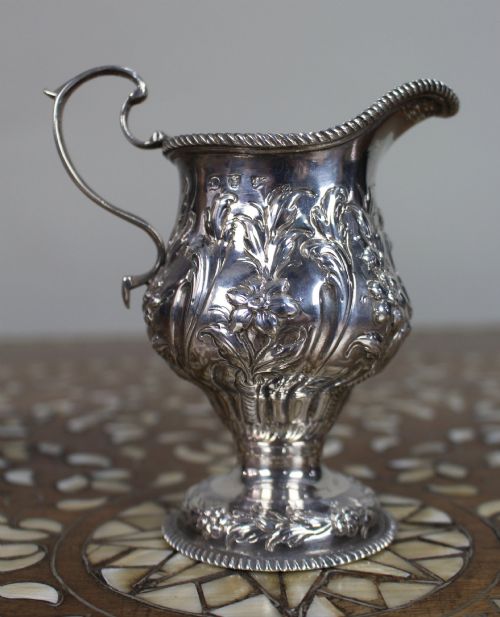
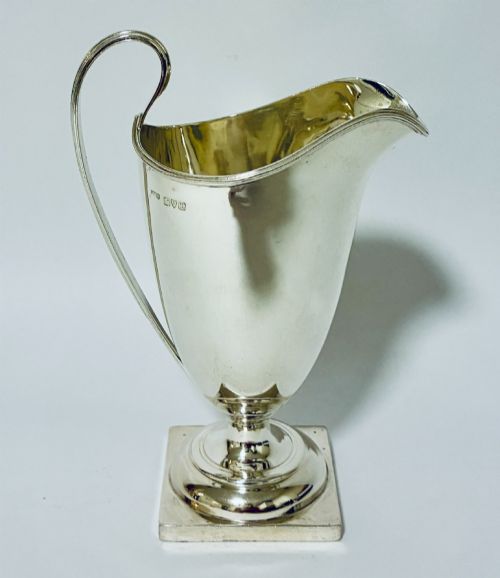
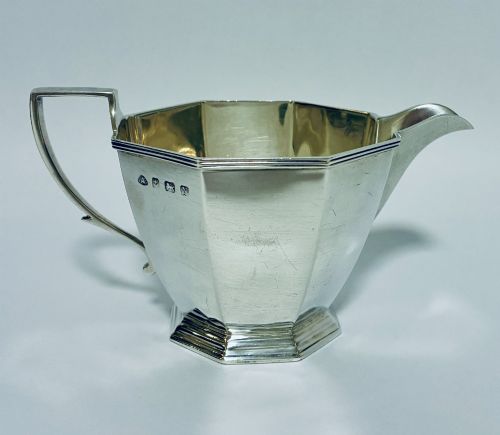
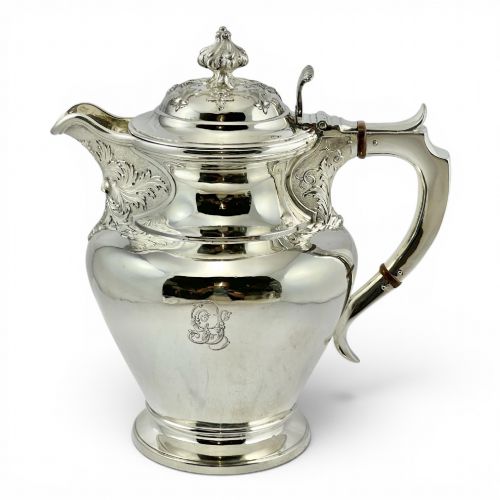
When you search for a hallmarked silver pitcher, you encounter a diverse group of holloware spanning multiple centuries and reigns. The selection includes Georgian lidded tankards, Victorian claret jugs, Edwardian watering cans, and various cream jugs or sauce boats bearing official assay office stamps.
You are most likely to meet Victorian and George V examples on this page. These encompass silver-mounted cut glass claret jugs, heavy sterling milk jugs, and smaller creamers designed for domestic service.
The forms range from utilitarian water vessels and sauce boats to decorative table pieces with intricate Celtic style decoration or scroll design glass bodies.
How they were made
Silversmiths shaped sterling silver into substantial bodies through hammering, casting, and soldering. Handles, hinges, and finials such as lions and shields were cast separately and attached securely to the main vessel.
Cut glass and hobnail cut crystal bodies appear frequently, fitted with silver mounts, rims, and hinged lids. Wood, silk, velvet, leather, and cane sometimes supplemented the primary materials, particularly in handles and fitted presentation sets.
Listings span from the mid-eighteenth century to the mid-twentieth century, encompassing Georgian, Victorian, and Edwardian periods.
What varies in quality
The weight of the sterling silver and the crispness of the hallmarks set individual pieces apart. Deeper relief work on decoration and solid construction in handles and hinges indicate superior manufacture.
In glass and silver combinations, the clarity of the cut crystal and the snugness of the silver mount determine the standard of the piece. Well-proportioned spouts and balanced handles separate domestic utility items from finer presentation examples.
George Unite·Robert Pringle & Sons
The Hallmarked Silver Pitcher Glossary
- Hallmark
- Official stamps punched into silver that indicate the maker, standard of purity, assay office, and year of testing. These marks provide the primary evidence for dating an antique.
- Claret jug
- A tall vessel designed for serving red wine, typically featuring a glass body with a silver handle, collar, and hinged lid. Victorian makers often produced elaborate versions with cut crystal.
- Sauce boat
- An open vessel with a lip and handle used for serving gravies or sauces, frequently raised on three small feet. They appear in pairs or singly from the Georgian period onward.
- Sterling silver
- An alloy consisting of 92.5 percent silver and 7.5 percent other metals, usually copper, to provide durability. Most British pieces of consequence carry this standard.
- Finial
- A decorative ornament attached to the top of a lid, such as the lion and shield motifs found on Victorian jugs. It provides a thumbpiece to lift the hinged cover.
Hallmarked Silver Pitcher: Frequently Asked Questions
How do I date a silver pitcher?
You date a hallmarked silver pitcher by reading the punch marks stamped into the metal. These include a date letter and assay office symbol which point to a specific year and city.
Style, handle formation, and decorative motifs also offer clues to the period, though the official hallmarks remain the definitive guide.
Can I use these pitchers for serving drinks?
Most solid silver and glass pitchers remain fully functional for serving water, wine, or cream at the table. Regular use requires gentle hand washing without harsh abrasives to protect the metal and glass.
For pieces with delicate glass bodies or antique wooden handles, careful handling prevents accidental damage during pouring.
Why do some pitchers have glass bodies?
Glass bodies became popular in the nineteenth century to showcase the colour and clarity of wine or water within. Silversmiths mounted these vessels with decorative silver rims, handles, and hinged lids.
Hobnail cutting and unusual scroll designs on the glass added textural contrast to the smooth polished silver mounts.