


Hallmark Silver Vase
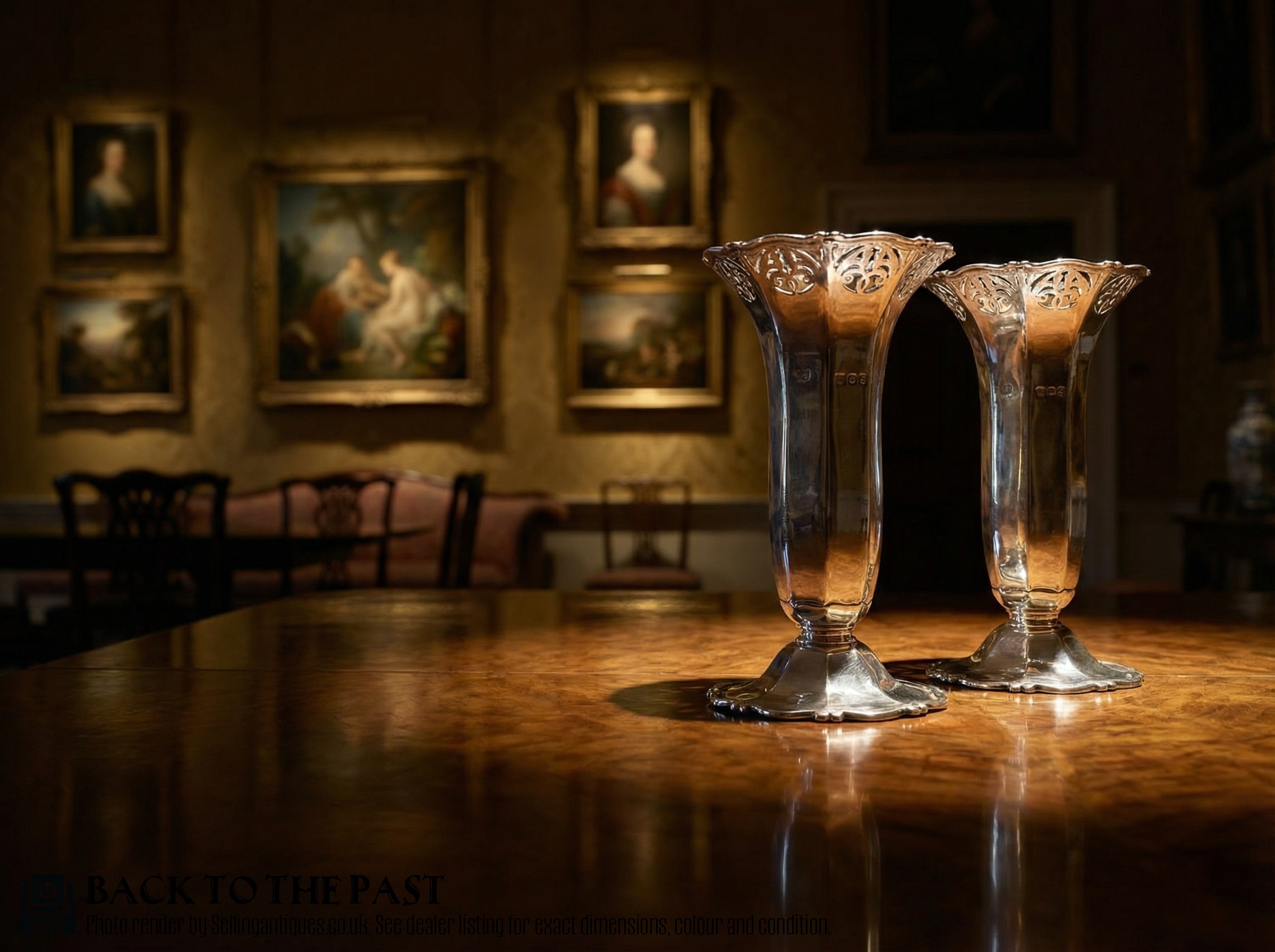
These hallmark silver vase pieces are solid silver and glass table vessels bearing official assay office stamps, collected for their period character and craftsmanship.
Hallmark Silver Vase
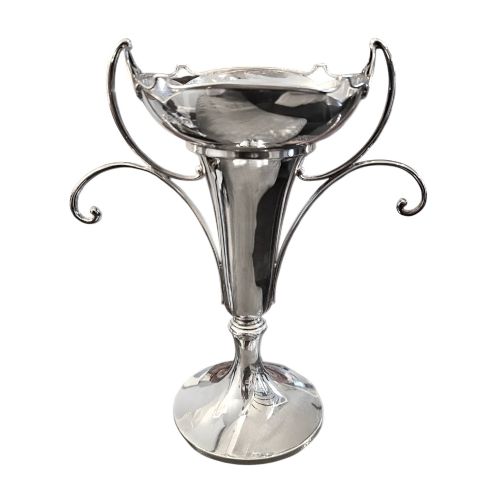
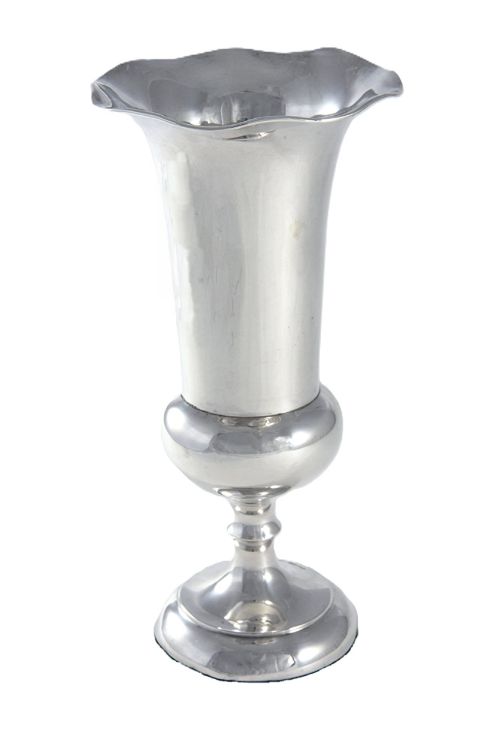
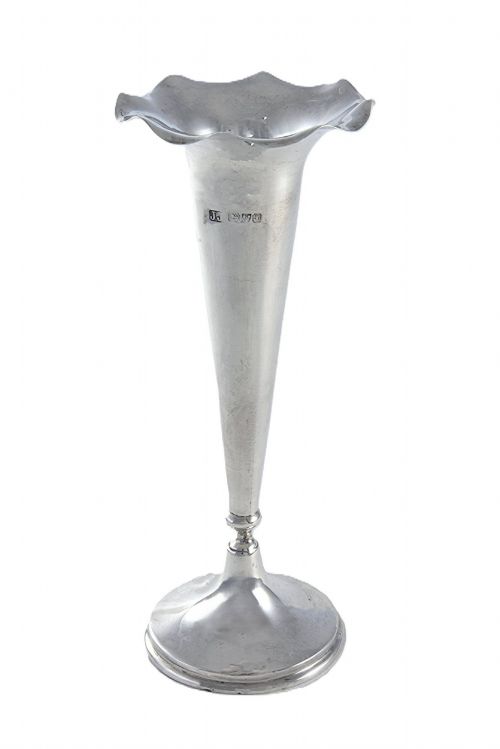
When you search for hallmark silver vase items, you encounter pieces primarily from the Victorian, Edwardian, and early twentieth century periods. The selection spans straightforward trumpet shapes and posy vessels alongside complex epergnes and glass vessels with metal collars.
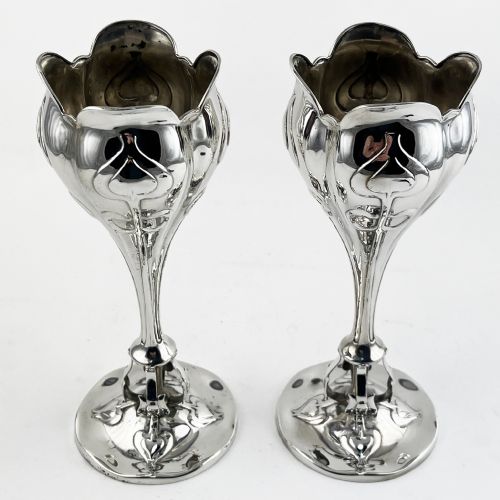
Edwardian pieces dominate the range, frequently showing slender silhouettes or organic motifs typical of the era. Makers utilised sterling silver alongside glass inserts to create vessels intended for floral displays on dining tables and mantelpieces.
Materials and construction methods
Silversmiths formed these objects using sterling silver, often combining the metal with clear or cut glass bodies. Assay offices stamped the silver components with hallmarks indicating the year, town, and metal purity.
Manufacturing techniques involved spinning or hammering sheet silver into trumpet and flute profiles, sometimes mounting them on weighted bases for stability. Glass flutes and collars were shaped separately before assembly with the hallmarked metal elements.
Listings for hallmark silver vase items feature Edwardian and Victorian periods, with materials spanning sterling silver and cut glass.
Distinctions in construction and design
The standard of a hallmark silver vase depends on the weight of the metal and the crispness of the assay stamps. Thicker gauge silver maintains its structural integrity better over decades of polishing and handling.
Design complexity also separates standard vessels from higher quality examples, particularly where silversmiths incorporated sculptural Art Nouveau styling or paired the metal with cut glass components.
Hukin & Heath·Henry Matthews·Deakin & Francis·Goldsmiths & Silversmiths
The Hallmark Silver Vase Glossary
- Hallmark
- An official stamp applied by an assay office to guarantee the purity of precious metal. These marks identify the maker, the town of testing, and the year of manufacture.
- Sterling silver
- An alloy consisting of ninety-two point five percent silver and seven point five percent other metals, usually copper. This standard composition provides the durability required for domestic tableware.
- Epergne
- A central table ornament featuring a main vessel with multiple branching holders or flutes. They were used for displaying flowers or fruit during formal Victorian and Edwardian meals.
- Trumpet vase
- A vessel characterised by a narrow base that flares outward toward the rim in the shape of a musical horn. This profile supports tall floral stems effectively.
Hallmark Silver Vase: Frequently Asked Questions
What do the stamps mean?
Hallmarks comprise individual punches showing the maker's mark, the standard of silver purity, the assay office town mark, and a date letter. Together they verify the exact origin and year the metal was tested.
Reading these symbols allows collectors to trace the piece back to specific workshops and cities across Britain during the Victorian and Edwardian eras.
How were they used?
These vessels served primarily as table decorations for holding cut flowers, posies, or single stems during formal meals and domestic gatherings. Their portable sizes made them suitable for moving between rooms.
Some configurations, such as epergnes and trumpet vessels, held complex arrangements while smaller posy pieces accommodated simple seasonal blooms.
How do I clean silver safely?
Cleaning requires a soft cloth and a specialised silver polish formulated to remove tarnish without abrading the surface. Care must be taken around engraved details and assay marks to preserve the crispness of the metal.
If the piece incorporates glass components, removing them before polishing prevents moisture and cleaning agents from becoming trapped between the materials.
How do I date an Edwardian piece?
Dating relies heavily on the specific date letter stamped within the hallmark, which corresponds to the assay office records for that year. Stylistic clues such as slender trumpet profiles and organic motifs also point to the Edwardian period.
Comparing the maker's mark against known working dates helps confirm the manufacturing era when records are complete.