





Hall Storage Chest
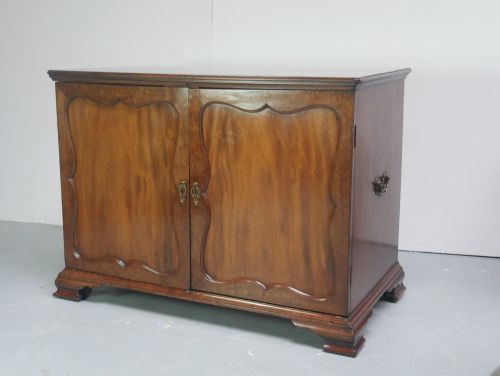
A hall storage chest provides a practical seat and a concealed compartment, uniting hallway tidiness with period character.
Hall Storage Chest
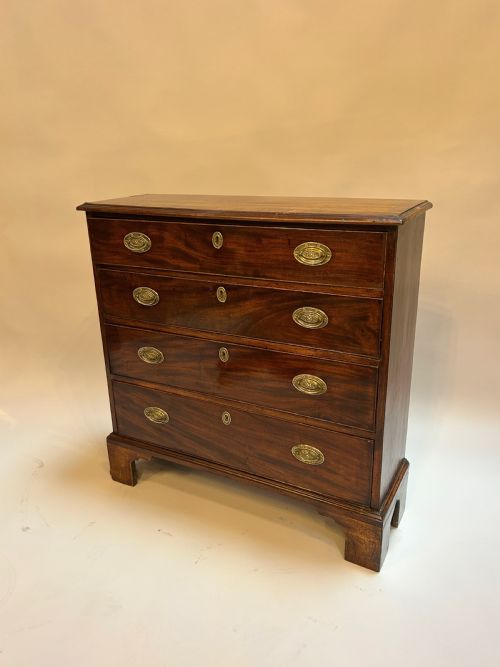
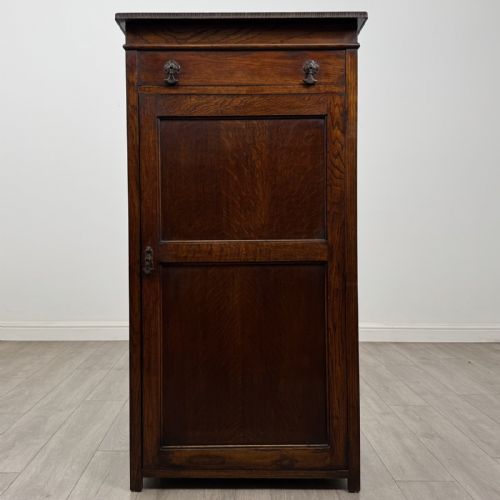
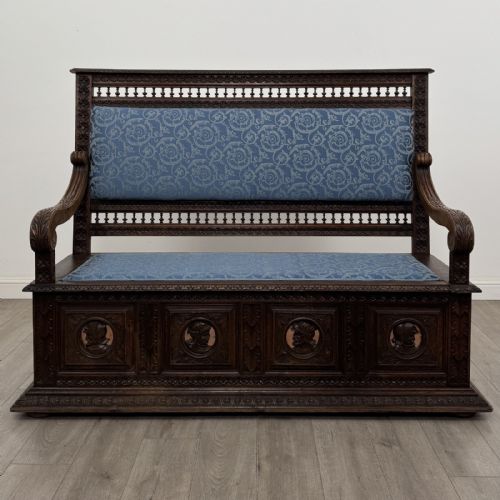
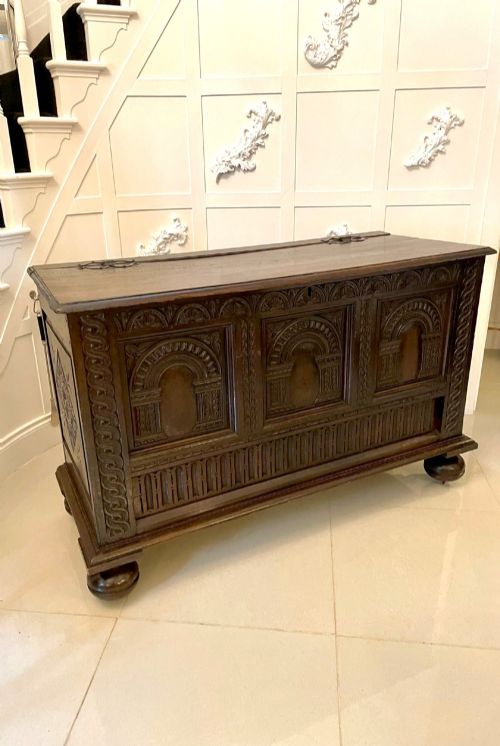
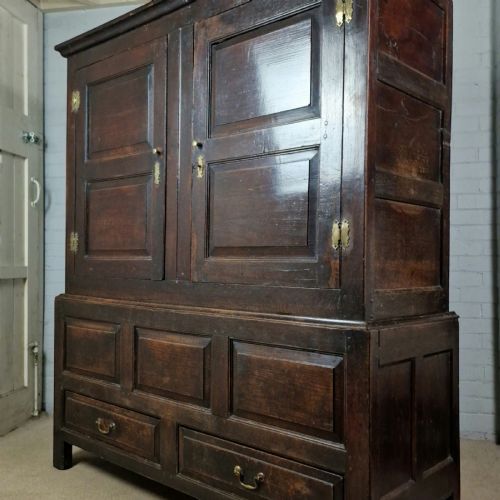
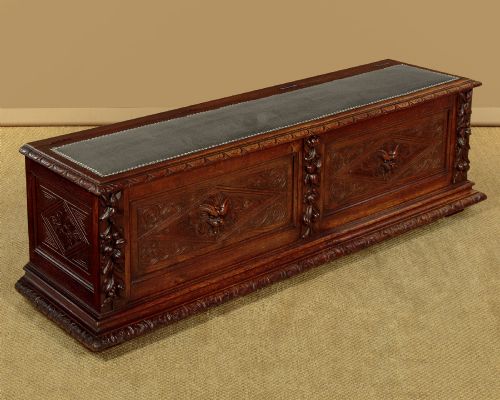
A hall storage chest serves as both a seat and a receptacle for household items, appearing in forms such as monks benches, coffers, settles, and mule chests. When exploring a hall storage chest, buyers encounter pieces intended for hallways, boot rooms, and entrance spaces to manage coats, blankets, and boots.
The pieces on this page span the 17th century through the early 20th century, encompassing Georgian, Victorian, and Edwardian periods alongside revival styles. Oak forms the most common material foundation, often complemented by mahogany, walnut, and pine.
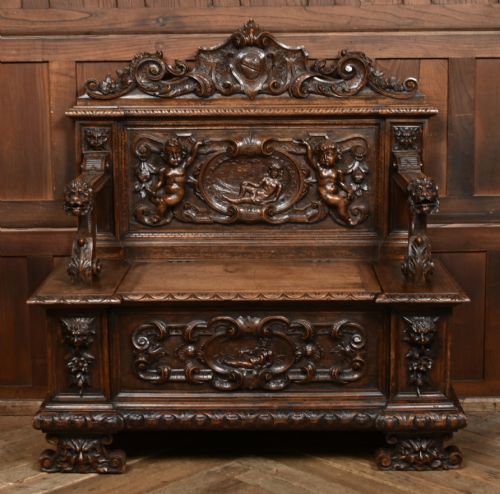
Makers and craftsmen utilised timber panels, lift-up lids, and hinged seats to create functional furniture that doubles as benches. Continental and British workshops produced these storage items with varying degrees of carved ornamentation, from plain panels to elaborate Green Man motifs.
Materials and construction
Cabinetmakers and joiners relied primarily on solid oak, mahogany, and walnut, employing frame-and-panel construction to accommodate seasonal timber movement. Iron hinges, brass handles, and leather details provided the functional hardware for lids, drawers, and drop-down backs.
Carpenters shaped these woods using hand tools, executing mortise and tenon joints for structural stability in heavy seating furniture. Carved decoration on panels and settles was typically executed by hand, utilising gouges and chisels to produce relief patterns, linenfold designs, or figurative motifs.
Hall Storage Chest Retail Price Guide 2026
Typical asking prices for hall storage chest among the pieces listed under this phrase on Sellingantiques today, from the lower quarter to the upper quarter. They describe what is for sale here now, not the wider market.
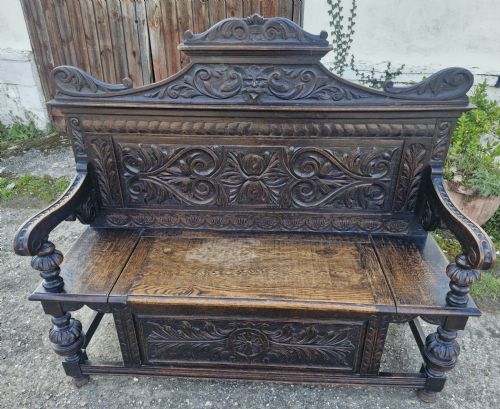
Several Victorian oak hall benches hide cheeky Green Man carvings peering out from the foliage to watch over your hallway clutter.
Assessing quality in storage seating
Quality rests upon the selection of timber and the integrity of the joinery, particularly where lids and hinges bear the daily weight of seating. Pieces constructed from solid hardwoods with tight, pegged joints demonstrate superior craftsmanship compared to those utilising thinner secondary woods.
The crispness and depth of hand-carving distinguish finer examples from mass-produced or later revival items. Original hardware, undisturbed surface patination, and intact internal compartments elevate a piece beyond standard utilitarian examples.
Walker & Hall·Muirhead Moffat & Co
The Hall Storage Chest Glossary
- Monks bench
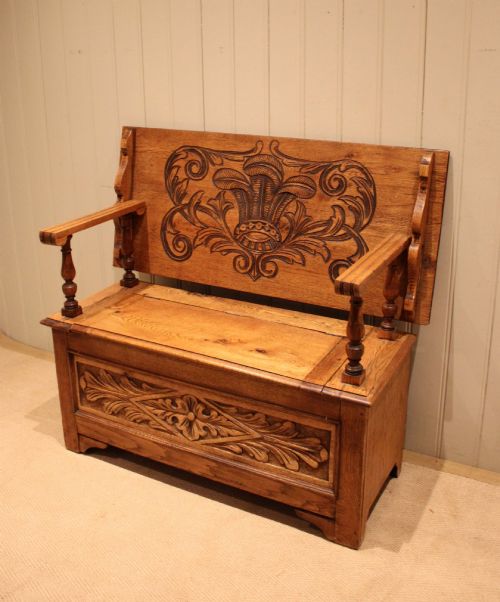
- A convertible piece of furniture featuring a hinged back that tilts forward over the arms to form a table top above a box seat.
- Coffer
- A large wooden chest with a hinged lid, traditionally used for storing valuables, linens, or dry goods.
- Settle
- A wooden wooden bench with a high back, solid arms, and an enclosed base utilised for storage.
- Mule chest
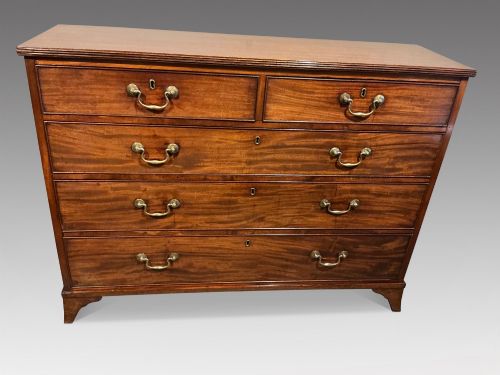
- A chest of drawers set beneath a lift-up compartment, combining the storage functions of a coffer and a chest of drawers.
- Green Man
- A sculptural architectural ornament depicting a human face surrounded by or disgorging foliage, common in revival woodwork.
Hall Storage Chest: Frequently Asked Questions
What is a monks bench?
A monks bench is a dual-purpose item featuring a solid seat with a storage compartment underneath and a pivoting backrest. When pushed forward, the back rests on the arms to create a flat table surface.
This design allowed smaller homes to economise on floor space by combining a seating area, a storage chest, and a table into a single timber item.
How do I distinguish oak periods?
Early pieces from the 17th and 18th centuries display hand-riven timber, pegged joinery, and simpler panel construction influenced by utilitarian needs. Later 19th-century and Edwardian pieces often incorporate revival styles like Jacobean or Gothic, featuring machine-sawn components and heavier, deeper machine or hand carving.
Examining the underside, interior boards, and hinge types reveals the manufacturing methods characteristic of each specific era.
What maintenance do these chests need?
Maintain antique wood surfaces by applying appropriate beeswax sparingly to nourish the grain and preserve the natural patination. Avoid modern chemical sprays and keep the timber away from extreme moisture fluctuations to prevent warping.
Period hinges and metal fittings benefit from occasional light cleaning with a dry cloth to prevent dust accumulation.