







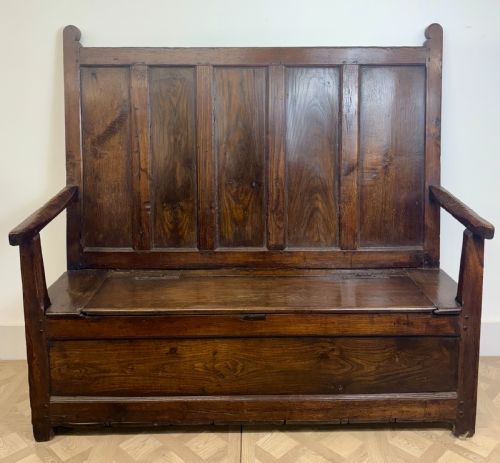
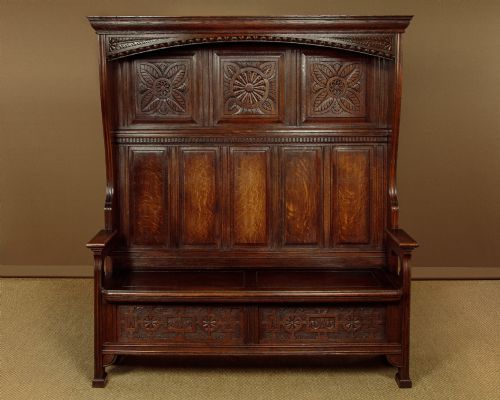
Hall Storage Box
A hall storage box gives an entranceway practical seating and concealed space, spanning centuries of regional cabinetmaking.
Hall Storage Box
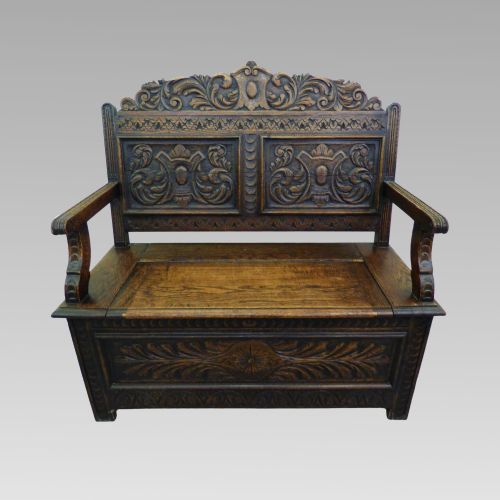
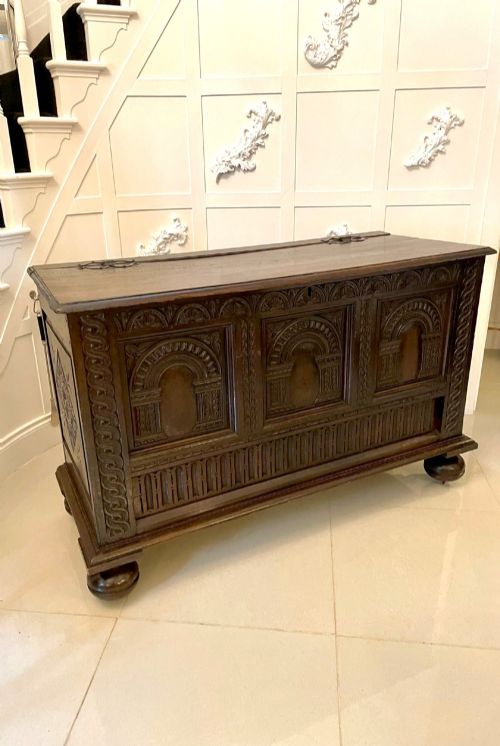
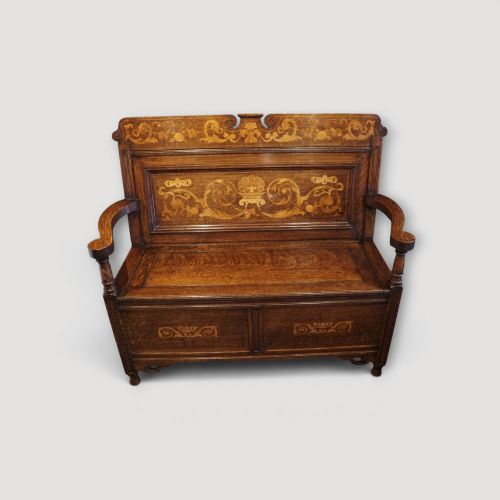
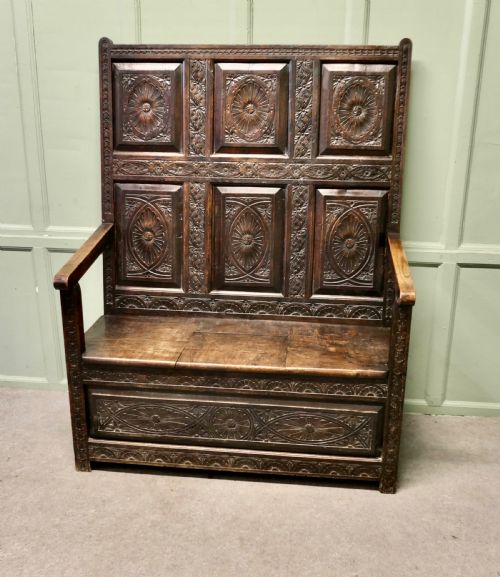
A hall storage box primarily takes the form of a settle, coffer, or bench with a lift-up lid, spanning periods from the seventeenth century through to the Edwardian era. These pieces combine a seat for an entrance hall with an integrated compartment beneath to hold cloaks, boots, or household goods.
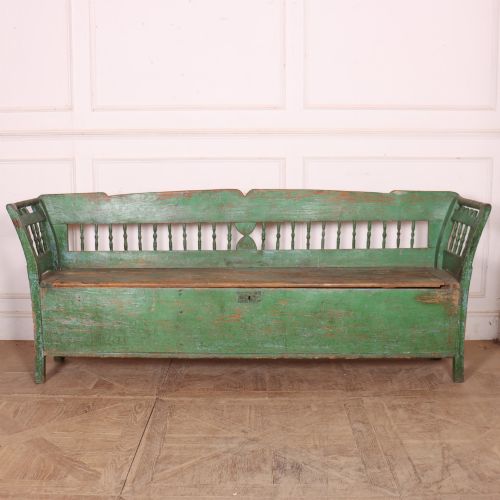
The versions most commonly met on this page are oak and pine box settles from the Georgian and Victorian periods, often showing regional characteristics such as high panelled backs or spindle details. Alongside these, buyers find seventeenth-century coffers and later Edwardian variations incorporating carved decoration or inlay.
Materials and construction
Solid oak and pine dominate the construction of these items, shaped using traditional joinery methods such as mortise and tenon frames and pegged joints. Many seventeenth and eighteenth-century examples rely heavily on sturdy oak boards to form the box base and high panelled back.
Surface treatments vary between waxed finishes that highlight the natural grain of the timber and original painted or grey-painted surfaces found on continental and country pieces. Secondary woods like ash and walnut appear occasionally in specific regional frameworks or decorative panels.
Hall Storage Box Retail Price Guide 2026
Typical asking prices for hall storage box among the pieces listed under this phrase on Sellingantiques today, from the lower quarter to the upper quarter. They describe what is for sale here now, not the wider market.
Some nineteenth-century pine settles arrive complete with layers of old farmhouse grey paint that hint at decades of domestic use.
Assessing quality
Quality rests in the integrity of the timber, the crispness of any hand-carved ornamentation, and the survival of original components like hinges, lids, and feet. Pieces featuring thick, well-figured oak boards and strong structural joinery sit at the higher end of the range.
Proportion and decorative ambition also set examples apart, distinguishing simple utility items from pieces displaying refined Jacobean revival carving, inlay, or canopy tops. The presence of original surface finishes, whether waxed or painted, preserves the historical character that collectors value.
James Shoolbred & Co.·Walker & Hall
The Hall Storage Box Glossary
- Settle
- A wooden bench with a high back, solid arms, and a box seat compartment beneath the squab. It was designed to keep draughts away from the sitter in a hallway or by a hearth.
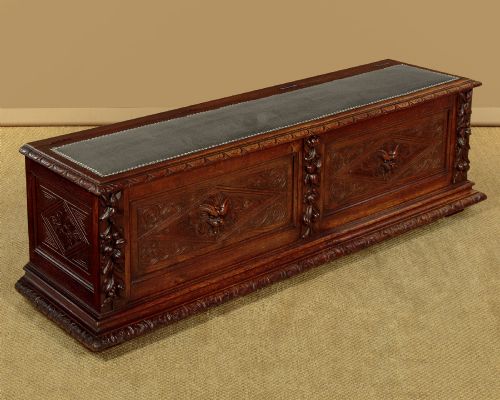
- Coffer
- A large wooden chest used for storage, often fitted with a hinged lid and raised on feet or a low stand. Early examples frequently display carved panels on the front.
- Mule chest
- A chest featuring one or more drawers beneath the main storage compartment accessed via the lid. It bridges the transition between a traditional coffer and a chest of drawers.
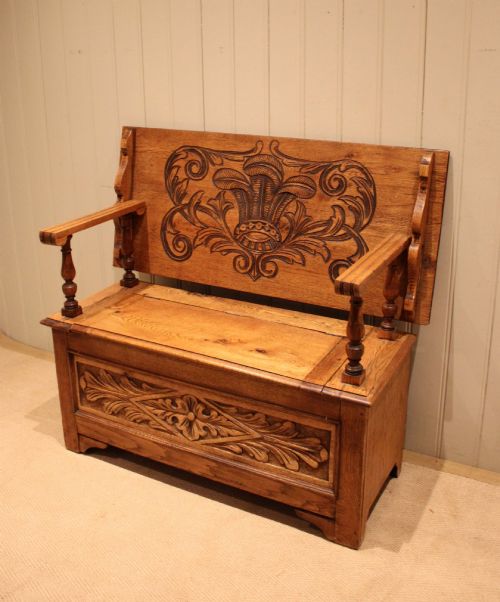
- Monks bench
- A convertible piece of furniture featuring a hinged back that folds down over the arms to transform a high-backed seat into a table. It provides dual utility in a compact space.
- Cassapanca
- An Italian wooden bench incorporating a large storage chest beneath the seat, often ornamented with carved details. It serves a similar function to northern European settles.
Hall Storage Box: Frequently Asked Questions
What is a hall storage box used for?
These pieces provide a dual function as both a seat and a concealed container for household items.
Historically placed in entranceways, they offered a place to sit while removing footwear and kept outdoor garments out of sight.
How do I tell an 18th-century settle apart from a Victorian one?
Earlier pieces from the eighteenth century typically display hand-pegged oak construction with heavier timber framing and simpler, functional proportions.
Victorian and later interpretations often incorporate revival styles, machine-cut elements, or softer woods like pine finished with paint or wax.
Are pine box settles authentic period pieces?
Pine examples frequently originate from rural continental workshops, such as those in Hungary or Scandinavia, during the eighteenth and nineteenth centuries.
They served as practical farmhouse furniture and often retain their original painted or waxed surfaces.
How should I care for a waxed oak hall box?
Maintain the wood by applying a quality beeswax periodically to nourish the timber and protect the surface from drying out.
Keep the piece away from direct heat sources and sudden temperature fluctuations to prevent the wood from splitting.