
Hall Seat with Storage
A hall seat with storage combines a practical entrance bench with a concealed compartment, offering a traditional place for hats and cloaks.
Hall Seat with Storage
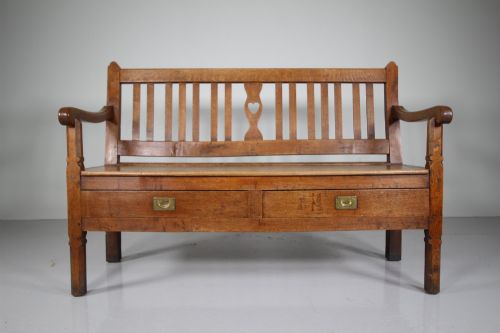
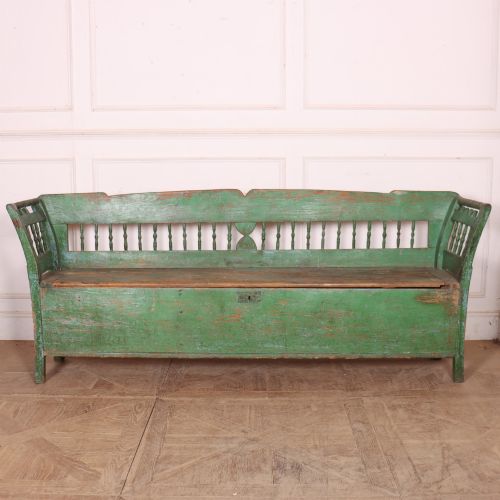
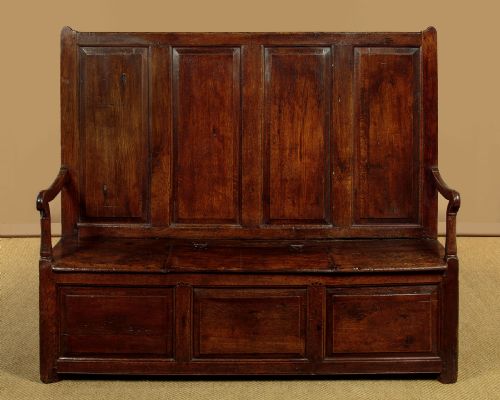
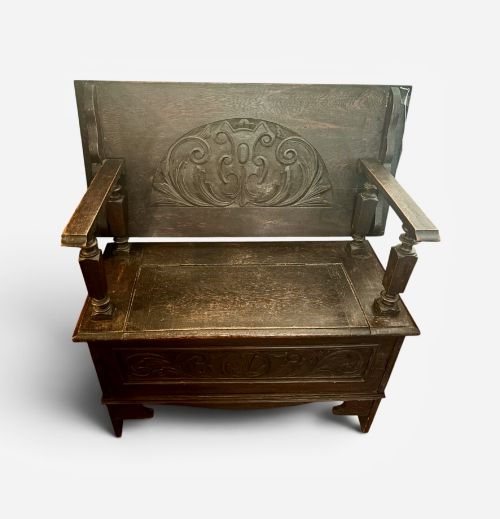
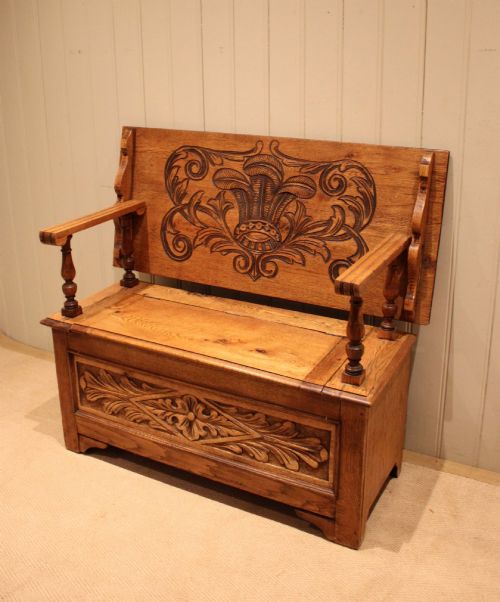
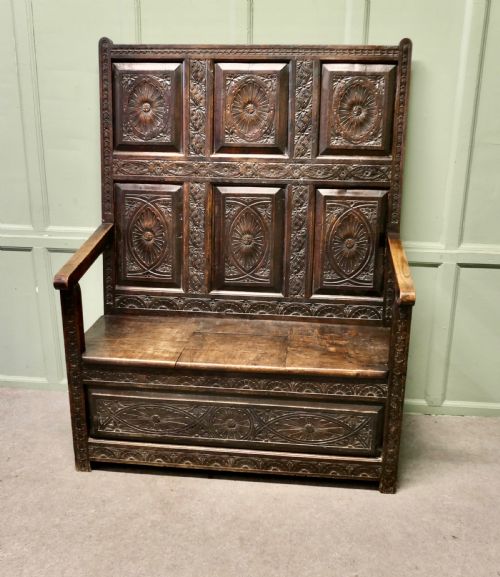
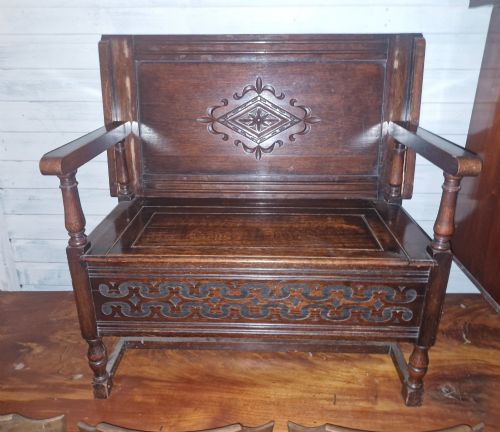
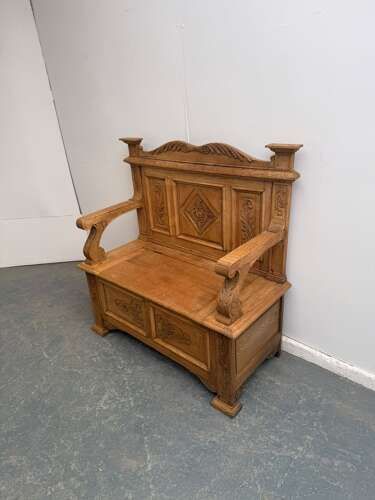
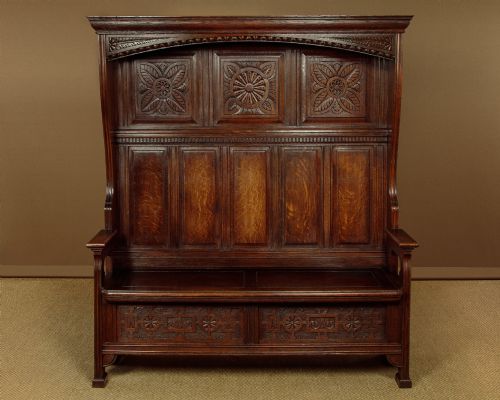
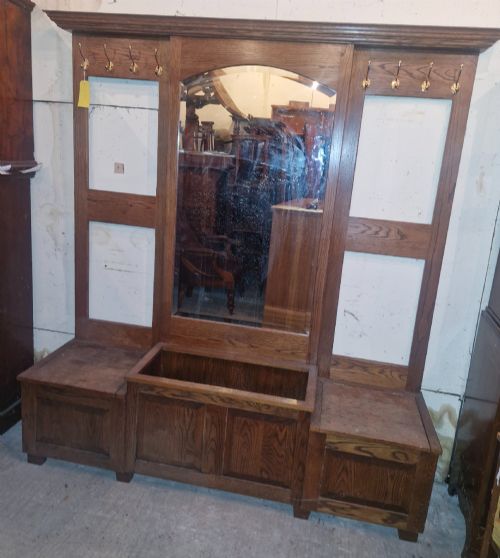
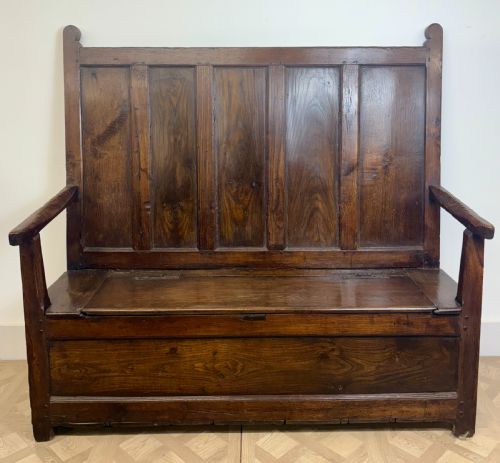
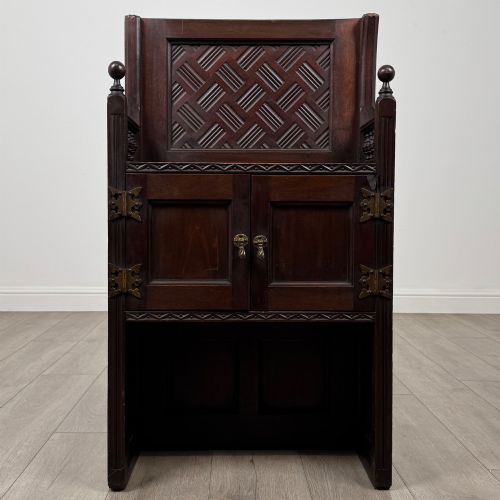
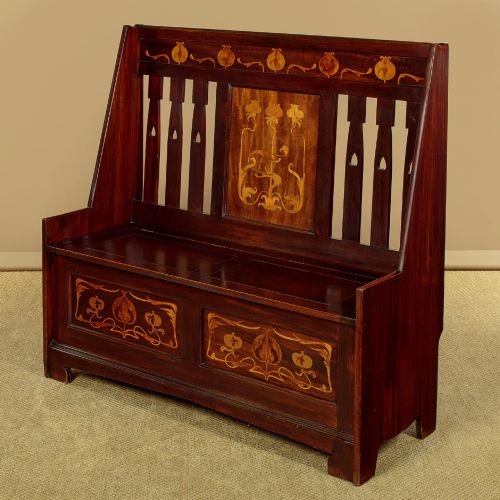
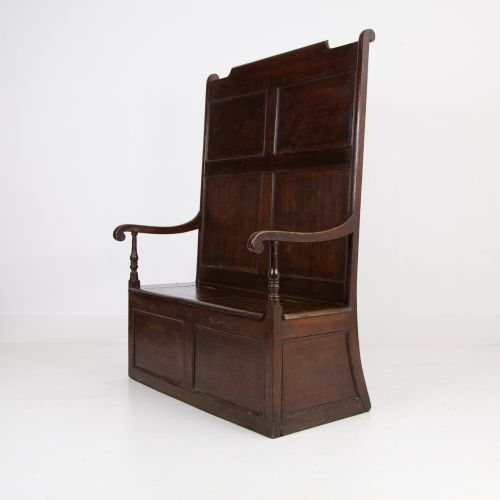
A hall seat with storage serves as a functional entrance piece, spanning forms such as box settles, monks benches, hall benches and hall stands.
The pieces appearing on this page date from the seventeenth century through to the twentieth century, encompassing Georgian, Victorian, Edwardian and Arts and Crafts eras.
Regional variations include Welsh country furniture, French examples, and Anglo-Indian designs alongside English country pieces.
How they were made
Carpenters constructed these items predominantly using solid timbers such as oak, pine, elm, fruitwood, walnut and mahogany.
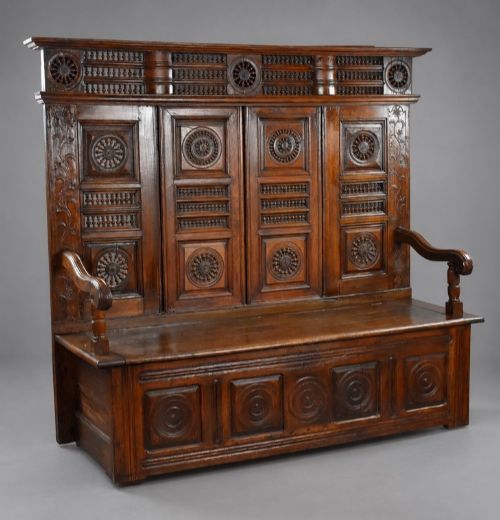
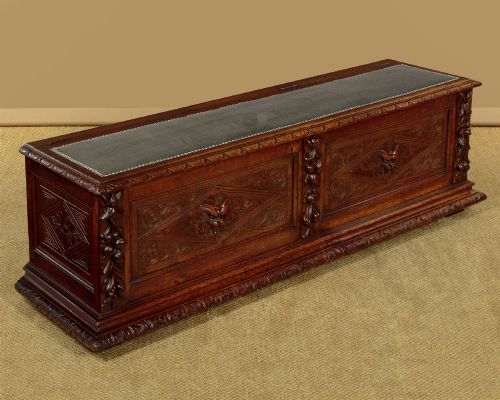
Construction methods rely on traditional joinery, often incorporating panelled backs, lift-up lids, fold-over tops and carved ornamentation.
Detailing on selected pieces includes brass hardware, iron fittings, glass elements and fabric inserts.
Periods represented span from the 17th century through to the Edwardian era and the 1920s.
What varies in quality
The degree of carving and stylistic detail distinguishes simpler vernacular pieces from heavily ornamented examples like Gothic Revival or Arts and Crafts designs.
The integrity of the timber and the survival of original mechanics, such as hinges for lift-up seats and fold-over mechanisms, determine the overall standard.
James Shoolbred and Co·Shapland and Petter·Liberty
The Hall Seat with Storage Glossary
- Box settle
- A wooden bench featuring a high back and a concealed storage compartment beneath the hinged seat. This form kept draughts away from doorways.
- Monks bench
- A convertible seat featuring a fold-over top that transforms the backrest into a table surface. It provides dual functions in compact hallways.
- Hall stand
- An entrance furnishing that combines a seat with storage alongside mirror panels, hooks for coats, and umbrella stands. These pieces coordinated hallway storage.
- Vernacular
- Furniture built by local craftspeople using regional traditions and native timbers rather than following metropolitan stylistic decrees. These items reflect local rural aesthetics.
- Gothic Revival
- A nineteenth-century design movement drawing inspiration from medieval architecture. Pieces display pointed arches, tracery and robust carved motifs.
Hall Seat with Storage: Frequently Asked Questions
How were hall seats used historically?
Historically, these items stood in the entrance halls or parlours of country houses and town dwellings. The enclosed base stored heavy garments and household items, keeping draughts at bay in large, cold entryways.
Convertible versions, such as monks benches, also served as makeshift tables for signing ledgers or taking meals near the door.
How do I care for an antique oak hall seat?
Antique oak benefits from occasional waxing to nourish the timber and maintain its natural lustre. Keep the wood away from direct heat sources and sudden temperature shifts to prevent warping.
Regular dusting with a soft, dry cloth preserves the carved details and historic patination without damaging the surface.
How can I tell the period of a hall seat?
Dating relies on examining the timber species, construction joints, and stylistic vocabulary such as Jacobean revival strapwork or Arts and Crafts simplicity. Hand-cut pegs, tool marks, and the type of hinges used provide clues to the decade of manufacture.
Comparing the decorative motifs, like Green Man carvings or Gothic tracery, helps place the piece within Georgian, Victorian, or Edwardian traditions.