





Hadley Worcester Porcelain
Hadley Worcester porcelain brings together delicate Victorian figure modelling and subtle glaze work that collectors prize for its distinct Orientalist and revivalist character.
Hadley Worcester Porcelain
When you search for Hadley Worcester porcelain, you encounter pieces originating from the late nineteenth and early twentieth centuries, spanning the Victorian and Edwardian periods. The selection includes decorative figurines, intricate candelabra, jardinieres, and pedestal vases.
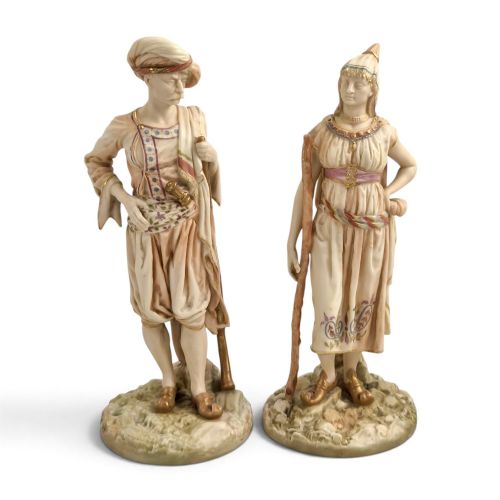
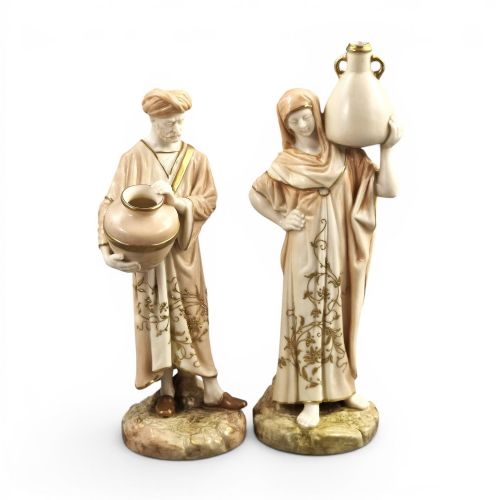
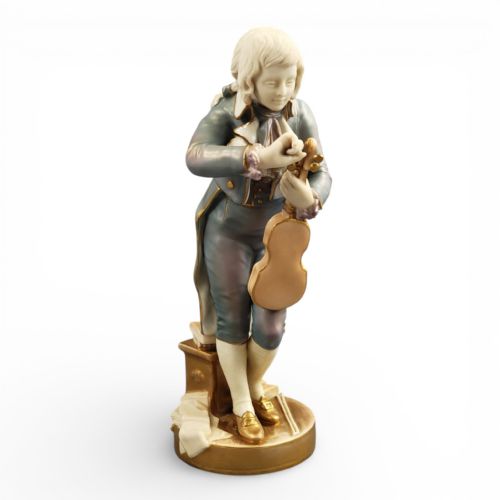
Figural works often depict figures such as water carriers, musicians, and historical or literary characters modelled with considerable detail. These pieces frequently bear the hand of James Hadley or emerge from his associated workshops and factories.
Vases and jardinieres showcase characteristic surface treatments like the blush ivory glaze, accompanied by delicate gilding and enamel highlights. Pieces range from small mugs and bowls to large, ambitious sculptural groups.
Materials and production
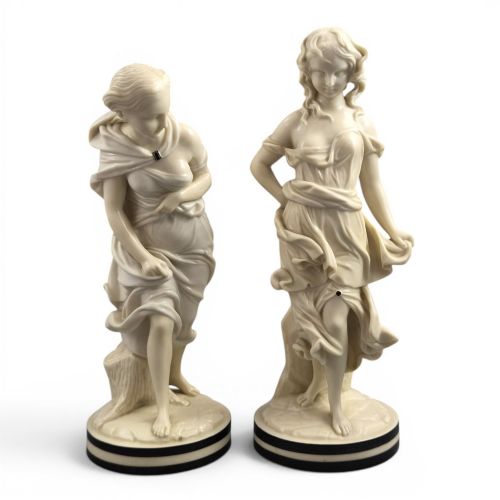
Potters utilised fine porcelain and Parian ware to create bodies capable of holding intricate sculptural detail and delicate modelling. Surfaces received specialised finishes, notably the blush ivory glaze, which provided a soft, matte ground for subsequent decoration.
Makers applied gold leaf, gilding, and enamel work by hand to highlight the contours of figures and ornament vases, candelabra, and bowls. Patent metallic finishes also appear on specific wares, adding a distinct sheen to the ceramic surface.
Hadley Worcester Porcelain Retail Price Guide 2026
Typical asking prices for hadley worcester porcelain among the pieces listed under this phrase on Sellingantiques today, from the lower quarter to the upper quarter. They describe what is for sale here now, not the wider market.
Potters captured domestic and exotic life alike, translating Egyptian musicians, medieval monks, and dancing figures into delicate ceramic form.
Assessing quality in the range
The sophistication of the form also separates standard production from exceptional pieces. Large sculptural groups, candelabra with multiple branches, and complex figural subjects demand greater technical skill in firing and assembly than simple mugs or bowls.
James Hadley·Royal Worcester·Hadley and Sons
The Hadley Worcester Porcelain Glossary
- Blush ivory glaze
- A soft, matte ceramic glaze developed at Worcester that imitates the tone of ivory and accepts delicate enamel and gilt decoration.
- Parian ware
- A fine-grained, unglazed porcelain resembling marble, frequently utilised for Victorian figures and portrait busts.
- Patent metallic
- A specialised ceramic finish producing a lustrous, metal-like sheen on specific Victorian and later porcelain pieces.
- Pot pourri
- A decorative pierced container designed to hold dried scented plant material, often taking the form of a lidded vase or urn.
- Candelabra
- A branched candlestick designed to hold multiple candles, often produced in pairs as decorative garnitures.
Hadley Worcester Porcelain: Frequently Asked Questions
What is Hadley Worcester porcelain?
Hadley Worcester porcelain refers to ceramic wares designed and modelled by James Hadley and produced in association with the Worcester factory. The output encompasses figures, vases, and candelabra.
These pieces emerged during the Victorian and Edwardian eras, reflecting contemporary tastes for Orientalist subjects, classical revivals, and finely painted floral decoration.
What is blush ivory porcelain?
Blush ivory is a signature Worcester ceramic finish characterised by a warm, matte cream ground that resembles genuine elephant ivory. It provided an ideal surface for tinted floral painting and gilt highlights.
This glaze technique became immensely popular during the late nineteenth century and remains a defining characteristic of many Hadley-designed pieces.
How should I display these porcelains?
These decorative porcelains require stable surfaces away from direct sunlight and high-traffic areas to protect delicate enamel work and gilding. Candlesticks and candelabra function best as mantle or table centerpieces.
Keeping pieces in well-lit cabinets prevents dust accumulation in the intricate recesses of figures, pierced vases, and jardinieres.