
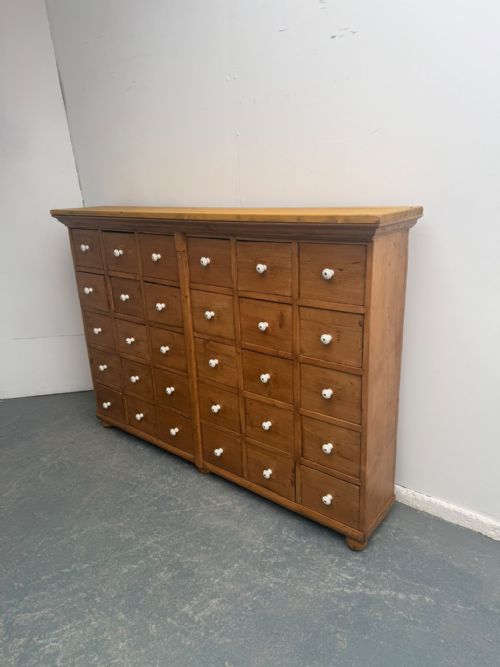
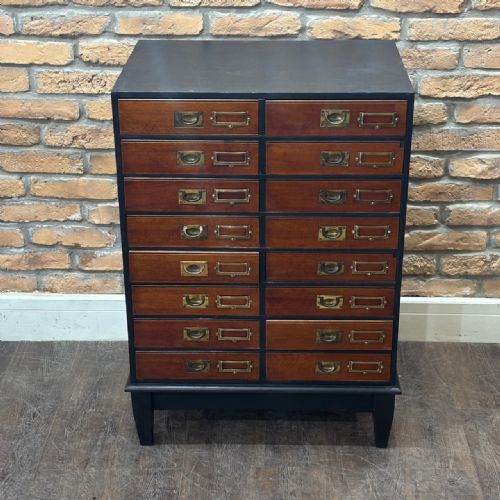
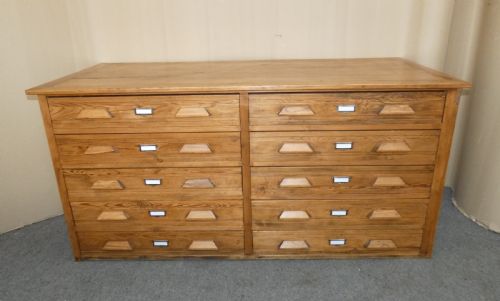

Haberdashery Chest of Drawers
A haberdashery chest of drawers delivers exceptional utility and industrial character to a modern interior.
What They Are
A haberdashery chest of drawers is a utilitarian storage piece originally built for commercial shops, workshops, and retail display. These items span the Victorian era, the 1870s, 1880s, 1890s, and 1920s, reflecting a long history of practical trade use.
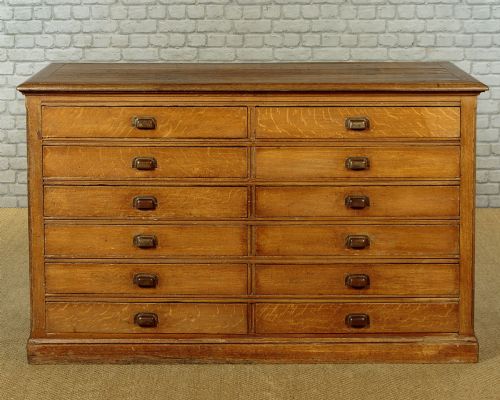
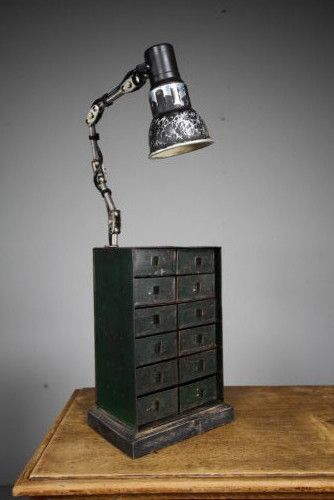
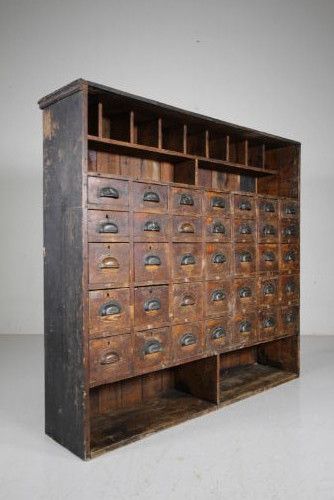
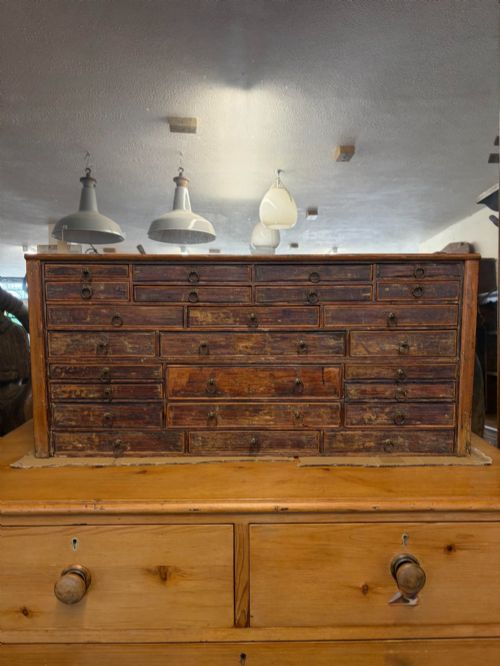
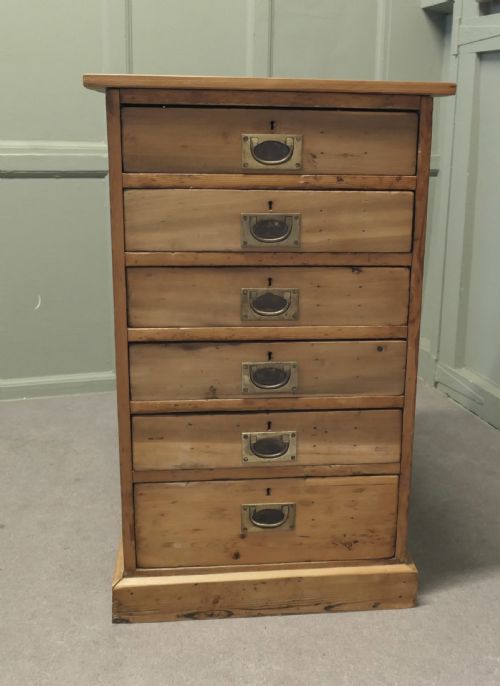
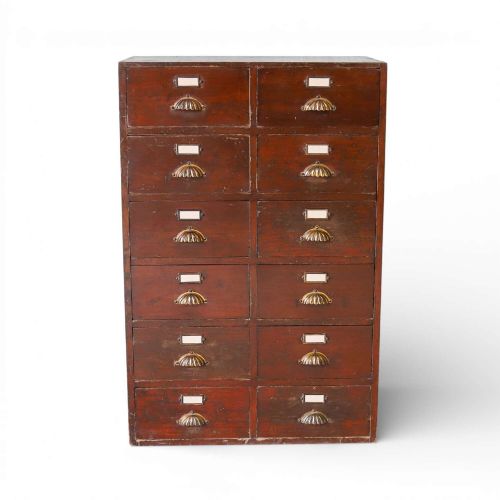
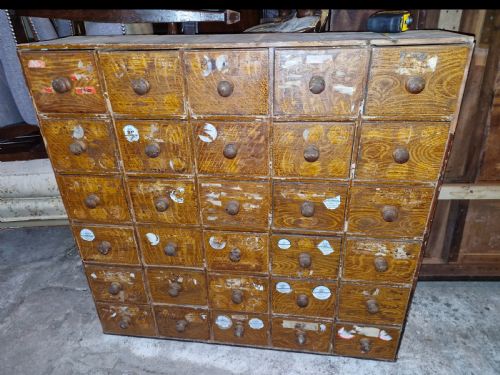
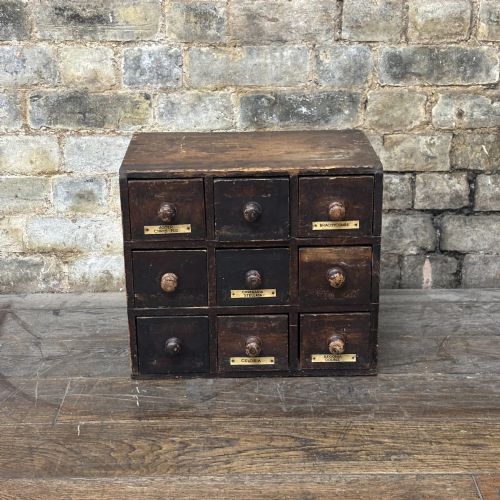
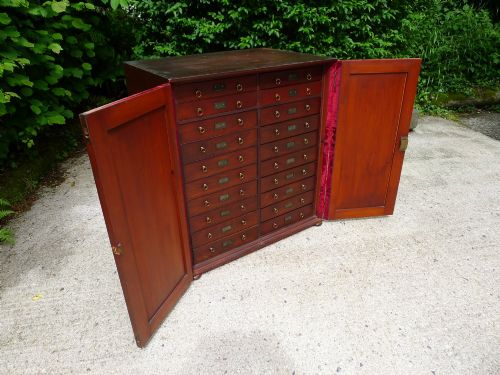
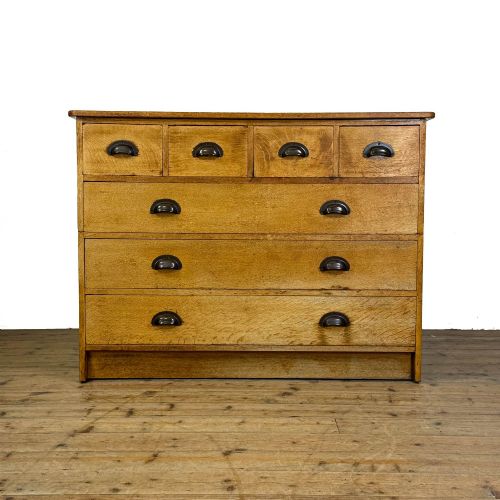
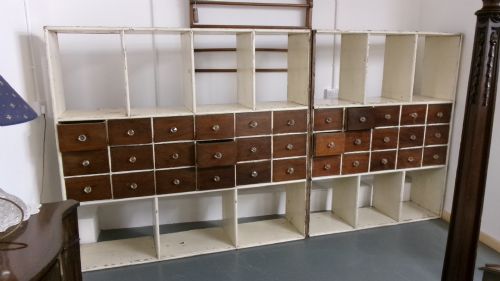
The pieces appearing on this page include workshop banks of drawers, collectors chests, shop display cabinets, and campaign chests. Forms range from low four-drawer units to tall banks containing nine drawers, alongside specialised drapers and watchmakers furniture.
Buyers meet variations designed for specific trades, such as J P Coats haberdashery units and commercial shop displays. These functional items translate easily into contemporary homes for organised storage with distinct period presence.
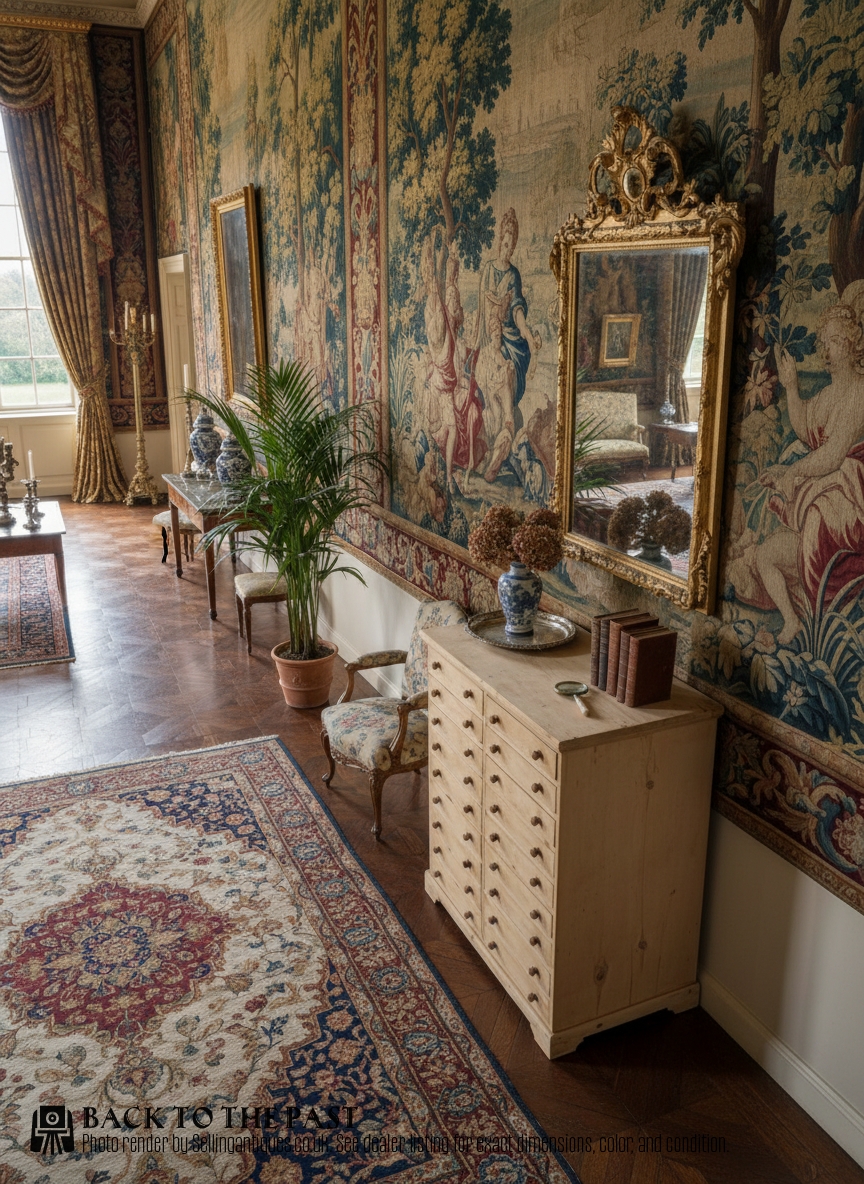
How They Were Made
Construction relies heavily on robust timbers like mahogany, walnut, pine, pitch pine, and oak, chosen for structural endurance in busy commercial environments. Drawers are frequently graduated to accommodate varying sizes of stock, goods, or tools.
Makers integrated brass and iron hardware, including campaign-style fittings and sturdy pulls, to withstand daily handling in shops and workshops. Surfaces range from polished timber finishes and waxed pine to industrial painted or metal elements.
Retail Price Guide 2026
Typical UK retail prices for haberdashery chest of drawers, calculated from the Sellingantiques database of over a million retail prices indexed since 2003. This retail price guide relies exclusively on Sellingantiques data; no external sources or auction records are used, so the figures do not describe the wider market.
Watchmakers required nine separate drawers just to keep track of tiny cogs and springs.
What Varies in Quality
Quality rests on the integrity of the timber selection and the retention of original commercial hardware like brass pulls and iron mounts. Untouched workshop surfaces and polished cabinetmaker finishes demonstrate higher craftsmanship than utilitarian utility pieces.
The complexity of the drawer configuration dictates the distinction between standard storage and superior workshop banks. Taller banks with numerous graduated drawers or specialised trade provenance sit at the upper end of the scale.
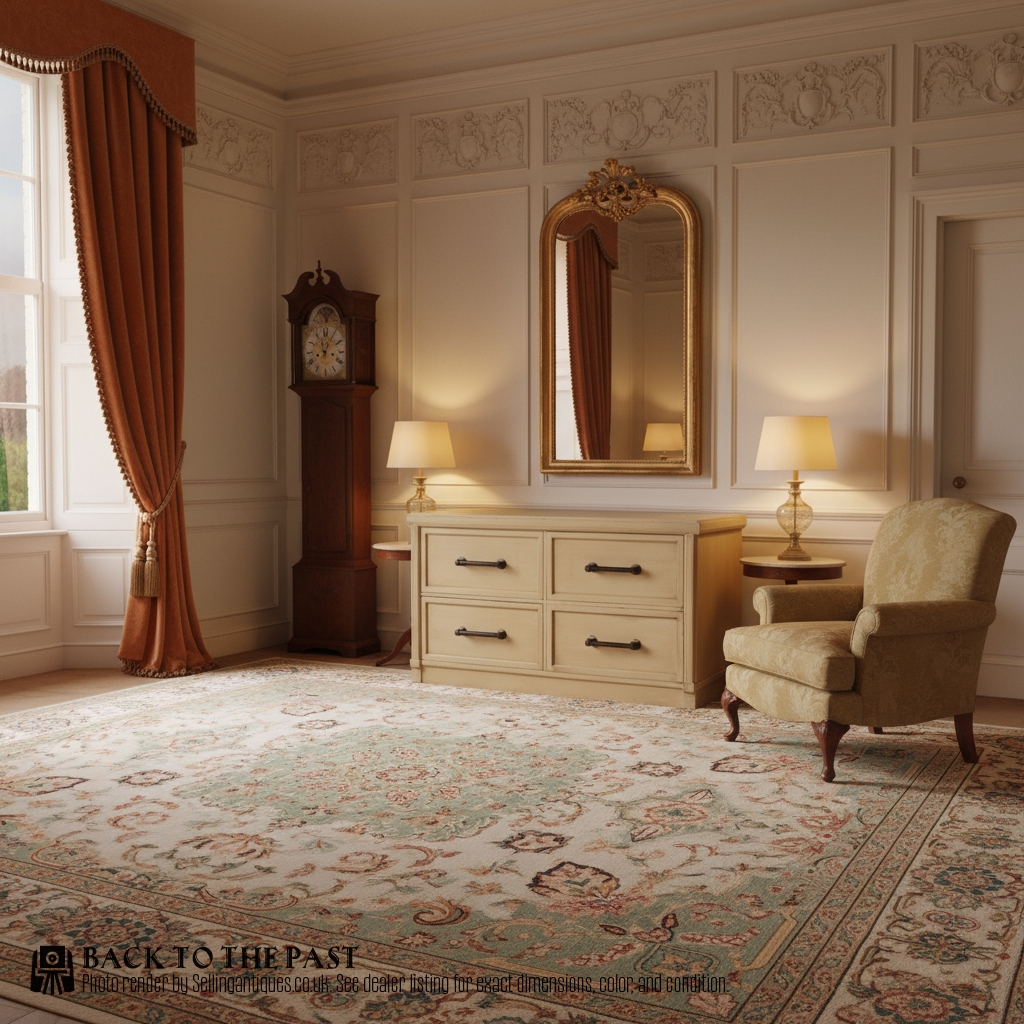
J P Coats
The Haberdashery Chest of Drawers Glossary
- Haberdashery chest
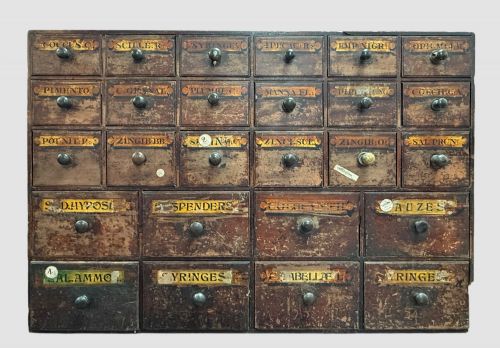
- A multi-drawer storage unit originally designed for retail shops to display and sort small sewing goods, ribbons, and threads. These pieces often feature numerous shallow drawers.
- Campaign chest
- A portable set of drawers made in sections with recessed brass handles, built for transport by travellers or military officers. Pitch pine and mahogany examples appear frequently.
- Graduated drawers
- A series of drawers arranged vertically where the depth increases from top to bottom. This design balances visual proportion with practical storage capacity.
- Workshop bank
- A tall or long set of drawers constructed for heavy industrial or trade use. They prioritize robust timber frames and functional utility over decorative veneer.
Frequently Asked Questions
What is a haberdashery chest?
A haberdashery chest is a multi-drawer cabinet originally used in shops to organise small sewing items, buttons, and ribbons. They offer deep utility through numerous small drawers.
Today, buyers use them in living spaces and bedrooms for tidy storage of accessories and smaller garments.
How do I date these drawers?
Dating relies on timber types, construction methods, and hardware styles associated with the Victorian period through the 1920s. Mahogany and walnut often indicate finer Victorian or 1880s cabinetmaking.
Pine and pitch pine versions frequently point towards utilitarian workshop or retail origins from the late nineteenth century.
Where do I put a shop chest?
These chests fit well in kitchens as islands, in hallways for daily items, or in bedrooms for folded clothes. Their numerous drawers make sorting small items straightforward.
Ensure you measure the depth and height, as commercial banks of drawers can be exceptionally tall or deep.
What woods were used?
Carpenters utilised durable timbers such as mahogany, walnut, oak, pine, and pitch pine to handle heavy commercial use. Metal and brass hardware reinforced the structures.
Some pieces feature polished timber surfaces while others retain raw pine or painted industrial finishes.