




Gustavian Pine Sideboard
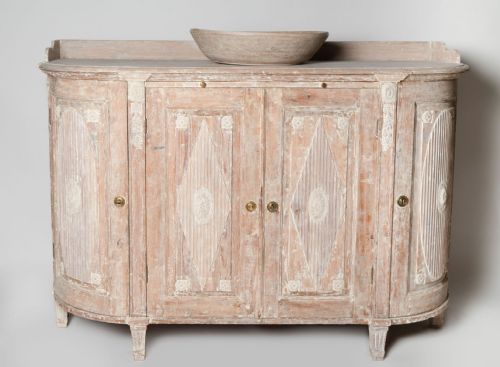
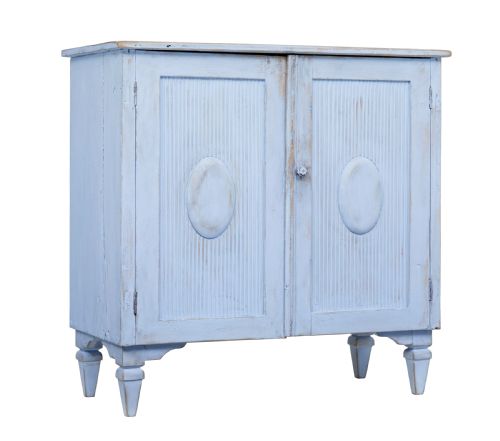
These gustavian pine sideboard pieces are nineteenth-century Scandinavian country storage forms built from pine and painted softwood.
Gustavian Pine Sideboard
A gustavian pine sideboard brings nineteenth-century Scandinavian country practicality into a modern room, offering generous interior space behind heavy panelled doors. Buyers searching for a gustavian pine sideboard often encounter nineteenth-century Scandinavian country cupboards, sideboards, and cabinets that share identical regional forms.
The objects seen here originate entirely from the nineteenth century, spanning early and mid-century production. Forms range from dedicated sideboards and cabinets to tall linen cupboards and rustic cupboards.
Swedish country and Gustavian aesthetics dominate these pieces, reflecting the austere yet elegant design language of Scandinavian interiors. Most examples present as painted pine or painted softwood, occasionally detailed with brass or iron hardware.
How they were made
Construction relies primarily on sturdy pine and painted softwood timbers joined to withstand daily domestic storage use. Workshops utilised basic iron and brass hardware for hinges and key escutcheons.
Surface finishing defines the visual character of these pieces, involving layers of paint that sometimes feature original scraped paint techniques. This traditional application leaves the underlying timber and historic brushwork visible across the cabinet exterior.
Object classifications span cabinets, cupboards, sideboards, and linen cupboards within Scandinavian country and Gustavian styles.
What varies in quality
Quality differences rest largely in the preservation of original painted surfaces, where intact historic layers command greater attention than modern re-paintings. The subtlety of the scraped paint finish reveals the care taken during initial production and subsequent generations.
Proportion and regional style adherence also divide standard utility cupboards from finer cabinet work. Pieces retaining authentic Swedish country proportions display a balance between rustic utility and refined restraint.
The Gustavian Pine Sideboard Glossary
- Gustavian
- The Swedish neoclassical style spanning the late eighteenth and nineteenth centuries, characterised by restrained carving, pale paint finishes, and classical symmetry.
- Softwood
- Timber from coniferous trees such as pine, utilised extensively throughout Scandinavian furniture making for its accessibility and workability.
- Linen cupboard
- A tall storage piece designed specifically for household textiles and bedding, featuring deep internal shelving.
- Scraped paint
- A decorative surface treatment where dried layers of historic paint are partially scraped back to reveal underlying colours and create a textured patina.
Gustavian Pine Sideboard: Frequently Asked Questions
What is a gustavian pine sideboard?
A nineteenth-century Scandinavian storage piece constructed from pine and painted softwood, encompassing regional cupboards, cabinets, and sideboards.
These pieces reflect Swedish country design traditions, combining utilitarian storage capacity with characteristic painted finishes.
How were these sideboards used?
They served as essential domestic storage furniture in nineteenth-century Scandinavian homes, holding household provisions, tableware, and textiles.
Tall variants functioned as linen cupboards, while lower cabinet forms operated as sideboards for dining room organisation.
How do I live with one?
Integrate them into living spaces or dining rooms as focal storage points that accommodate modern media, books, or tableware.
Their pale painted surfaces complement neutral interior schemes while adding historical texture to contemporary rooms.
How do I identify the period?
Examine the timber construction, hardware fixtures, and surface finishes to determine nineteenth-century origins.
Characteristic Scandinavian country proportions and original scraped paint layers provide key indicators of period authenticity.