
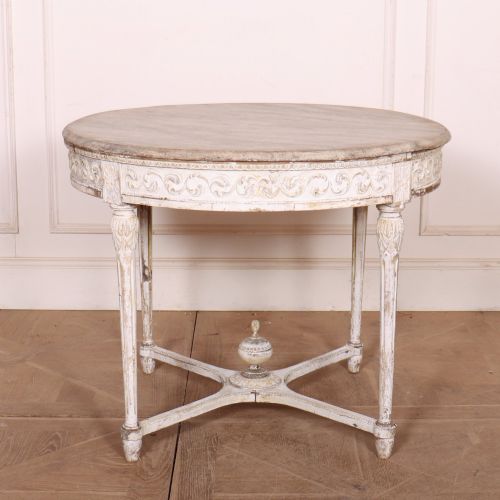

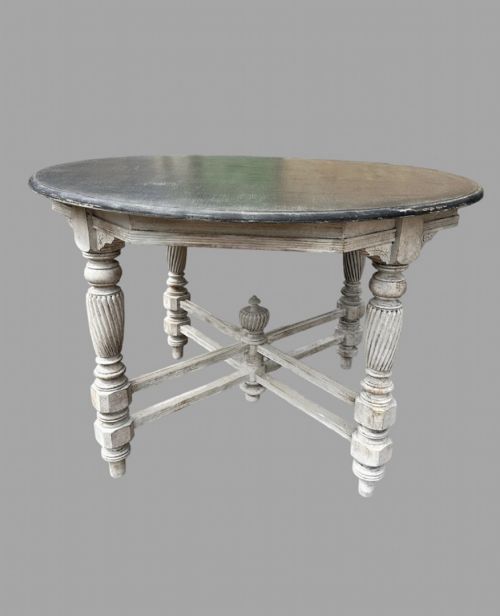
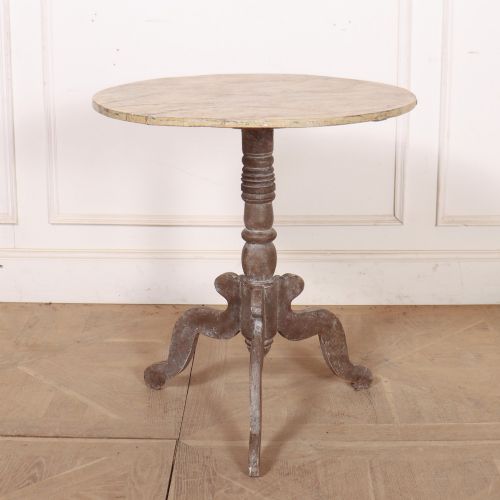
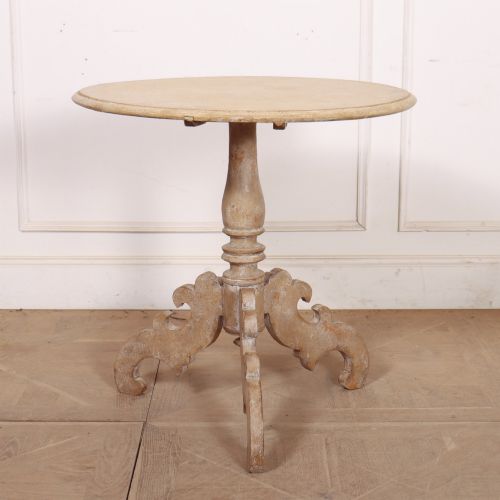
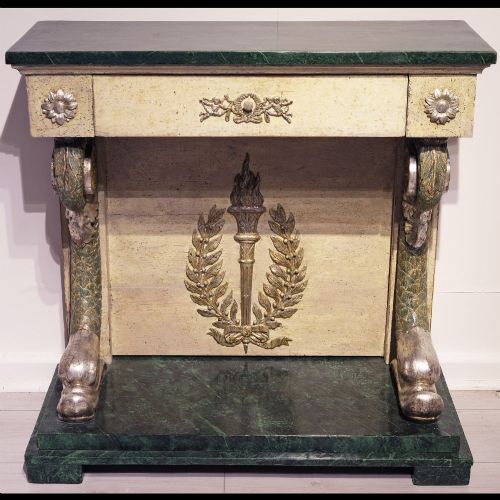
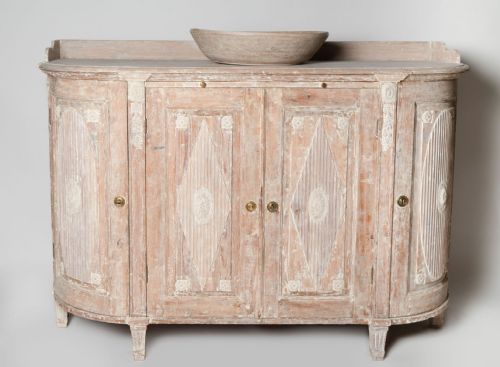
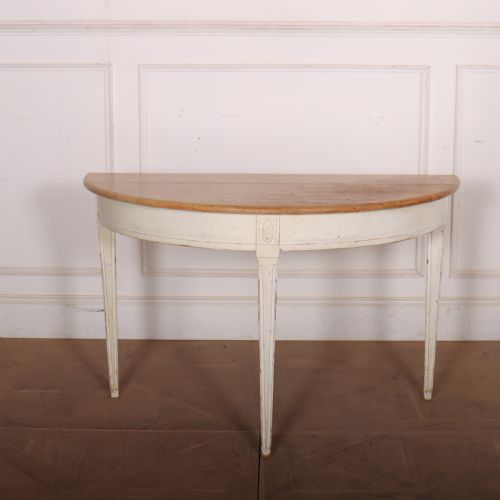


Gustavian Painted Table
A gustavian painted table brings light northern proportion and time-worn surface into a room.
Gustavian Painted Table
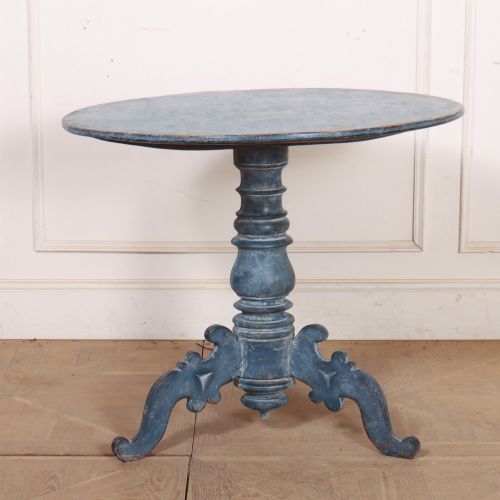
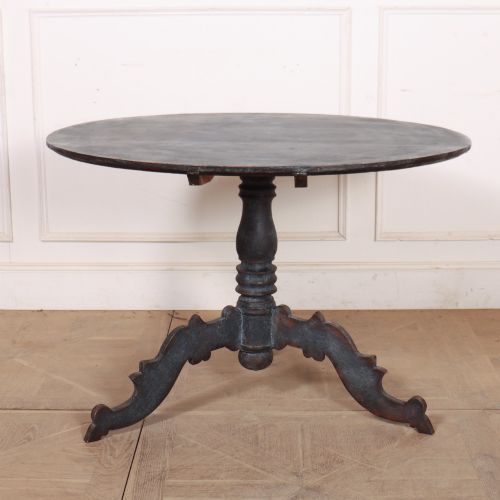
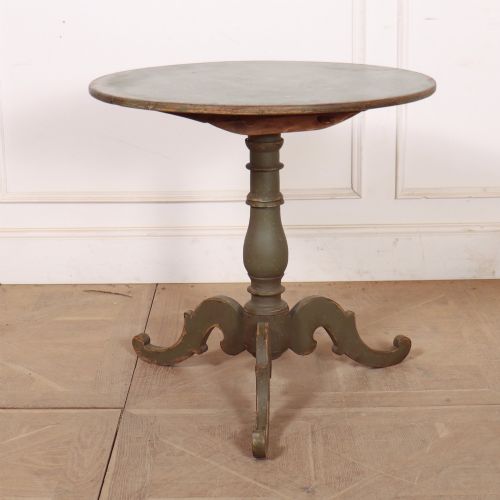
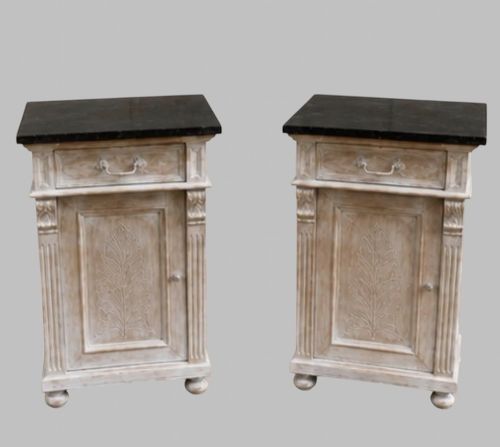
When you search for a gustavian painted table, you are looking at timber furniture shaped by Scandinavian interpretations of neoclassical design. These pieces range from compact lamp tables and demi-lune consoles to large drop-leaf dining surfaces and writing desks. On this page, lamp tables and console tables from the nineteenth century appear most frequently alongside pairs of bedside cabinets.
The aesthetic draws on eighteenth-century Swedish royal tastes, filtered down into provincial workshops over subsequent decades. You will encounter forms labelled as Gustavian, Scandinavian Country, and Swedish Country, spanning periods from the late eighteenth century through the early twentieth century. These tables bring a pale, functional elegance to domestic spaces.
Materials and construction
Carpenters built these pieces primarily using pine and softwood, selected for ready availability and ease of working. Surfaces received layered coats of paint, sometimes finished with details mimicking marble or aged to show subtle wear. Joinery relied on traditional methods suited to softwood framing and turned legs.
Hardware additions such as brass fittings appear on select drawers and cabinets, though timber remains the dominant structural medium. Tables often feature hand-painted finishes applied over successive generations of use and upkeep.
Common object types include demi-lune consoles, lamp tables, drop-leaf dining tables, and bedside cabinets.
Qualities of craftsmanship
Quality rests in the crispness of the carved detail and the integrity of the original proportions. Finer examples retain their early paint layers with minimal disturbance, showing the hand of regional joiners through well-balanced turnings and stable joints.
Plain utility pieces sit at the other end of the scale, built for simple domestic service with heavier construction and later overpainting. The distinction lies in whether the surface tells a cohesive story of age or conceals heavy modern intervention.
The Gustavian Painted Table Glossary
- Demi-lune
- A half-moon shape used for console tables designed to sit flush against a wall.
- Slagbord
- A traditional Swedish drop-leaf dining table supported by swinging gate legs.
- Commode
- A low chest of drawers or cabinet, often fitted with decorative painted finishes.
- Tripod table
- A small occasional table supported by a central pillar on three feet.
Gustavian Painted Table: Frequently Asked Questions
Are these tables strictly eighteenth century?
Most examples date from the nineteenth century and early twentieth century, carrying stylistic influences from the earlier eighteenth-century Gustavian period.
Provincial workshops continued producing these forms long after the initial royal-led design movement concluded.
How do I care for painted wood?
Keep painted furniture out of direct sunlight and away from sudden temperature shifts to protect the surface layers from drying out.
Dust gently with a soft cloth and avoid modern chemical polishes that can soften old paint.
Where should I place a console table?
Demi-lune and console tables suit narrow hallways, entryways, or living room perimeters where floor space is limited.
Their shallow depth allows them to sit neatly against walls while displaying lamps or decorative objects.
What defines Scandinavian Country style?
This style combines classical neoclassical outlines with the practical needs and simpler materials of rural northern European makers.
It prioritises pale paint finishes designed to reflect natural light in long northern winters.