

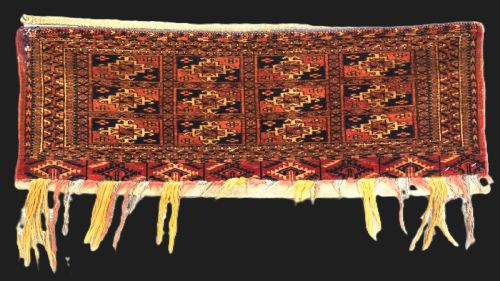


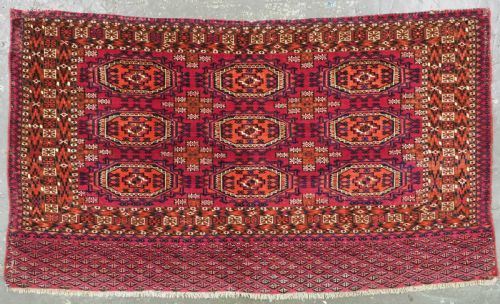


Gul Motif Carpet
These gul motif carpet pieces are woven tribal rugs carrying centuries of geometric heritage that anchor a room with distinct nomadic character.
Gul Motif Carpet
A gul motif carpet displays the traditional octagonal or medallion patterns characteristic of Central Asian weaving traditions, notably Turkmen, Afghan, and Kurdish tribal groups. Buyers searching this phrase will find a variety of formats including torba bag faces, runners, and village rugs dating from the mid-nineteenth century through the early twentieth century.
The objects stem from nomadic and village workshops across regions such as Turkmenistan, North Afghanistan, and Persia, carrying regional variations in their repeating guls. Most examples encountered on this page belong to the Turkmen, Afghan, and Kurdish tribal traditions recorded in the listings.
Forms range from complete storage bags like torbas and mafrash faces to larger room-sized carpets and runners. Each piece serves as a textile record of tribal identity, utilising traditional layouts passed down through generations of weavers.
What Varies in Quality
Quality rests in the precision of the weave and the complexity of the gul patterning, where finer knots allow for sharper geometric definition and intricate drawing. The crispness of the curled leaf designs and secondary motifs indicates the weaver's skill and the workshop's standard.
Material preparation also dictates distinction, particularly the use of hand-spun wool and stable natural dyes that retain their depth of colour over time. Completeness adds further merit, seen in examples that retain their original backs, edges, and full pile thickness rather than having suffered significant losses.
Gul Motif Carpet Retail Price Guide 2026
Typical asking prices for gul motif carpet among the pieces listed under this phrase on Sellingantiques today, from the lower quarter to the upper quarter. They describe what is for sale here now, not the wider market.
Object forms include full carpets, runners, area rugs, and functional nomadic bag faces such as torbas and mafrash.
The Gul Motif Carpet Glossary
- Gul
- A repeating octagonal or medallion motif used as the primary design element in Central Asian and tribal carpets. These motifs often identify the specific tribe or clan that wove the textile.
- Torba
- A small nomadic storage bag or hanging sack, frequently woven by Tekke Turkmen makers. Complete examples often retain their original flat-woven backs and hanging loops.
- Mafrash
- A rectangular storage container or bedding bag face produced by nomadic groups. They typically display bold geometric arrangements suited to their smaller scale.
- Chuval
- A large tent bag utilised for storage within a nomadic yurt. Their face designs usually feature multiple rows of guls.
- Memlinc Gul
- A specific polygonal geometric gul variant with hooked or stepped edges. Named after fifteenth-century Flemish paintings where similar rugs frequently appear.
Gul Motif Carpet: Frequently Asked Questions
What is a gul motif?
A gul is an octagonal or floral medallion repeated across tribal rugs to signify specific nomadic lineages and regional weaving traditions.
These geometric emblems form the visual backbone of Turkmen and related Central Asian textile artistry.
How do I date an antique carpet?
Dating relies on assessing the wool quality, natural dye palette, structural weave density, and stylistic markers consistent with nineteenth and early twentieth-century production.
Comparative analysis against documented tribal pieces helps narrow the decade of origin.
Where were these rugs made?
They originated among nomadic and village communities across Central Asia, including regions spanning Turkmenistan, North Afghanistan, and parts of Persia.
Different tribes, such as the Tekke, Yomud, Ersari, and Kurdish groups, developed distinct regional variations.
How do I care for antique wool rugs?
Protect the textiles by placing them in low-traffic areas or mounting them securely if they are delicate bag faces like torbas.
Regular gentle vacuuming without a beater bar and professional cleaning when necessary will preserve the natural wool fibres.