





Guilloche Enamel Silver Case
A guilloche enamel silver case brings together precision engine turning and translucent vitreous enamel to form functional pocket companions.
Guilloche Enamel Silver Case
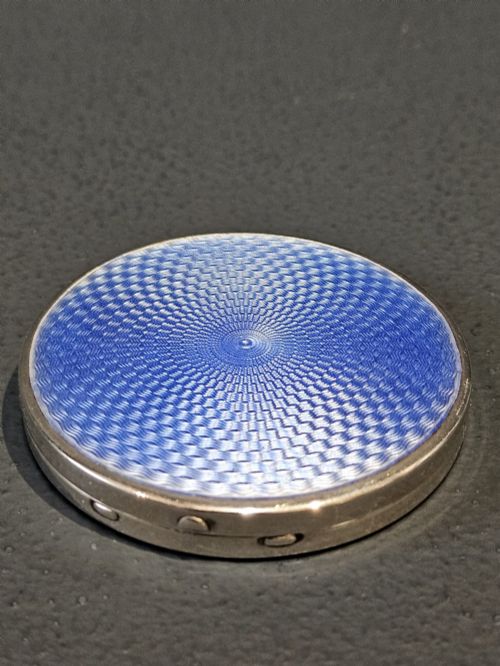
A guilloche enamel silver case combines sterling silver or silver gilt with patterned metalwork beneath coloured glass enamel. These objects span from the nineteenth century through the Edwardian period into Art Deco and mid-century designs, reflecting changing social habits and personal accessories.
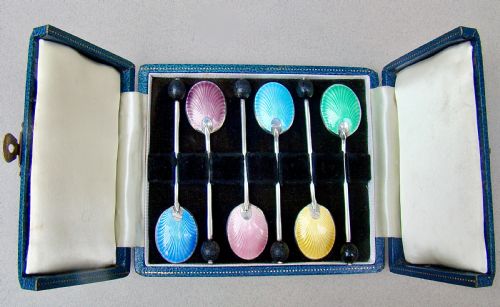
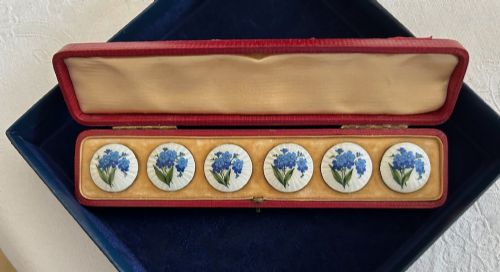
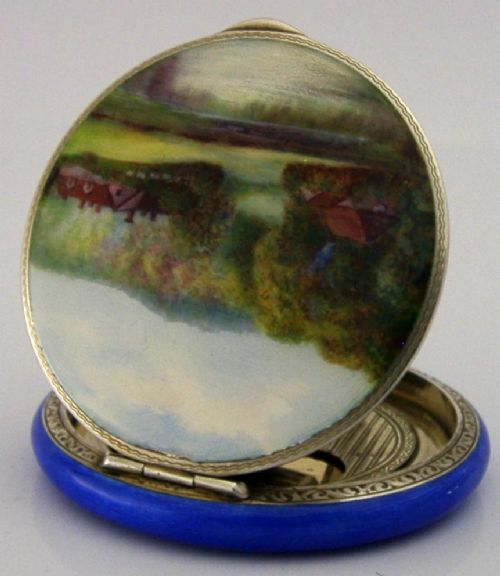
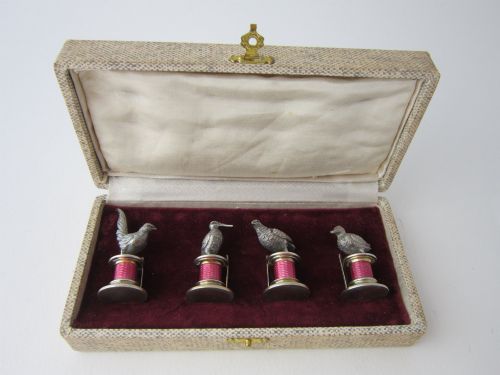
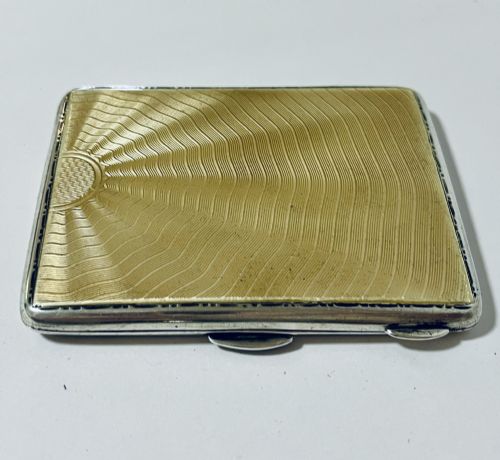
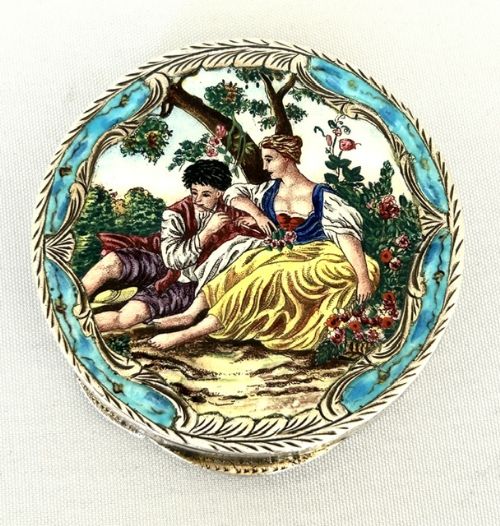
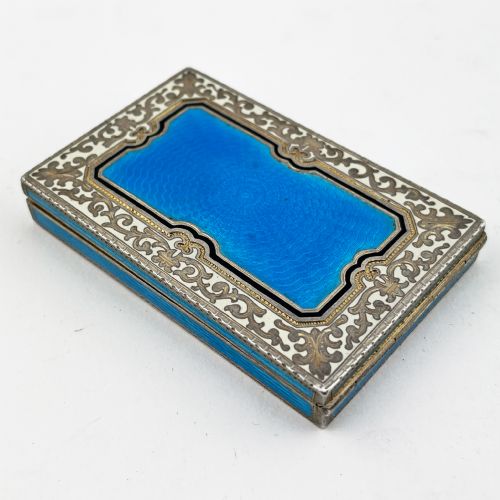
The selection here encompasses powder compacts, cigarette cases, card cases, and boudoir timepieces alongside smaller items like buttons, teaspoons, and place card holders. Powder compacts and cigarette cases dominate the inventory, showcasing the geometric motifs and vibrant colour palettes typical of the nineteen-twenties and nineteen-thirties.
Origins range widely across British workshops in Birmingham, continental makers, and Scandinavian studios, each bringing distinct regional aesthetics to the core combination of silver and enamel.
How they were made
Makers utilised mechanical lathes to cut precise, repetitive geometric patterns known as engine turning directly into the silver surface. This machined base creates the reflective, patterned foundation required for translucent enamel.
Vitreous enamel, composed of powdered glass suspended in a liquid medium, was applied by hand over the engraved silver and fired in a kiln. Multiple layers built up depth, allowing light to pass through the coloured glass and catch the underlying guilloche pattern.
Fitted interiors frequently incorporate silk, velvet, or cut glass alongside internal mirrors and mesh panels, reflecting the detailed craftsmanship demanded by personal luxury items of the period.
Guilloche Enamel Silver Case Retail Price Guide 2026
Typical asking prices for guilloche enamel silver case among the pieces listed under this phrase on Sellingantiques today, from the lower quarter to the upper quarter. They describe what is for sale here now, not the wider market.
Materials recorded across the inventory include sterling silver, silk, velvet, cut glass, and vitreous enamel.
What varies in quality
The crispness and depth of the engine-turned engraving dictate the foundational standard of the piece. Shallower machine work yields less refraction, whilst deep, mathematically precise cuts produce a lively play of light beneath the enamel surface.
The clarity and evenness of the vitreous enamel layer determine the visual success of the object. High-standard examples display a uniform thickness without clouding or surface pitting, preserving the integrity of the underlying metal pattern.
Turner And Simpson·Henry Matthews·Henry Perkins And Sons·Evans
The Guilloche Enamel Silver Case Glossary
- Guilloche enamel
- A decorative technique where intricate geometric patterns are mechanically engraved into metal before translucent enamel is applied over the top. This allows the underlying pattern to remain visible through the coloured glass.
- Vitreous enamel
- A material made by fusing powdered glass to a substrate by firing, usually at high temperatures. The resulting compound provides a glossy, durable coloured surface on silver items.
- Engine turned
- A method of ornamentation using a precision lathe to cut complex geometric lines into metal. It forms the textured base for guilloche work.
- Sterling silver
- An alloy of silver containing ninety-two point five percent silver and seven point five percent other metals, usually copper. It provides the structural body for the majority of these cases and compacts.
Guilloche Enamel Silver Case: Frequently Asked Questions
What is a guilloche enamel silver case used for?
These cases served as practical accessories for personal grooming, social correspondence, and leisure. Compacts held loose face powder, whilst cigarette and card cases protected paper goods in pockets and handbags.
Smaller items like place card holders and coffee spoons added decorative touches to dining tables and tea services. Each piece combined utility with portable luxury.
How do I care for silver and enamel?
Keep these items away from direct sunlight, extreme temperature changes, and harsh chemical cleaners which can discolour the enamel or damage internal silk and velvet linings. Clean the silver portions gently with a soft cloth.
Store them separately to prevent scratching the delicate glass surfaces of the enamel panels. Proper handling preserves both the metalwork and the vitreous coating.
How do I identify an Art Deco piece?
Art Deco examples typically display bold geometric patterns, symmetrical layouts, and vibrant blue or contrasting enamel colours. The engine-turned engraving on these items often follows strict rectilinear or sunburst designs.
Manufactured predominantly during the nineteen-twenties and nineteen-thirties, these pieces reflect the modern architectural influences of the interwar period.
What is the difference between Edwardian and Art Deco styles?
Edwardian items tend to feature lighter, more delicate floral motifs and softer pastel colour palettes. The silver mountings often incorporate scrollwork or Rococo Revival influences typical of the early twentieth century.
Art Deco design shifts toward sharp lines, solid block colours, and industrial precision. This transition marks the move from ornate Edwardian craftsmanship to streamlined mid-century aesthetics.