



Guilloche Enamel Powder Box
A guilloche enamel powder box brings intricate metallic pattern beneath translucent glass-like colour to any dressing table.
Guilloche Enamel Powder Box
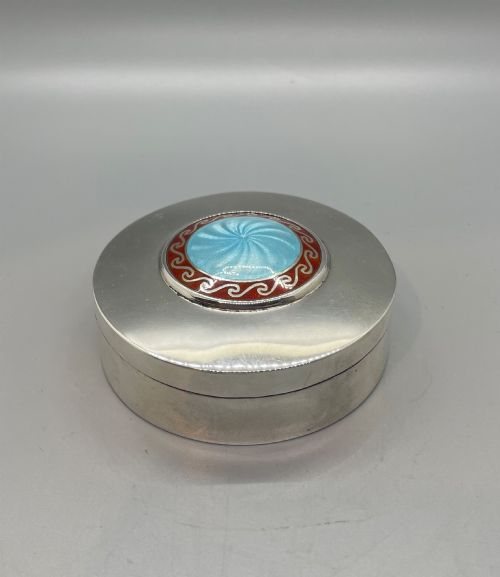
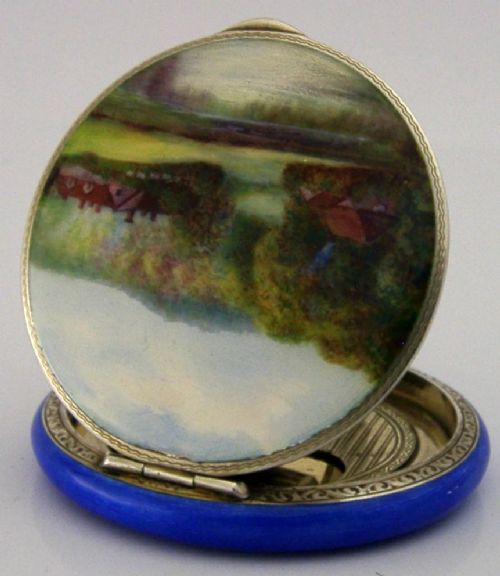
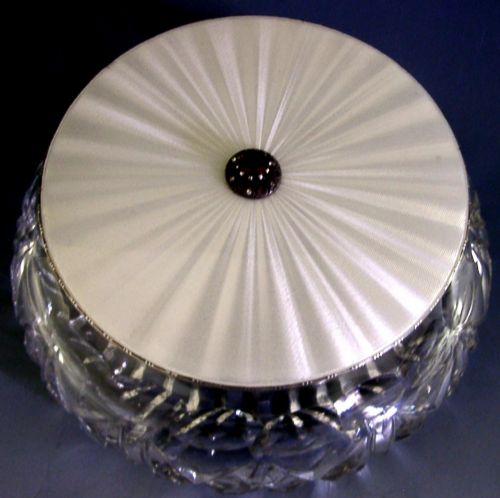
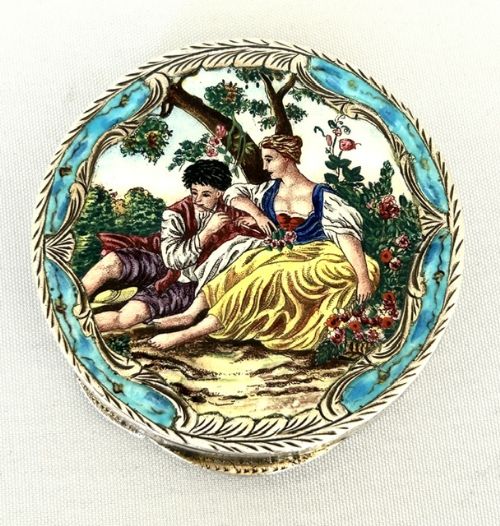
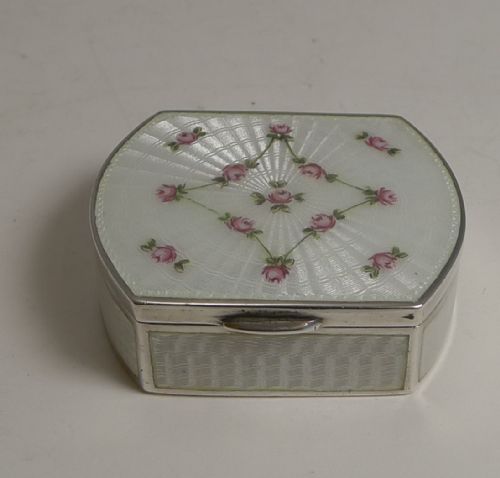
A guilloche enamel powder box combines functional dressing table storage with meticulous metalwork and vitreous colour. These pieces usually feature a sterling silver base or lid mount paired with a glass body or an entirely metal construction.
Most examples found here date from the early twentieth century, spanning Edwardian, Art Deco, and mid-century periods. Forms range from compacts and rouge pots to large dressing table jars and crystal powder bowls.
Materials and construction
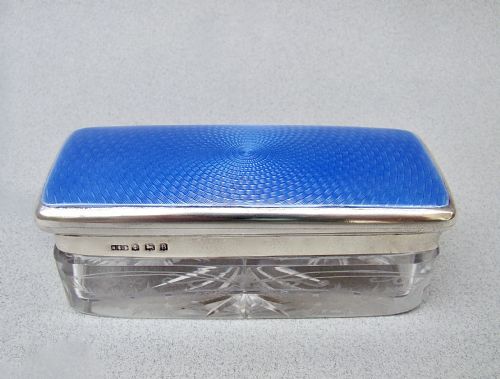
Craftsmen utilised mechanical lathes to engrave precise geometric patterns onto sterling silver surfaces before applying coloured enamel. This transparent vitreous enamel allows the underlying machine-turned design to catch the light from beneath.
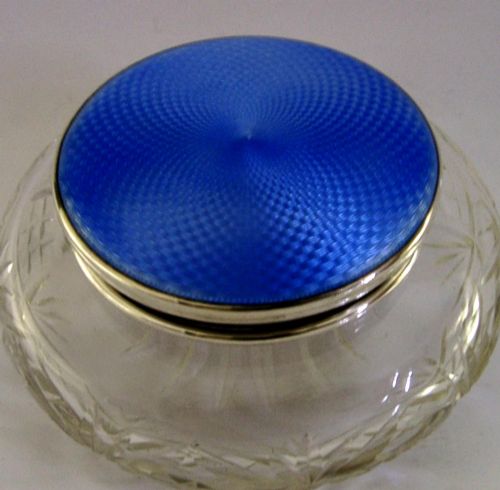
Many containers pair these silver and enamel lids with heavy cut glass or cut crystal bases. Interiors sometimes retain original mesh sifters, mirrors, or fabric linings such as suede.
Listings feature sterling silver, cut glass, and vitreous enamel across Edwardian, Art Deco, and mid-century periods.
Distinctions in craftsmanship
Quality rests upon the crispness of the engine-turned engraving and the even clarity of the applied enamel colour. Finer pieces demonstrate precise symmetry in their patterns and seamless integration between silver mounts and glass bodies.
Maker attribution and assay office provenance further elevate certain items, particularly those bearing the marks of established silversmiths from Birmingham and London.
Henry Clifford Davis·Henry Matthews·Houbigant·Evans
The Guilloche Enamel Powder Box Glossary
- Guilloche
- A decorative engraving technique where a mechanical lathe etches precise, intricate geometric patterns into metal. This precise work forms the textured foundation visible beneath translucent enamel colour.
- Vitreous Enamel
- Glass fused to metal through high-temperature firing. This durable coloured coating provides the smooth, glossy surface characteristic of these antique containers.
- Sterling Silver
- A silver alloy containing ninety-two point five percent pure silver by mass. Assay offices hallmark this metal to certify its standard of purity.
- Powder Compact
- A small handheld cosmetic case typically fitted with an internal mirror and powder sifter. These portable accessories gained immense popularity during the Art Deco era.
- Dressing Table Jar
- A larger vanity container with a fitted lid, designed to sit permanently on a dressing table. They frequently combine cut crystal bases with decorated silver tops.
Guilloche Enamel Powder Box: Frequently Asked Questions
How do I date a guilloche enamel powder box?
Assay office hallmarks stamped onto the silver components provide the most reliable dating evidence, indicating the specific town and year of manufacture. Stylistic indicators, such as linear Art Deco motifs or softer Edwardian curves, offer additional chronological context.
Looking closely at the construction techniques and maker marks helps establish whether a piece belongs to the early twentieth century or later mid-century revivals.
What is the difference between a compact and a jar?
Compacts are portable cosmetic cases traditionally manufactured for handbags, frequently including internal mirrors and hinged lids. Dressing table jars are stationary containers meant for vanity displays, often featuring heavy cut crystal bases.
While both utilise guilloche enamel lids, their intended daily use dictates their physical scale and internal fittings.
How should I clean my enamel box?
Gentle maintenance preserves the delicate balance between the sterling silver mounts and the fused glass surface. Using a soft dry cloth removes dust without risking abrasion to the enamel or polish on the metal.
Harsh chemical dips must be avoided entirely, as they damage vitreous enamel and loosen adhesives used in historic assembly.
Did these boxes originally hold loose powder?
Many dressing table boxes and powder bowls served loose face powder, sometimes accompanied by a down puff or fabric sifter. Smaller compacts often contained pressed powder cakes or served as rouge and pill containers.
Survival of original internal mesh inserts indicates how the cosmetic was applied during the period.