





Guilloche Enamel Case
A guilloche enamel case brings together precision metal engraving and translucent coloured glass to hold cosmetics, cigarettes, cards or timepieces.
Guilloche Enamel Case
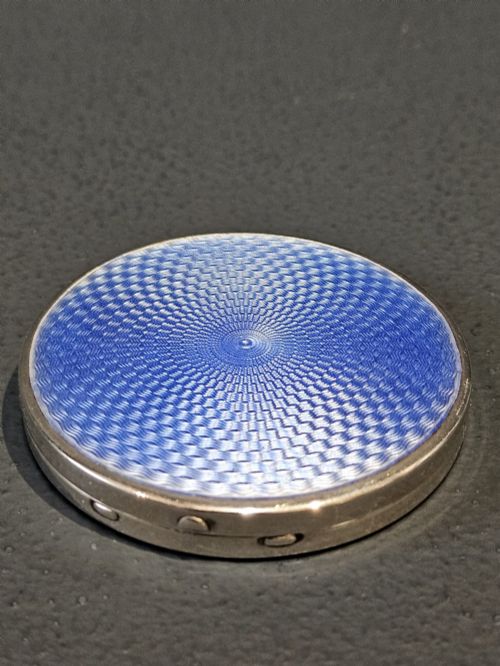
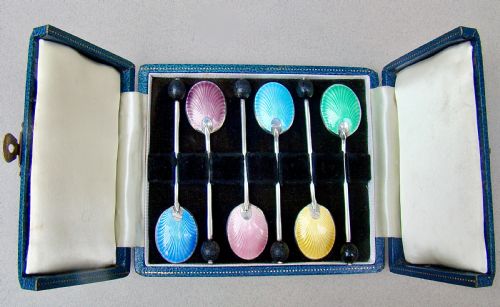
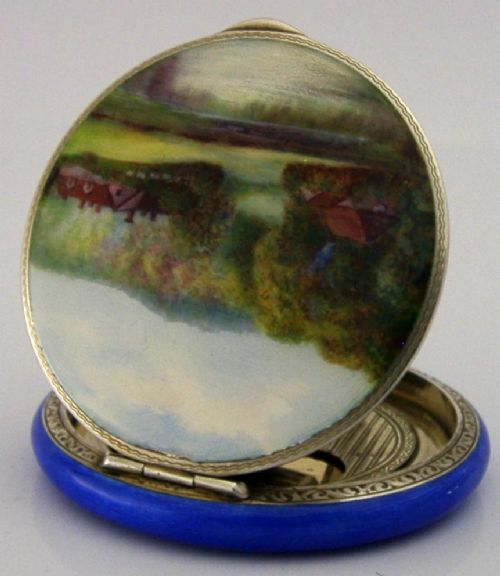
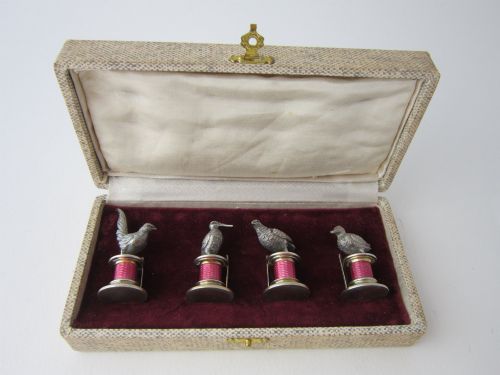
A guilloche enamel case covers a wide functional range, appearing most frequently on this page as compacts, cigarette holders, card receptacles, and cased spoon sets. These objects emerge from the Edwardian era through the Art Deco period into the mid-twentieth century, capturing shifts in personal accessories.
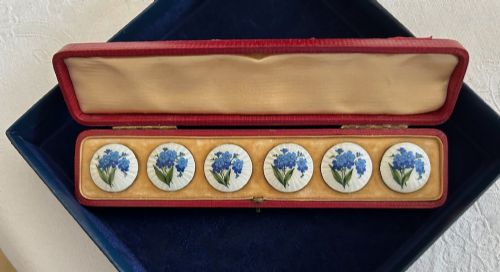
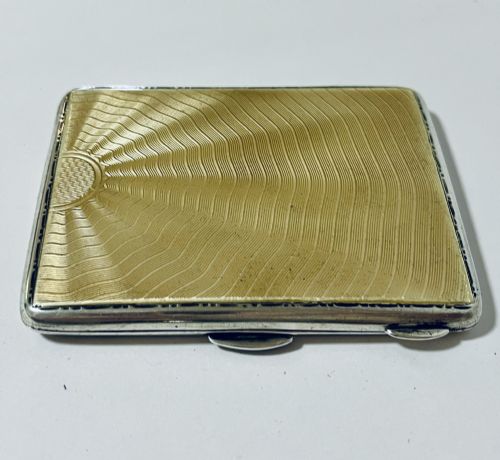
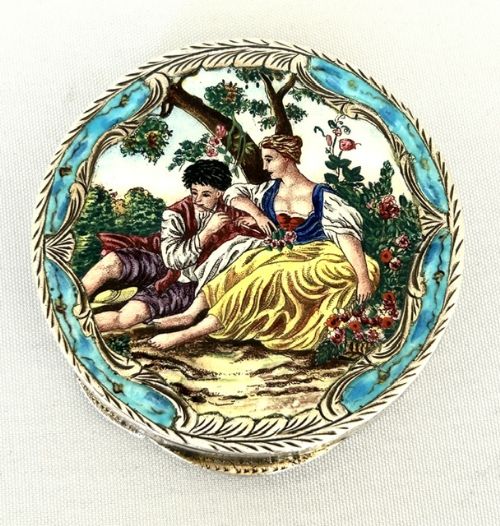
Makers across Britain, France, Germany, Norway, and Italy produced these items, utilising sterling silver, silver-gilt, and base metals to form the foundation of each piece. Geometric sunburst patterns and hand-painted floral motifs dominate the surface design across the surviving inventory.
Materials and Technique
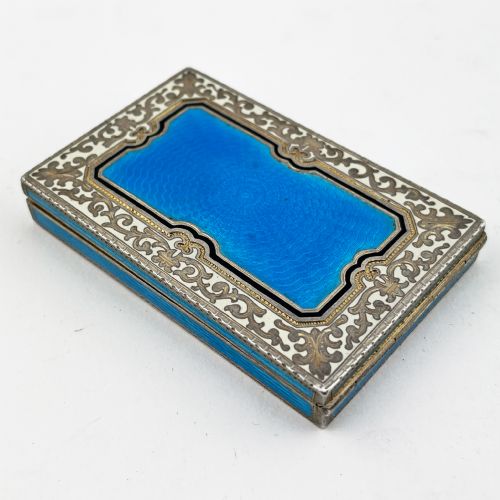
Craftsmen mechanically engine-turned geometric patterns onto a metal base, typically silver or silver-gilt, creating precise repeating lines that catch the light beneath the surface. Vitreous enamel is then applied in translucent layers over this engraved ground, allowing the underlying pattern to show through in blue, green, pink, or white.
The combination of metalwork and fired glass requires careful temperature control during kilning to prevent discolouration or cracking of the enamel layer. Silk linings, gilt highlights, and chrome elements frequently complete the interior and framing of compacts and watch stands.
Guilloche Enamel Case Retail Price Guide 2026
Typical asking prices for guilloche enamel case among the pieces listed under this phrase on Sellingantiques today, from the lower quarter to the upper quarter. They describe what is for sale here now, not the wider market.
Several sets preserved in this archive were originally designed purely to stir after-dinner coffee with a flash of pink enamel.
Markers of Execution
Superior examples display crisp, deep engine-turning beneath flawless, even enamel coatings free from chipping or heavy surface scratching. The weight and rigidity of the metal housing, alongside secure hinges and clasps, indicate the standard of original manufacture.
Finely painted floral garlands or complex multi-coloured sunburst rays distinguish high-grade pieces from simpler monochrome versions. Maker marks and clear city assay stamps further define the origin and standard of the metal components.
Henry Matthews·Henry Perkins and Sons·William Neale and Son Ltd·Joseph Gloster·Turner and Simpson·Walker and Hall·Henry Clifford Davis·Bapst Freres of Paris·Cohen and Charles
The Guilloche Enamel Case Glossary
- Guilloche
- An ornamental engraving technique where a mechanical lathe cuts precise, intricate geometric patterns into metal. This technique forms the textured base seen beneath translucent enamel layers.
- Vitreous enamel
- Glass fused to the surface of metal through high-temperature firing. This material provides the glossy, coloured coating characteristic of these cases.
- Silver-gilt
- Sterling silver or another silver alloy coated with a thin layer of gold. This treatment adds a warm metallic finish to the interior or exterior of cases and flatware.
- Engine-turning
- The process of using a specialised lathe to engrave geometric patterns onto metal components. It produces the repetitive, mathematical designs beneath the coloured glass.
- Compact
- A small handheld case containing a mirror and powder sifter, often fitted with a decorative enamelled lid. These accessories were popular items for personal use during the twentieth century.
Guilloche Enamel Case: Frequently Asked Questions
What were guilloche enamel cases used for?
These items served daily personal functions, holding loose face powder, cigarettes, calling cards, matches, or pocket watches. Wealthy owners carried them as decorative fashion accessories in pockets or evening bags.
Over time, many of these utilitarian objects transitioned into collectable display pieces valued for their decorative metalwork and glass finishes.
How do I care for antique enamel?
Enamel requires gentle handling because the glass coating can chip or crack if dropped against hard surfaces. Clean the pieces using a soft, dry cloth without harsh chemical polishes that might scratch the surface.
Keep items away from prolonged direct sunlight and moisture to preserve the underlying metal and coloured glass layers.
How can I tell the period of a case?
Assay office hallmarks, maker stamps, and stylistic cues provide the primary dating evidence. Edwardian and early twentieth-century pieces often feature delicate floral motifs, while 1930s examples lean towards bold Art Deco geometric sunbursts.
The shape of the object and the colour palette of the enamel also reflect the design preferences of their specific decade of manufacture.
Are these cases made of solid silver?
Many pieces use sterling silver or silver-gilt as the base metal, confirmed by hallmarks stamped directly onto the rim or interior. Other examples incorporate base metals, gilt metal, or chrome, particularly in compacts and match cases.
Examining the edges and interior fittings reveals the underlying metal composition used by the workshop.