





Grey Wood Console Table
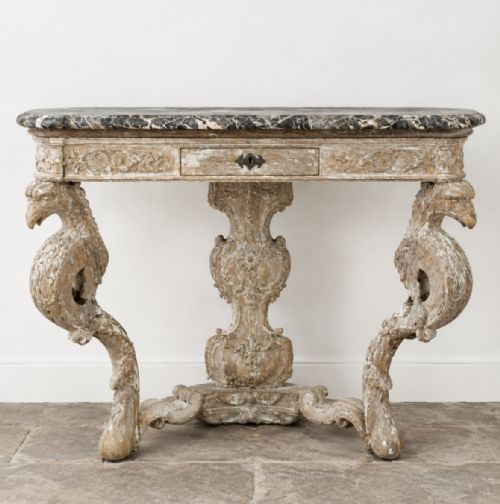
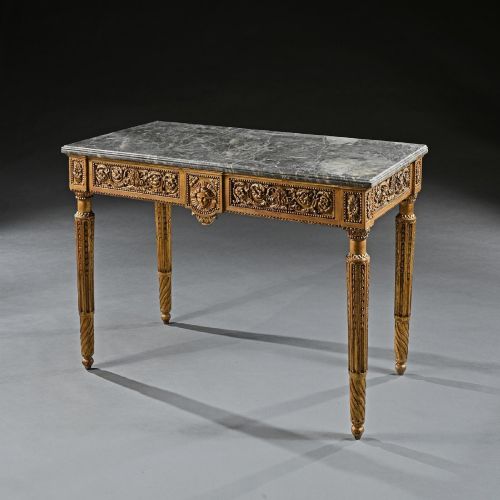
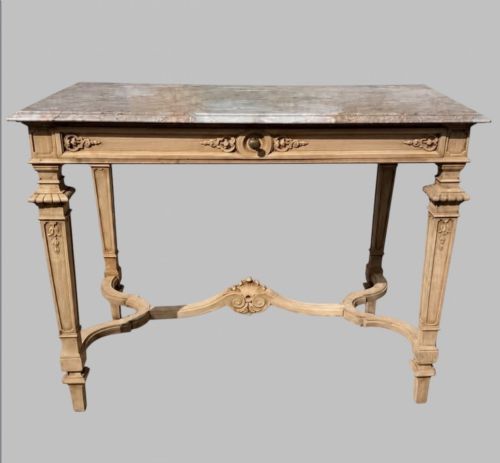
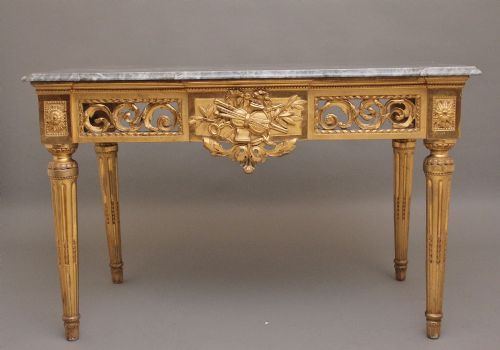
A grey wood console table offers narrow proportions and painted or bleached timber surfaces that anchor a hallway or reception room.
Grey Wood Console Table
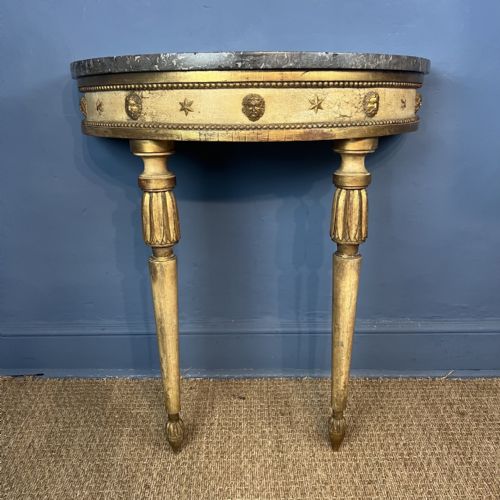
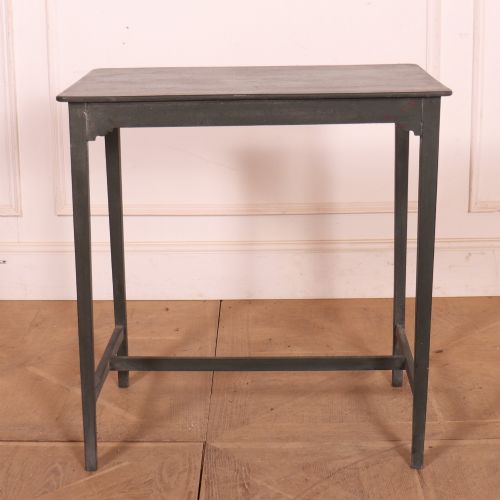
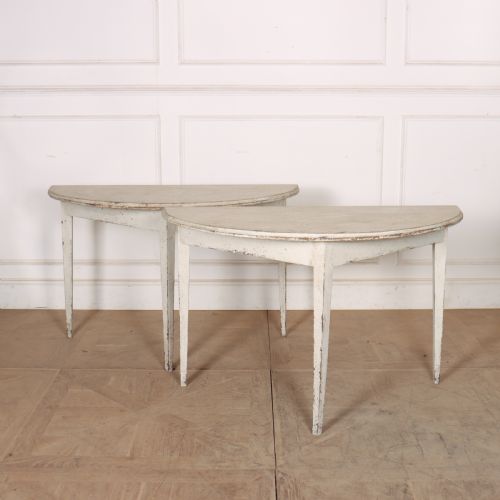
When you search for a grey wood console table, you encounter narrow wall-mounting tables, servers, and side tables designed to sit flush against a wall in hallways and principal rooms. The pieces recorded here span the eighteenth and nineteenth centuries, taking forms such as demi-lune shapes, serpentine fronts, and trestle designs.
You are most likely to meet painted wood, bleached timber, and parcel gilt surfaces finished in soft grey tones, often topped with marble. Origins stretch from French provincial workshops to English country houses, Italian palazzos, and Scandinavian country interiors.
These tables serve practical functions while introducing architectural presence to circulation spaces. Their shallow depth allows them to occupy narrow corridors without impeding movement.
Materials and construction
Makers utilised native and imported timbers, including pine, oak, walnut, and mahogany, frequently applying paint, giltwood, or faux finishes to the wooden carcass. Carved wood details appear on frames, skirts, and legs, reflecting regional cabinet-making traditions from France, Italy, and England.
Heavy marble slabs in grey, white, or shaped varieties provide durable working surfaces on many examples, resting directly upon the wooden frame or secured within a moulded edge. Surface treatments rely on historical paint layers, milk paint, or bleached finishes that highlight the underlying grain of the timber.
Listings feature eighteenth and nineteenth-century examples incorporating pine, oak, mahogany, walnut, marble, and hand-applied paint.
Judging quality and craftsmanship
Quality reveals itself in the crispness of hand-carved ornament and the harmonious proportion of the legs to the marble or timber top. Superior examples display thoughtful joinery, such as pegged mortise and tenon frames, rather than hurried assembly.
The integrity of the original painted surface or parcel gilding dictates distinction. Tables retaining their early or original grey paint layers without excessive modern intervention command greater appreciation among collectors.
The Grey Wood Console Table Glossary
- Demi-lune
- A half-moon shape used for tables designed to stand flat against a wall. This profile saves floor space in compact entrance halls.
- Serpentine
- A gently undulating curved front line found on the edges of tabletops and aprons. It adds visual movement and sophistication to case furniture.
- Parcel gilt
- Portions of a painted or wood surface highlighted with thin layers of gold leaf. This technique accentuates carved details and mouldings.
- Giltwood
- Timber that has been carved and then coated with gold leaf or gold paint. It provides reflective brilliance under candle or daylight.
- Potboard
- A lower open shelf fitted between the legs of a table, originally intended for storing pots and kitchen utensils. It stabilises the structural frame while offering display space.
Grey Wood Console Table: Frequently Asked Questions
Where should I place a console table?
A console table works best in a narrow hallway, behind a sofa, or beneath a mirror in a dining room. Its shallow depth keeps circulation paths clear while providing a surface for lamps and decorative objects.
Because these pieces sit against walls, they anchor empty spaces and create an immediate focal point as you enter a room.
How do I care for a painted wooden table?
Dust the surface regularly with a soft, dry cloth to prevent grit accumulation. Avoid harsh chemical cleaners that can degrade historical paint layers or wax finishes.
Use coasters beneath glasses and protect marble tops from acidic substances like citrus or wine to preserve the stone.
What is the difference between a console and a side table?
Console tables traditionally anchor against a wall and sometimes require wall fixing for absolute stability. Side tables are free-standing units with four fully independent legs designed to be moved about a room.
In historical listings, the terms frequently overlap depending on the proportions and intended placement within a country house interior.
Are marble tops original to these tables?
Many eighteenth and nineteenth-century console tables were constructed specifically to carry heavy marble slabs, particularly those originating from France and Italy. You can examine the rebate and support blocks beneath the top to assess originality.
Matching the age of the marble slab to the timber base remains a key consideration for dating the complete piece.