
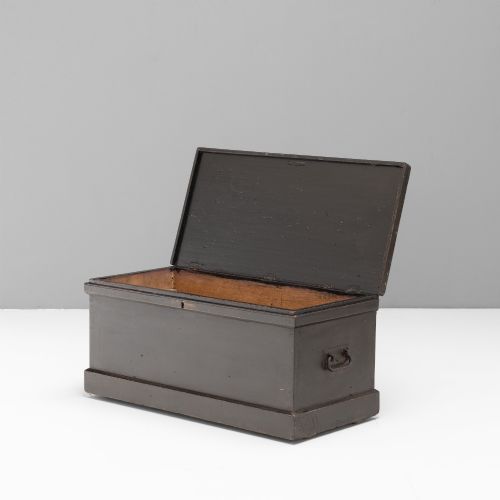
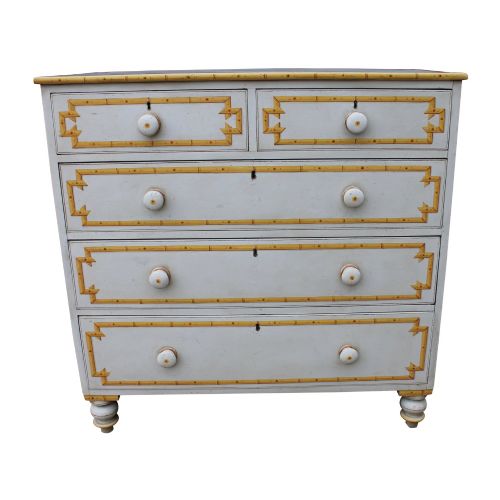
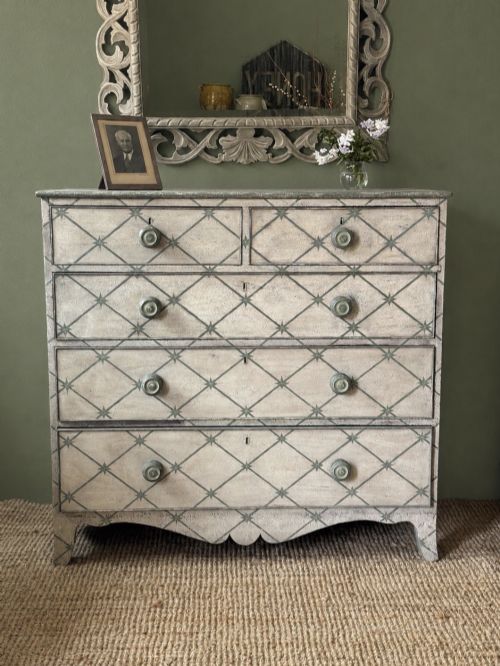
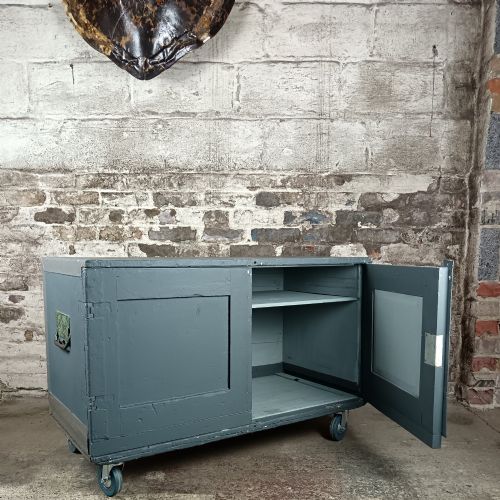
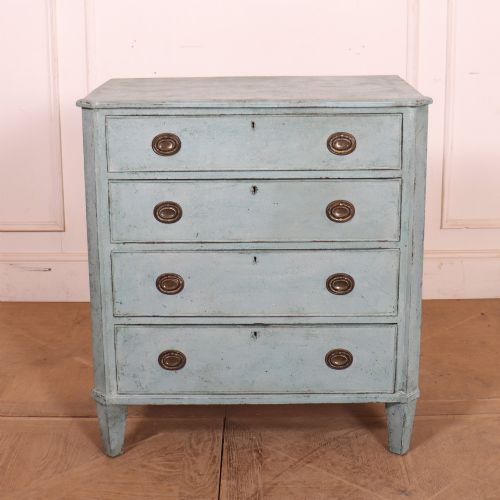

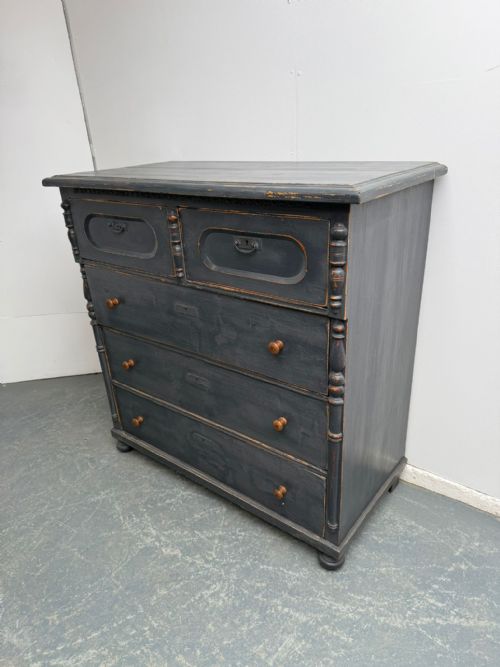

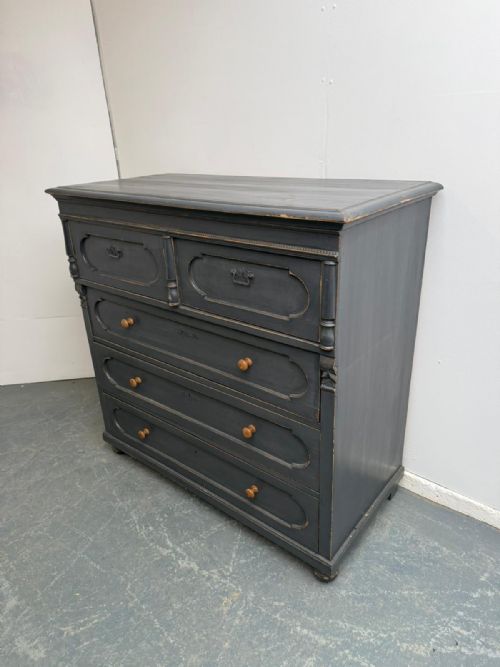

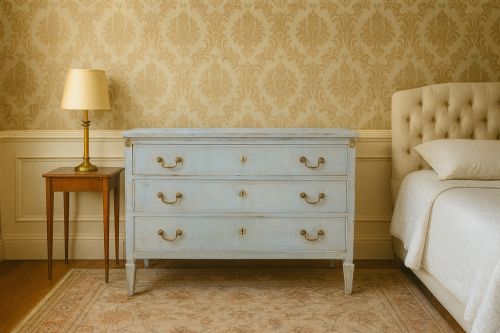


Grey Painted Pine Chest
A grey painted pine chest brings quiet utility and soft painted tone to a room, offering sturdy storage rooted in centuries of practical domestic history.
Grey Painted Pine Chest
A grey painted pine chest represents a durable form of storage, appearing most frequently in nineteenth-century and Victorian iterations alongside Swedish Gustavian examples. These pieces range from upright drawer chests and banks of drawers to blanket boxes, dome-top trunks, and linen cupboards.
Buyers seeking this phrase encounter items shaped by utilitarian origins or country aesthetics, including rustic country designs, French and Swedish country variants, and military campaign styles. The form serves primarily as a functional repository, whether configured with multiple drawers or as a single compartment chest.
How they were made
Construction relies fundamentally on pine and painted wood, manipulated to create sturdy carcases and drawer structures. Makers applied paint over the timber surfaces, sometimes incorporating faux bamboo detailing or hand-painted finishes.
Hardware elements such as brass and iron provide structural reinforcement and operational fittings, particularly visible on campaign packing cases and heavy drawer banks.
Listings feature pine and painted wood predominantly, alongside structural iron and brass hardware.
What varies in quality
The distinction between examples rests in the execution of the surface finish and the integrity of the underlying timber construction. Pieces retain varying degrees of original paintwork, ranging from plain coats to deliberate hand-painted decorative schemes.
Structural complexity also dictates the tier of an item, distinguishing simpler single-compartment pine boxes from multi-drawer configurations like banks of shop drawers or substantial five-drawer chests.
The Grey Painted Pine Chest Glossary
- Pine
- A softwood commonly utilised for carcases and drawer construction in traditional furniture. It provides a lightweight yet resilient base for painted finishes.
- Gustavian
- A Swedish neoclassical style associated with lighter colour palettes and restrained ornamentation. It frequently informs the aesthetic of painted commodes from the eighteenth and nineteenth centuries.
- Campaign
- A portable style of furniture designed for military transport, typically featuring recessed brass handles and reinforced corners. These pieces separate into modular sections for travel.
- Commode
- A low chest of drawers or cabinet. In European contexts, the term often describes decorative drawer units with painted surfaces.
Grey Painted Pine Chest: Frequently Asked Questions
What periods do these pieces come from?
The selection spans from the eighteenth century through the Victorian era and into the early twentieth century. Pieces from the 1750s sit alongside later nineteenth-century interpretations.
Production methods evolved slightly over this timeline, moving from bespoke estate-made items to more commercial workshop output while retaining traditional pine construction.
Are these pieces painted originally?
Many examples retain their historic painted surfaces, which show varying patinas developed over decades of domestic or commercial use. The grey tones applied to these pine surfaces reflect regional preferences, particularly within Swedish and English domestic traditions.
Over time, subsequent layers of paint or touch-ups occurred on working furniture, contributing to the textured appearance of the exterior finish.
How were banks of drawers used?
Banks of drawers served primarily in commercial environments, such as shop counters and estate offices, to organise large quantities of small items. The configuration required multiple shallow or deep drawers to keep contents sorted and accessible.
In modern settings, these substantial units function well as storage islands or hallway storage cabinets.