

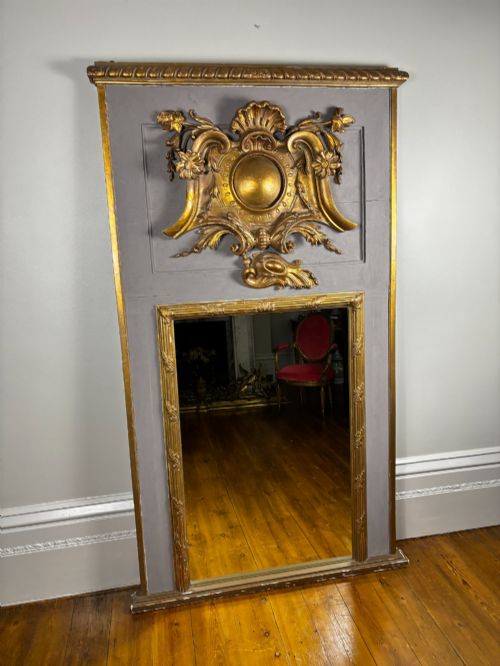
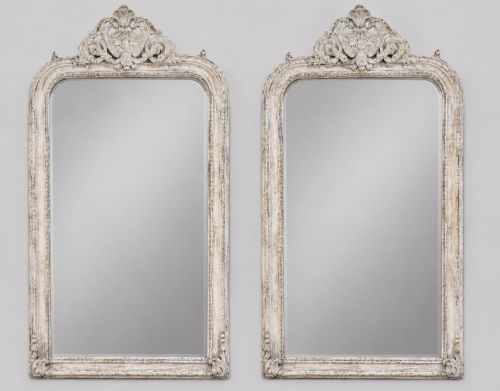
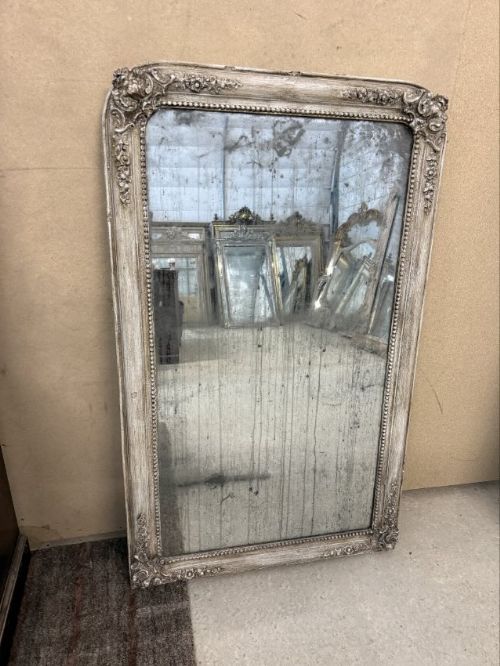
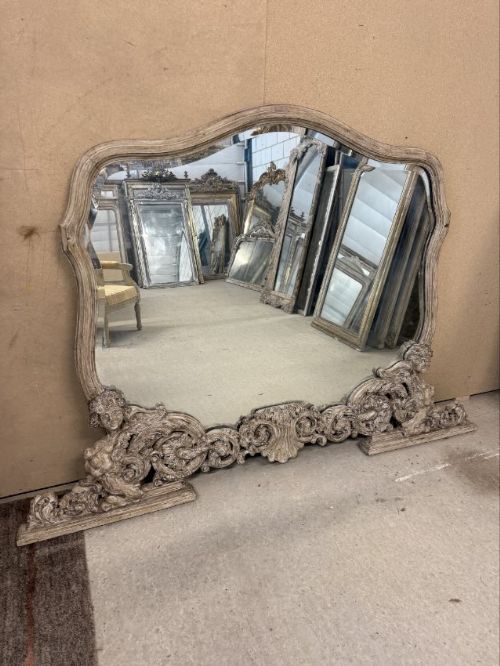
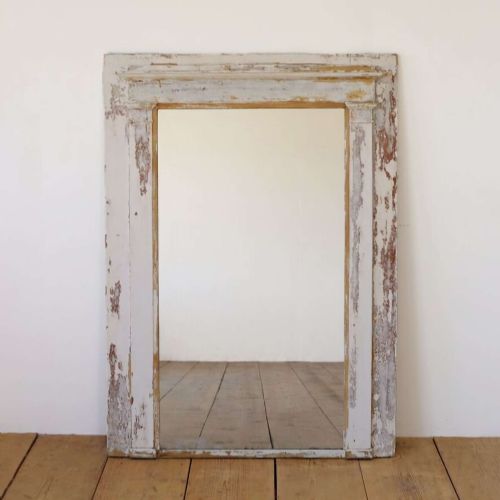
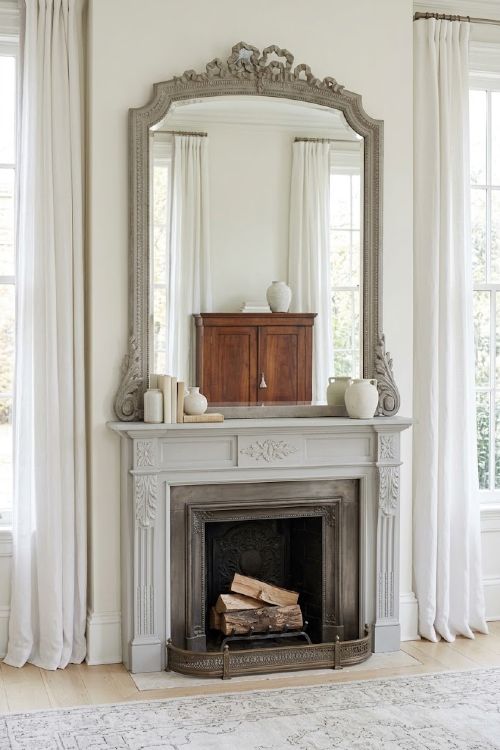
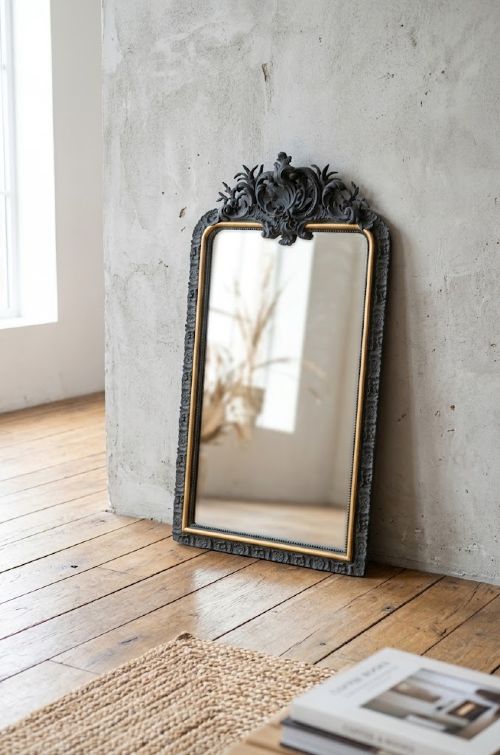
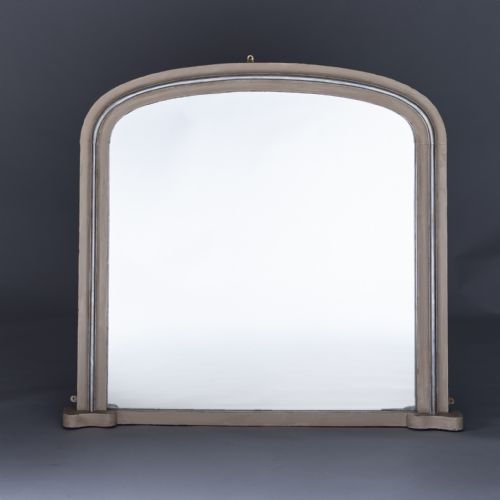
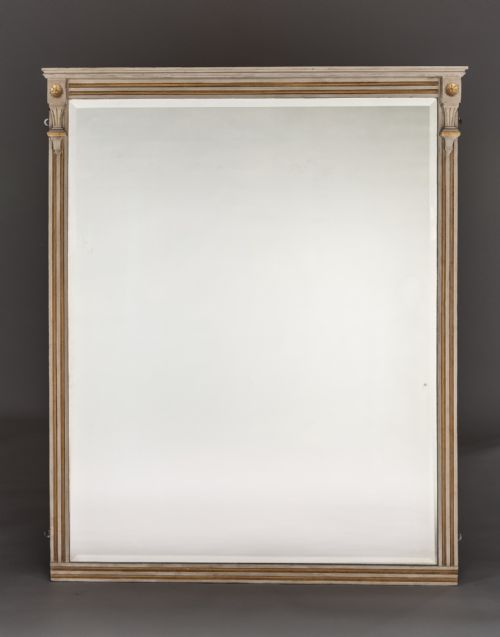


Grey Painted Overmantel
A grey painted overmantel brings period presence and mirrored light to a room, drawing the eye above a hearth with substantial presence.
Grey Painted Overmantel
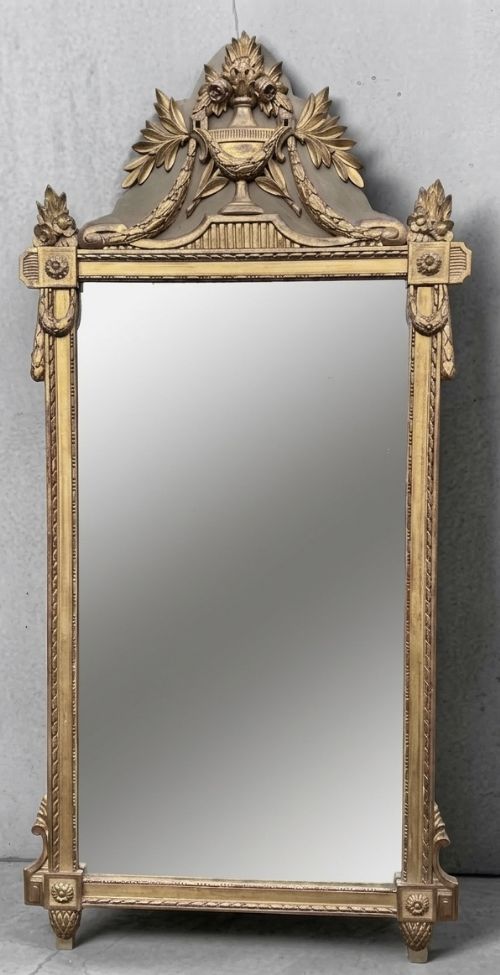
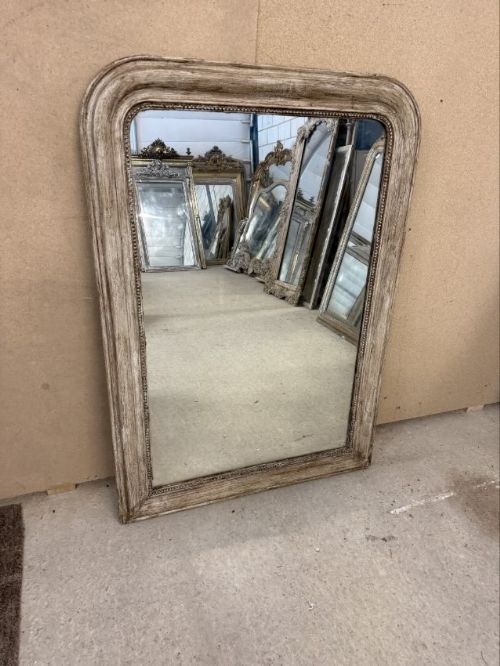
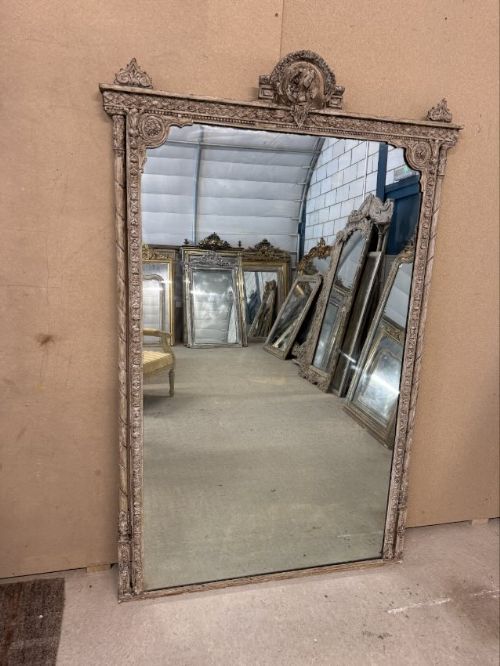
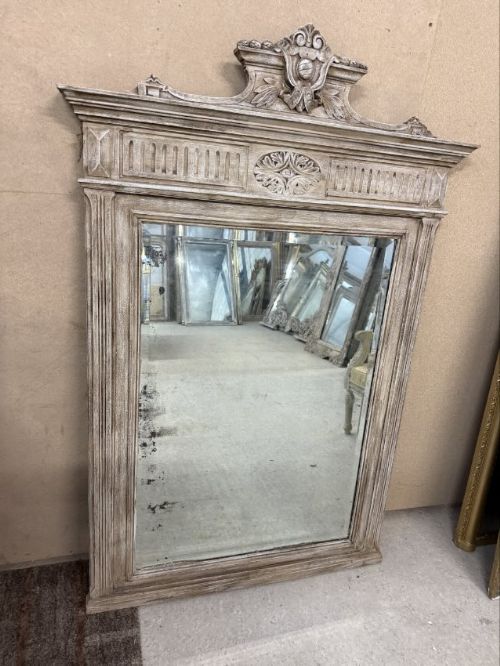
A grey painted overmantel is a large mirror designed to hang above a fireplace mantel, originating predominantly from the nineteenth century in both English and French workshops. These pieces appear in styles ranging from Louis Philippe and Louis XV to Victorian and Empire, frequently taking arched, shaped, or column-framed formats.
How they were made
Carved wood and gesso form the structural base of these mirrors, providing the detailed relief work seen on frames and crestings. Artisans applied layers of paint over wood or gesso, sometimes combining grey pigments with gilding or silvering to highlight architectural elements.
Many examples incorporate mirror glass or mercury glass held within robust wooden frames, which utilise traditional joinery and moulding techniques typical of nineteenth-century cabinet making.
Grey Painted Overmantel Retail Price Guide 2026
Typical asking prices for grey painted overmantel among the pieces listed under this phrase on Sellingantiques today, from the lower quarter to the upper quarter. They describe what is for sale here now, not the wider market.
Materials recorded across these items include carved wood, gesso, mercury glass, and painted wooden surfaces with gilt highlights.
What varies in quality
The depth and crispness of the carved wood and gesso ornamentation dictate the visual strength of the piece, separating finely detailed mouldings from simpler profiles. The execution of the painted surface, including the integration of parcel-gilt highlights and the character of the underlying grey finish, establishes the aesthetic distinction of each mirror.
Proportion and scale play a crucial role in quality, as larger formats with balanced arched or column-framed structures demand greater skill from the maker to maintain stability and visual harmony.
The Grey Painted Overmantel Glossary
- Overmantel mirror
- A large mirror specifically proportioned to sit on the wall or mantelpiece directly above a fireplace. These pieces often anchor the decorative scheme of a reception room.
- Gesso
- A plaster-based material applied to wood frames to create a smooth surface for painting or gilding. It allows for intricate relief carving and ornamentation.
- Parcel-gilt
- A decorative treatment where specific raised details of a carved frame are partially gilded with gold leaf, contrasting with the primary painted surface.
- Pier mirror
- A tall mirror designed to hang on the narrow section of wall between two windows. These pieces reflect additional light into period interiors.
- Louis Philippe
- A mid-nineteenth-century French style characterised by understated curves, gentle arched tops, and restrained classical ornamentation.
Grey Painted Overmantel: Frequently Asked Questions
Where should I hang an overmantel mirror?
These mirrors traditionally hang on the chimney breast directly above a fireplace mantel, where their scale balances the hearth below. They also function effectively on principal walls in high-ceilinged rooms to reflect light.
Ensure the wall construction supports the substantial weight of carved wood and glass before mounting.
How do I identify a French style mirror?
French pieces often display specific design vocabularies such as Louis Philippe arched tops, Empire column frames, or Rococo Revival curves. Carved wood and gesso ornamentation typically follows continental motifs from the nineteenth century.
Notice the integration of trumeau panels or distinct painted finishes that separate continental work from English Victorian designs.
What is mercury glass?
Mercury glass refers to double-walled silvered glass popular in older mirrors, known for producing a mottled, atmospheric reflection. It creates a softer visual depth compared to modern mirror glass.
This characteristic ageing adds historic authenticity to nineteenth-century frames.
How do I clean a painted wooden frame?
Dust the carved wood and gesso gently with a dry, soft brush to protect the historic paint layers. Avoid harsh chemical cleaners that might lift the original grey paint or parcel-gilt details.
Maintain stable indoor humidity to preserve both the wooden structure and the glass.