

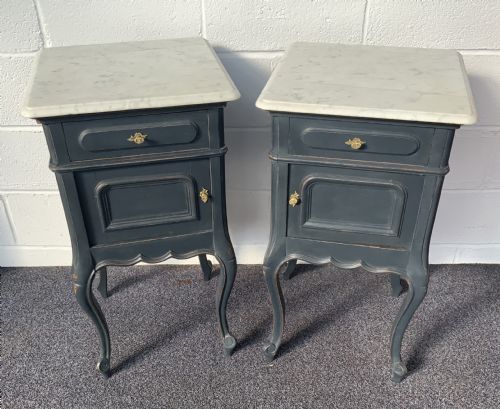


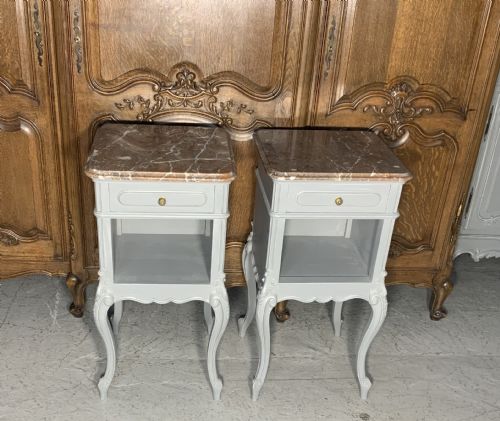

Grey Nightstands Pair
Grey nightstands pair selections bring matched symmetry and muted tone to a bedroom, combining practical bedside storage with continental elegance.
Grey Nightstands Pair
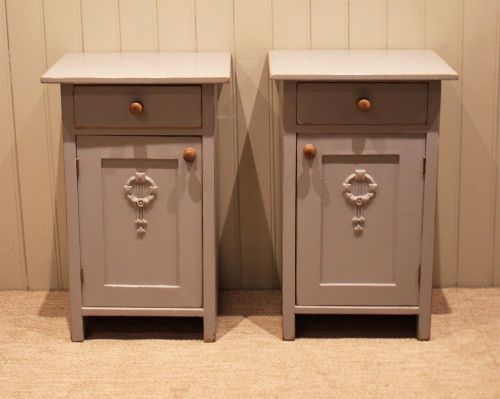
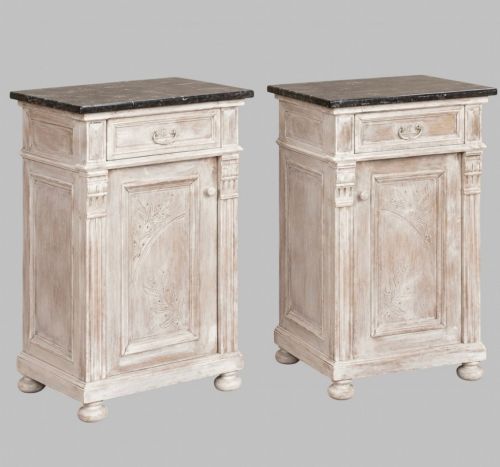
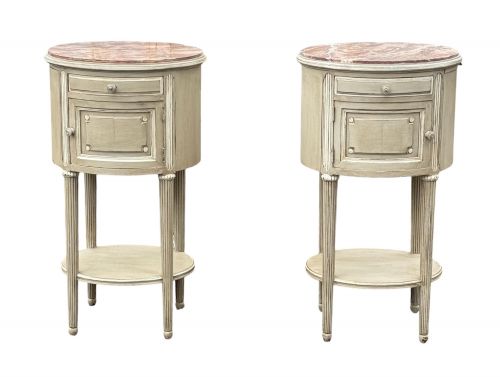
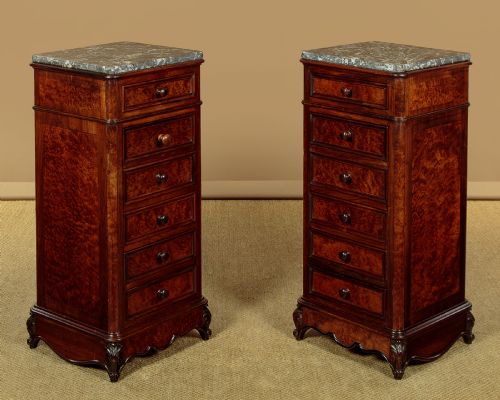
A grey nightstands pair brings balanced bedside storage and display surface into a bedroom, typically taking the form of matched cabinets, cupboards, small chests of drawers, or commodes. The pieces appearing here span the nineteenth century through to the 1930s, originating largely from French and Swedish workshops alongside British examples.
Buyers encounter numerous regional variations, from Gustavian influenced pieces featuring lighter painted surfaces to French provincial and chateau styles finished in specific modern or traditional grey paints. Many incorporate small cupboards or stacked drawers, offering enclosed storage beside the bed whilst maintaining a compact footprint.
The forms range from simple pine bedside tables to more decorative walnut, oak, and mahogany models, sometimes topped with marble or faux marble surfaces. This selection provides the essential symmetry required for twin bedside arrangements without sacrificing period character.
Materials and construction methods
Makers utilised a variety of solid timbers including pine, oak, walnut, mahogany, rosewood, and amboyna, often pairing structural woods with decorative veneers. Carved details appear on several oak and walnut specimens, whilst simpler pine and hardwood carcasses provide sturdy foundations for painted finishes.
Surface treatments define much of this selection, combining traditional hand painting with period paint applications in distinct grey tones. Certain continental commodes and cabinets feature integrated marble or faux marble tops, adding a durable and contrasting surface above the wooden storage compartments.
Grey Nightstands Pair Retail Price Guide 2026
Typical asking prices for grey nightstands pair among the pieces listed under this phrase on Sellingantiques today, from the lower quarter to the upper quarter. They describe what is for sale here now, not the wider market.
Listings feature pieces spanning the nineteenth century through the 1930s, utilising pine, oak, walnut, mahogany, and marble.
Distinguishing quality across the range
The distinction between standard examples and superior pieces rests upon the integrity of the timber, the subtlety of any carved ornamentation, and the precision of the joinery within the drawers and cabinet doors. Finer items display crisp mouldings, well-fitted panels, and balanced proportions that reflect the skill of the original cabinetmaker.
Finish application also dictates standing, where carefully layered hand-painted surfaces or well-preserved original timber grains outshine hurried modern coats. The inclusion of genuine marble tops or high-grade secondary woods such as oak and walnut elevates certain pairs above basic painted pine alternatives.
The Grey Nightstands Pair Glossary
- Gustavian style
- A Swedish interpretation of French neoclassical design characterised by restrained ornamentation and pale painted finishes. It originated in the late eighteenth century and heavily influenced nineteenth-century Scandinavian furniture production.
- Commode
- A low chest of drawers or a cabinet with doors, often standing on relatively tall legs. In continental usage, the term frequently describes decorative bedside storage units.
- Faux marble
- A painted surface treatment designed to imitate the veining and appearance of real stone. It provides a durable, decorative top without the heavy weight of actual marble.
Grey Nightstands Pair: Frequently Asked Questions
How do I style a grey nightstands pair in a bedroom?
Matched bedside tables create immediate visual symmetry on either side of the bed, anchoring the sleeping area with balanced proportions. Pairing them with contrasting lamps or simple accessories allows the painted or polished wood finishes to stand out.
The neutral grey tones blend easily with various textile colours and wall treatments, making them adaptable to both traditional and contemporary bedroom schemes. Their compact storage capacity keeps nighttime essentials neatly concealed.
What is the difference between French and Swedish bedside cabinets?
French cabinets often incorporate decorative carvings, curved lines, or warmer wood tones such as walnut and mahogany alongside painted finishes. They lean towards provincial elegance and detailed craftsmanship.
Swedish pieces, particularly those influenced by the Gustavian aesthetic, favour cleaner lines, lighter painted surfaces, and restrained neoclassical detailing. They offer a brighter, more restrained appearance suited to minimalist or airy interiors.
Are marble tops practical for daily bedside use?
Marble and faux marble surfaces provide a cool, hard-wearing resting place for water jugs, glasses, and alarm clocks without risking ring marks from condensation. They wipe clean easily and add a touch of traditional solidity.
While heavier than standard wooden tops, stone surfaces increase the overall stability of smaller bedside cabinets and introduce a pleasing textural contrast to painted pine or hardwood bases.
How should I care for antique painted bedside furniture?
Dust surfaces regularly with a soft, dry cloth to prevent dirt build-up on painted or polished finishes. Avoid using harsh chemical cleaners or abrasive scourers that might strip historical paint layers or damage delicate wood veneers.
Maintaining stable room humidity prevents timber from warping and keeps drawers moving smoothly within their tracks. Periodic waxing can protect exposed wooden elements while preserving the character of older pieces.