
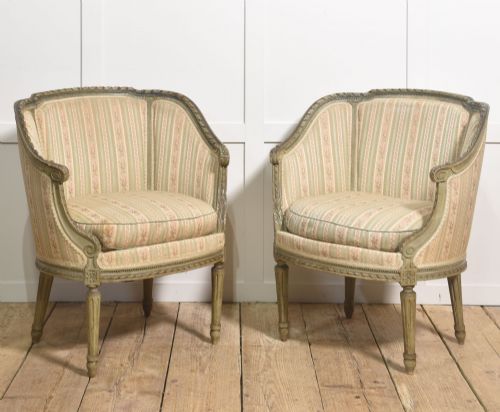
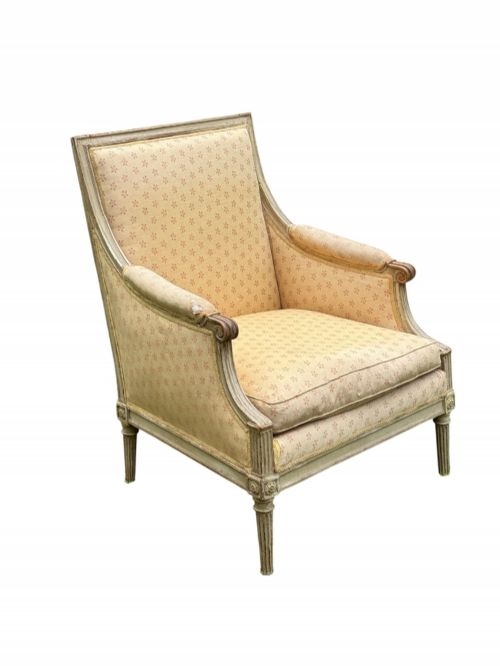


Grey Neoclassical Chairs
Grey neoclassical chairs bring restraint and painted elegance to a room, offering classic seating shaped by eighteenth and nineteenth century taste.
Grey Neoclassical Chairs
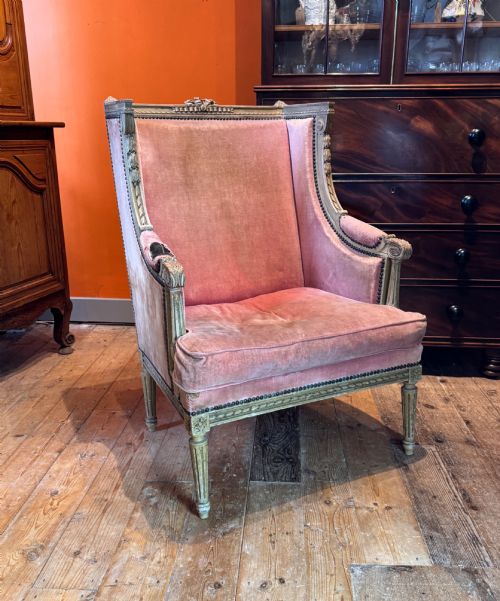
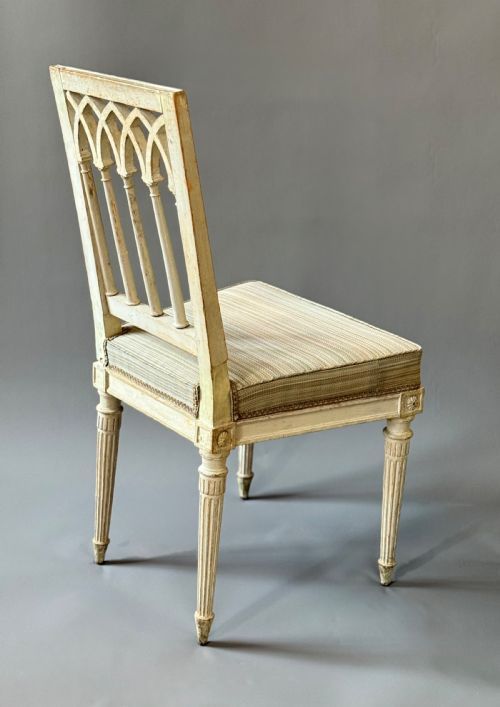
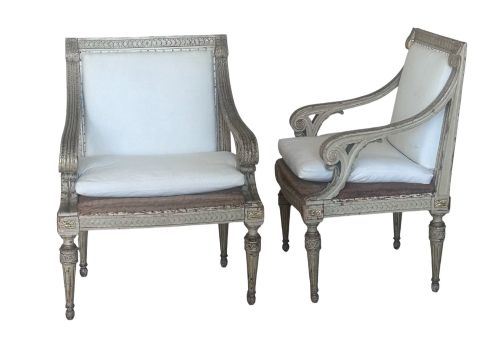
Grey neoclassical chairs comprise seating forms such as armchairs, side chairs, dining chairs, tub chairs and salon armchairs originating from the eighteenth and nineteenth centuries. These pieces reflect specific stylistic influences including Louis XVI, French Directoire, Gustavian and Gothick taste.
The version most commonly met on this page is the French Louis XVI or Gustavian style armchair, frequently found in painted wood with upholstered seats. Makers and workshops from periods spanning the 18th century through to the Edwardian era and the early twentieth century produced these variations.
Originating largely from French and Italian traditions, these chairs combine classical architectural lines with subdued painted surfaces. They serve both functional seating roles and decorative functions within domestic interiors.
What varies in quality
The refinement of hand-carved details and the preservation of original paint surfaces distinguish different tiers of pieces within this category. Surviving original finishes carry greater integrity than later repainting efforts.
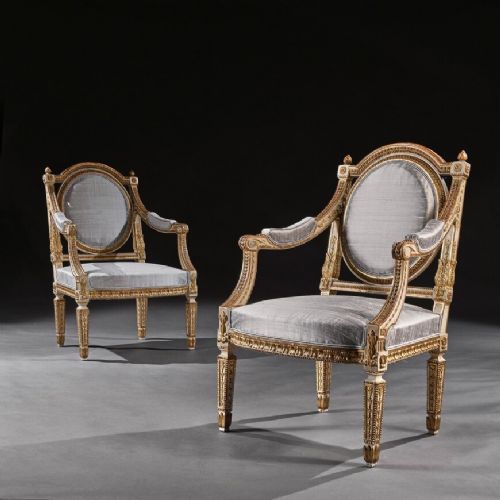
Proportion and structural harmony reflect the skill of the original workshop, separating standard production from finely executed artisan seating. The integration of parcel gilt elements alongside painted surfaces requires precise craftsmanship.
Listings feature painted wood, gesso, fabric, linen, and brass across 18th century, 19th century, and Edwardian periods.
Henri Jacob
The Grey Neoclassical Chairs Glossary
- Neoclassical
- A style drawing inspiration from the classical art and architecture of ancient Greece and Rome. It emphasises symmetry, straight lines and restrained ornamentation.
- Gustavian
- The Swedish interpretation of the French Louis XVI style, characterised by simpler lines and pale painted finishes. This aesthetic developed during the late eighteenth century.
- Gesso
- A plaster mixture applied to wood frames to create a smooth surface for painting or gilding. It allows for crisp carved details beneath the finish.
- Parcel Gilt
- A technique where portions of an object are highlighted with gold leaf while the remaining surface is painted or left plain. This creates a contrasting two-tone decorative effect.
- Directoire Style
- A transitional French design period bridging Louis XVI and Empire styles, marked by pared-back classical geometry. It flourished around the turn of the nineteenth century.
Grey Neoclassical Chairs: Frequently Asked Questions
What periods do grey neoclassical chairs span?
The pieces available here stretch from the eighteenth century through the nineteenth century, including Edwardian examples and pieces dated up to the 1930s.
Earlier items tend to feature traditional regional craftsmanship, while later nineteenth and twentieth century pieces often replicate classic Louis XVI and Gustavian forms.
How do I identify a Gustavian chair?
Gustavian chairs generally display Swedish interpretations of French neoclassical design, favouring pale painted wood and simpler carved details.
They often appear as dining chairs or armchairs with clean geometric lines and subdued grey or white paint.
Were these chairs originally painted?
Many eighteenth and nineteenth century chairs were painted from creation, utilising gesso and lead-based or oil paints to achieve a specific tonal finish.
Original paint surfaces often show patination and wear accumulated over decades of domestic use.
Where were these chairs made?
The evidence shows production rooted primarily in France and Italy, along with English interpretations in the Gothick taste.
Workshops in regions like Piedmont and France produced the distinct regional variations seen across these listings.
How do I use these chairs in a modern room?
Grey neoclassical chairs function effectively as accent seating in living spaces, studies or bedrooms due to their neutral painted tones.
Their classical silhouettes provide a sculptural element that pairs easily with both traditional and contemporary interiors.