

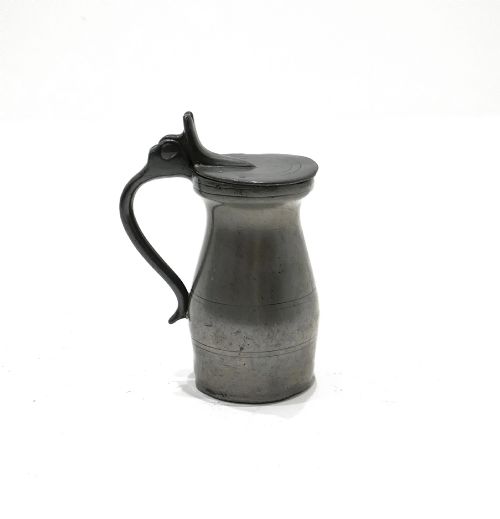
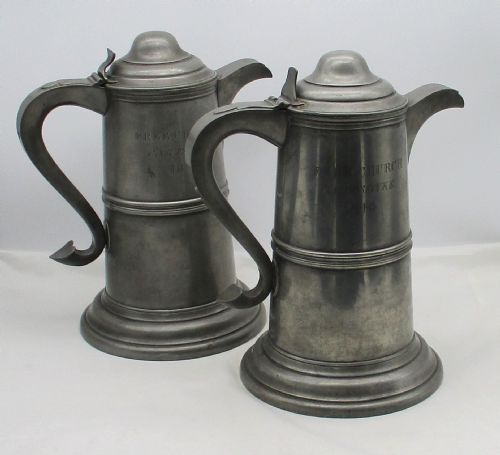


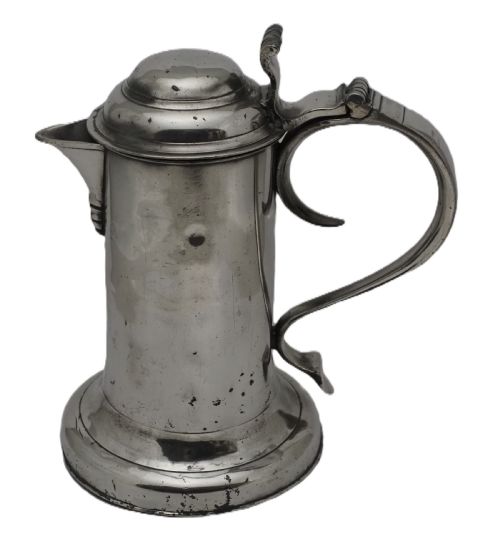


Grey Metal Flagon
A grey metal flagon is a sturdy vessel built for heavy use, offering a tactile piece of domestic or ecclesiastical history.
Grey Metal Flagon
A grey metal flagon is fundamentally a pewter vessel designed for holding liquids, ranging from small spirit measures to large church vessels and ale jugs. When you search for this phrase, you encounter utilitarian and ceremonial pieces spanning the eighteenth and nineteenth centuries.
The versions most commonly met on this page are eighteenth-century English flat-lidded flagons, Irish church flagons, and nineteenth-century German beer flagons. These objects encompass diverse regional forms, including Scottish tappit hens and Channel Islands measures.
Makers utilised durable alloy to fashion vessels that served taverns, homes, and parishes alike. The survival of these pieces reflects their solid original construction and practical utility.
Materials and construction
The primary material seen across these listings is pewter, a workable metal alloy that allowed smiths to cast and shape substantial vessels. Artisans utilised traditional casting and soldering techniques to assemble bodies, handles, and lids.
Details such as hops decoration and crested lids were applied to German and Scottish variants to add distinct regional character. The resulting surface bears the natural dull grey tone inherent to aged pewter.
Grey Metal Flagon Retail Price Guide 2026
Typical asking prices for grey metal flagon among the pieces listed under this phrase on Sellingantiques today, from the lower quarter to the upper quarter. They describe what is for sale here now, not the wider market.
German craftspeople once decorated giant beer flagons with hammered hops, ensuring even the thirstiest patrons admired the flora on their drinkware.
Markers of quality
Quality in a grey metal flagon rests upon the crispness of the original casting and the integrity of its proportions. Pieces featuring maker marks or clear ownership inscriptions hold greater distinction for collectors.
The survival of original lids, thumbpieces, and hinges without heavy alteration distinguishes superior examples. Weight and balance also separate standard utilitarian vessels from finer presentation pieces.
John Heaney·Robert Iles·John De St Croix
The Grey Metal Flagon Glossary
- Flagon
- A large drinking vessel with a handle and usually a lid, utilised for ale, wine, or church services. These containers form the core of this category.
- Pewter
- A malleable metal alloy primarily composed of tin, historically combined with lead, copper, or bismuth. This material gives the pieces their characteristic grey appearance.
- Flat-Lidded
- A style of vessel lid featuring a completely flat top surface, typical of early eighteenth-century English and Scottish forms. This design provides a clean profile distinct from domed covers.
- Tappit Hen
- A traditional Scottish form of pewter measure with a lid resembling a sitting hen. These heavy vessels possess a distinct bulbous body and a capacity specific to old Scottish standards.
- Spire Flagon
- A tall vessel featuring a steeply tapered lid resembling a spire, often produced in England during the eighteenth century. Such forms served both domestic and ecclesiastical functions.
Grey Metal Flagon: Frequently Asked Questions
What were grey metal flagons used for?
These vessels served various practical functions in daily life, ranging from measuring spirits in taverns to holding wine for church communion services. Larger examples handled bulk ale distribution.
Over time, many survived through domestic use or parish preservation, shifting from active utility to decorative and historical items.
How do I care for antique pewter?
Antique pewter requires minimal intervention to preserve its stable surface and natural grey patina. Dusting with a dry cloth is generally sufficient for regular maintenance.
Avoid aggressive modern metal polishes that strip away the aged skin. Keeping the vessels in a stable environment away from excessive moisture protects the metal.
How are different periods identified?
Periods are identified through specific stylistic markers such as flat lids, thumbpiece shapes, and body proportions. Eighteenth-century forms tend to be heavier and plainer than later nineteenth-century decorative pieces.
Maker marks and touchmarks stamped into the metal often provide direct evidence of a workshop and era. Comparing capacity standards also aids in dating.