



Grey Maritime Artwork
Grey maritime artwork captures the enduring pull of coastal shores, bustling harbours and open seas through muted palettes and atmospheric brushwork.
Grey Maritime Artwork
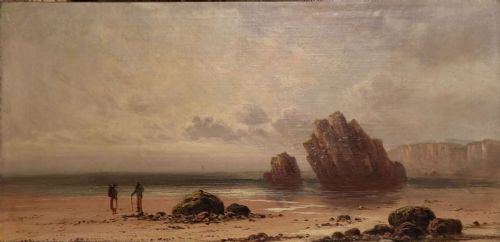
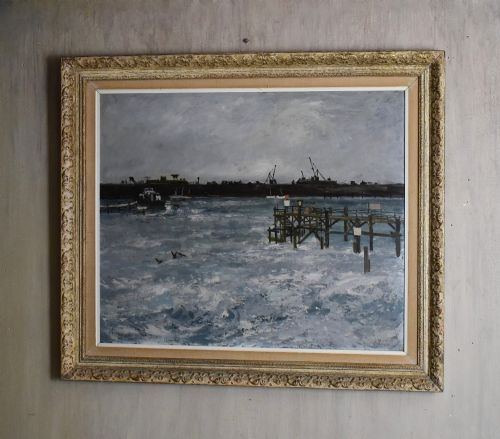
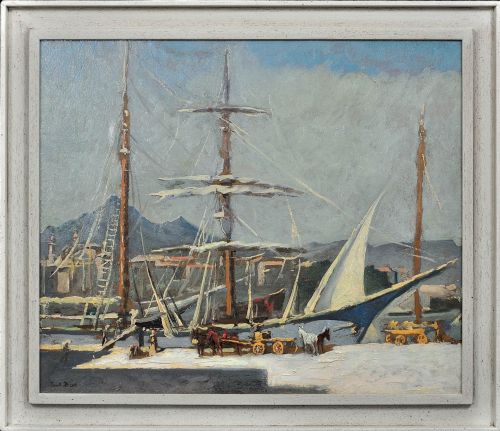
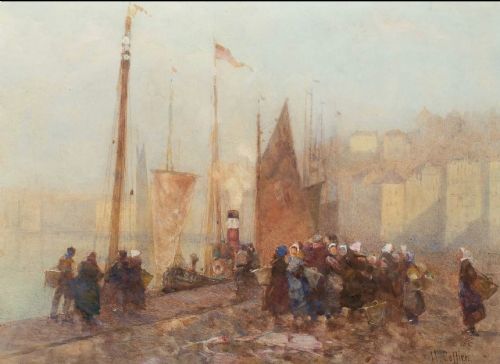
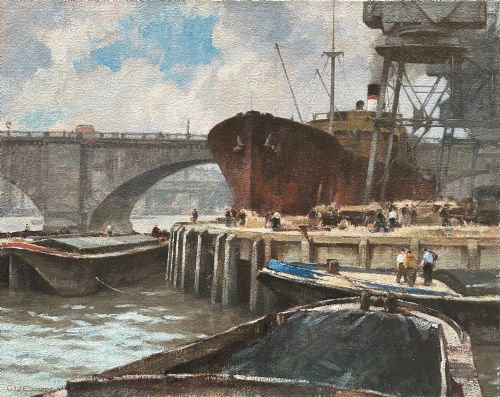
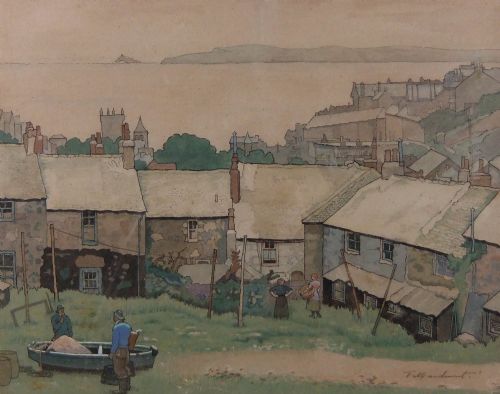
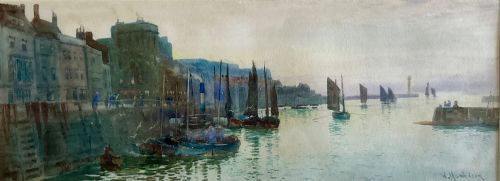
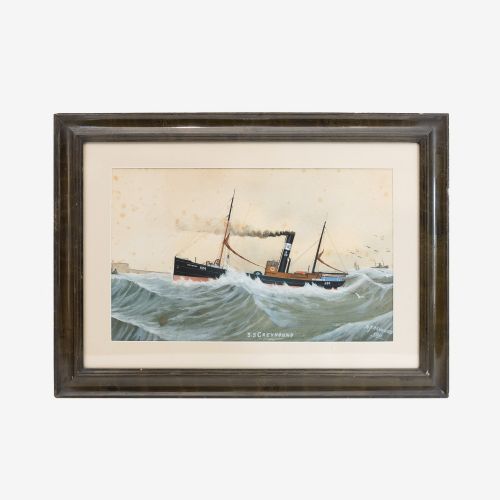
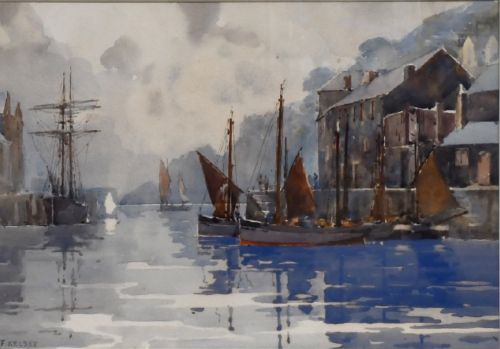
Grey maritime artwork encompasses paintings and watercolours that focus on marine subjects, coastal scenes, shipping and harbour life rendered in restrained, sober tones. When browsing this selection, collectors encounter compositions dominated by leaden skies, choppy slate-grey waters and misty coastal atmospheres.
The material spans the nineteenth century through the mid-twentieth century, capturing stylistic shifts from Victorian maritime realism towards British Impressionism and abstract approaches. Most pieces originate from British and European coastal artists documenting local harbours, fishing fleets and naval vessels.
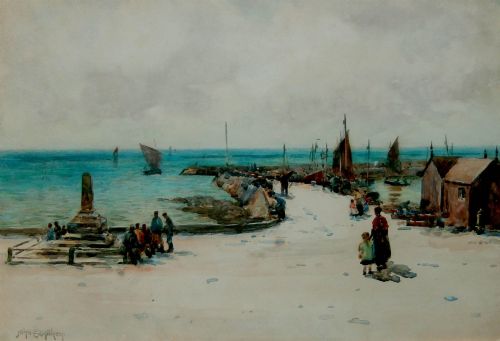
The most common forms on this page are framed watercolours, gouache studies and oil paintings on canvas or board. These works range in scale from intimate coastal sketches to substantial harbour scenes depicting vessels at anchor or under repair.
Materials and techniques
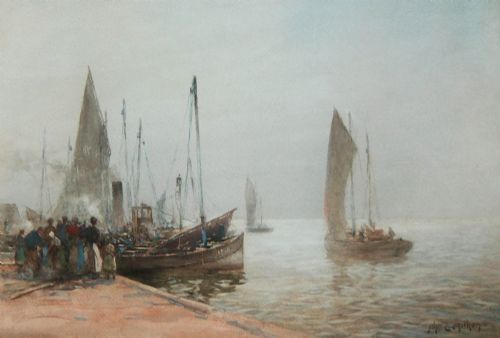
Painters working in this genre relied primarily on oil paint or watercolour pigment applied to canvas, stretched paper, wooden boards or heavy card. Watercolours often utilised fluid washes combined with gouache highlights to capture sea spray, mist and overcast daylight.
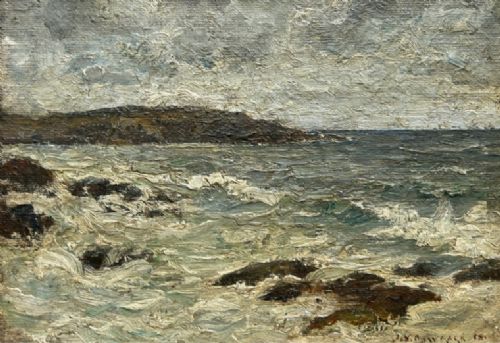
Oil painters built up surfaces using impasto or smooth glazes, working oil paint and pigment into thick applications that conveyed the heavy texture of turbulent seas and wooden hulls. These traditional methods allowed artists to build atmospheric depth using restricted monochrome and grey palettes.
Several naval pieces preserve the sentimental tributes sailors paid to their ironclad battleships.
Factors determining quality
The distinction between ordinary topographical records and superior grey maritime artwork lies in the artist's command of light, atmosphere and fluid movement. Masterful works use subtle tonal gradations to convey moisture in the air, the weight of a heavy sea and the specific architecture of vessels.
Compositional confidence and expressive brushwork separate accomplished paintings from rigid illustration. Stronger pieces reveal a sure hand in balancing expansive grey skies against dark hulls and turbulent water, creating a cohesive mood that endures across the centuries.
Thomas Bush Hardy·Hector Caffieri·Edward Seago·Vincenzo D Esposito·Frank H Mason
The Grey Maritime Artwork Glossary
- Gouache
- An opaque watercolour medium containing pigment mixed with a water-soluble binder and white filler. It provides heavier coverage than transparent watercolour, making it ideal for rendering bright highlights on dark waves.
- Impasto
- Paint applied in thick layers that stand out visibly from the surface. In maritime art, this technique lends physical texture to churning water, cloudy skies and weathered timber.
- Seascape
- A work of fine art that depicts the sea, coastal views or ships in open water. It forms the primary category for marine paintings and coastal watercolours.
- Barque
- A sailing vessel with three or more masts, square-rigged on the fore and main masts and fore-and-aft rigged on the mizzenmast. These commercial ships frequently appear in nineteenth and early twentieth-century maritime paintings.
- Provenance
- The documented history of ownership of a work of art. Established provenance helps verify the attribution, authenticity and exhibition history of historic marine paintings.
Grey Maritime Artwork: Frequently Asked Questions
What is grey maritime artwork?
Grey maritime artwork refers to paintings, watercolours and drawings depicting ships, harbours and coastal scenes using subdued, atmospheric palettes of grey, slate and silver.
These pieces capture the natural moods of the sea, from quiet coastal inlets to stormy waters under overcast skies.
How were these paintings displayed?
Historically, maritime watercolours and oil paintings were framed in wood, often with gilt mounts, to complement domestic interiors and maritime offices.
Today, they suit traditional studies, living rooms and hallways where neutral coastal tones harmonize with interior decor.
How do I care for antique watercolours?
Antique watercolours and works on paper require protection from direct sunlight to prevent the fading of pigments and discolouration of paper.
Displaying them away from moisture and using conservation-grade framing materials ensures their preservation for future generations.
How can I tell the age of a painting?
The age of a piece can be estimated by examining the support materials, framing methods, artist signatures and stylistic traits associated with specific periods.
Victorian works often display tighter detail and narrative focus, whereas mid-century pieces lean towards looser impressionistic brushwork.