


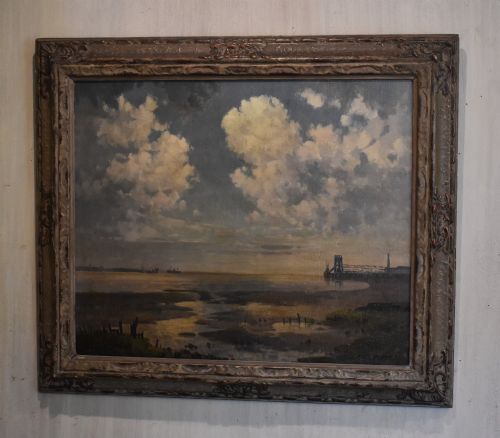
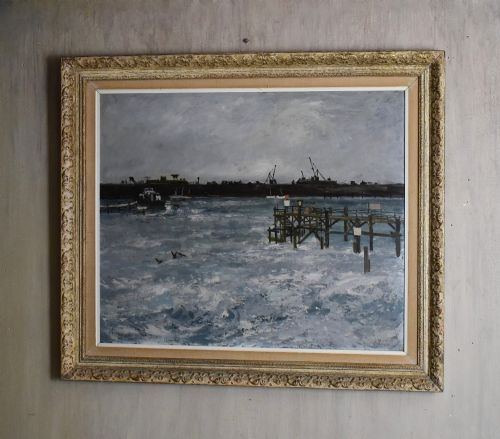
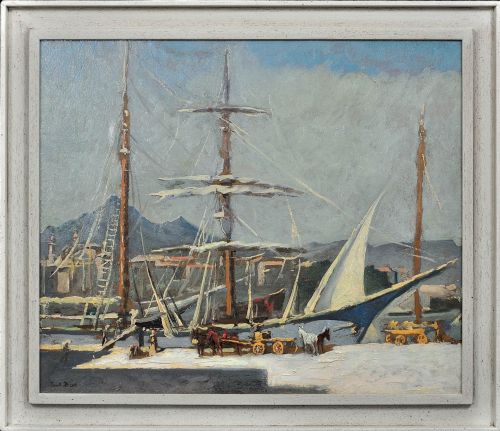

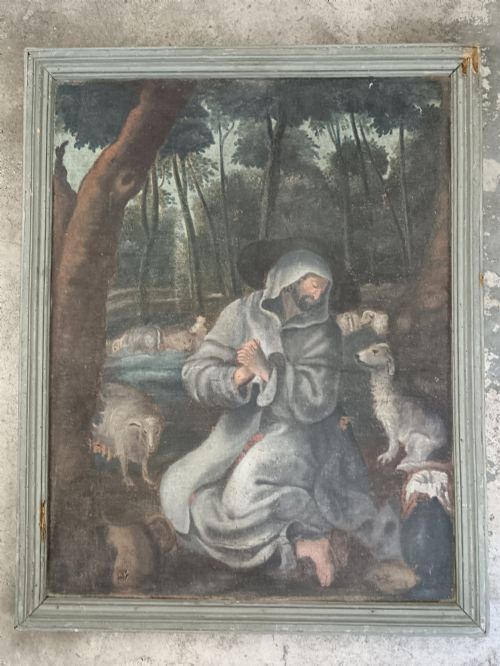

Grey Framed Canvas Painting
These grey framed canvas painting selections bring together centuries of oils and wood framing, offering character and depth for a wall.
Grey Framed Canvas Painting
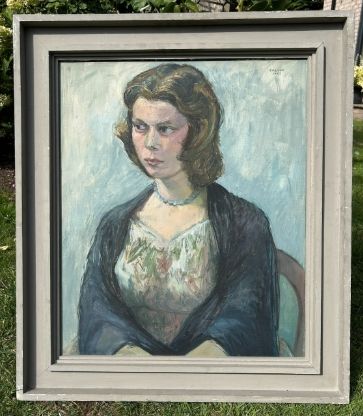
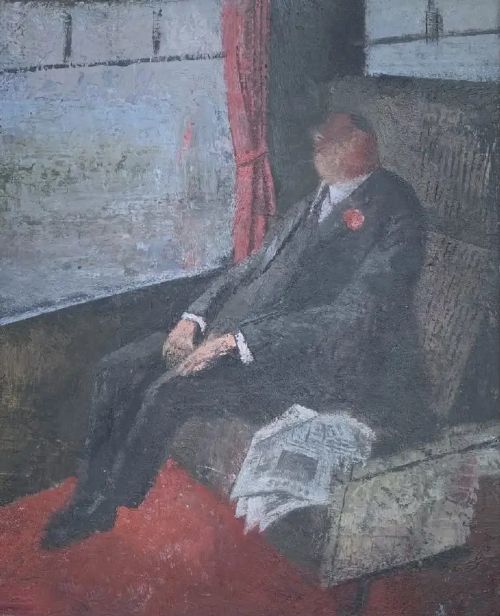
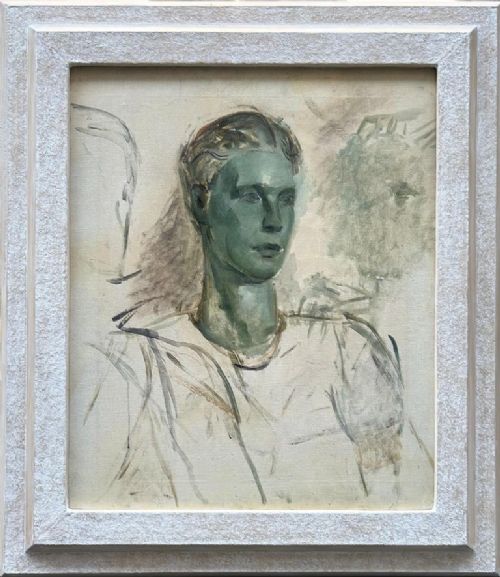
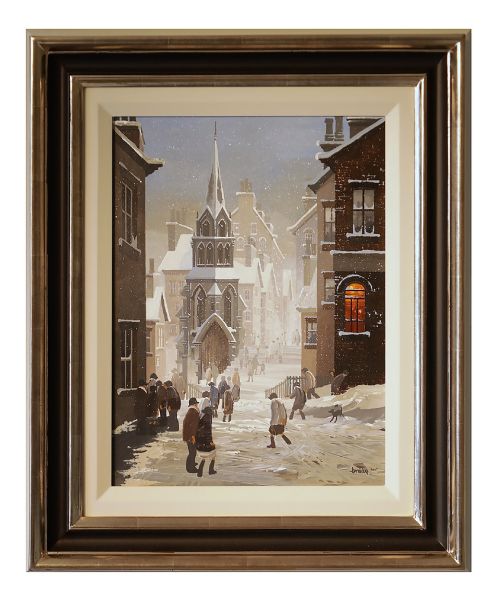
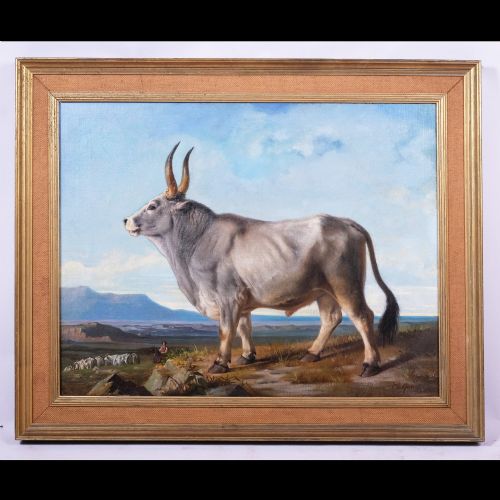
When searching for a grey framed canvas painting, buyers encounter oil paint on canvas housed within timber surrounds, spanning from the eighteenth century to the mid twentieth century. These works capture portraits, landscapes, and rural scenes executed within traditions such as British Impressionism, Modern British, and Nineteenth Century Realism.
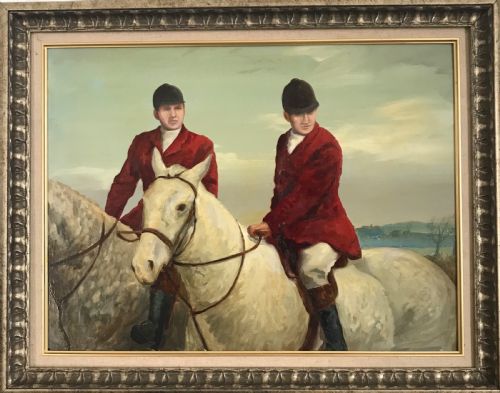
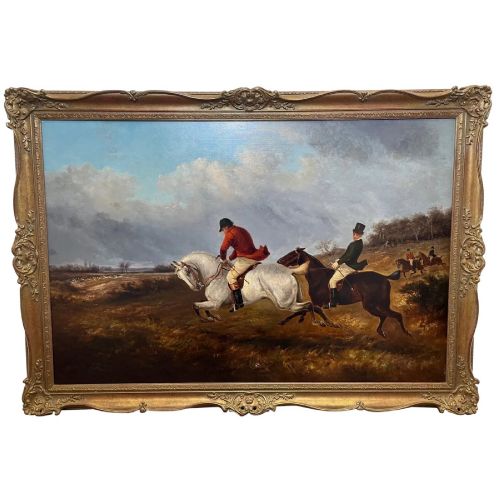
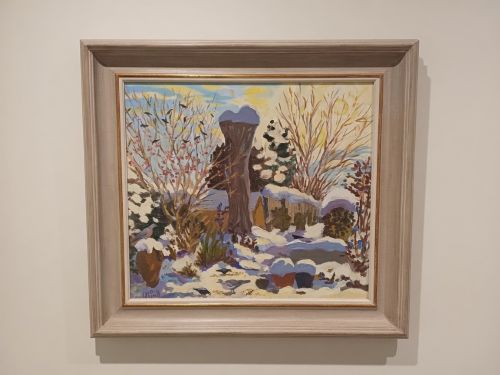
The pieces on this page lean heavily into equestrian studies, coastal views, and figural compositions, often bearing the distinct palettes of mid century modernism or earlier European schools. The framing ranges from simple wooden borders to gilt and painted mouldings that complement the canvases they enclose.
Materials and construction methods
The foundation of these works relies on woven canvas stretched across wooden frames, serving as the ground for applications of oil paint. Artists utilised traditional pigments and oils, building up brushwork that ranges from smooth glazes to thick impasto.
The surrounding frames are constructed from timber, occasionally finished with gilt or paint, designed to protect the canvas edges and provide a finished boundary for wall display.
Listings span from the eighteenth century to the mid twentieth century, featuring oil on canvas supported by wooden frames.
Determining quality in these works
Quality rests upon the handling of the medium, where confident brushwork and tonal control distinguish accomplished execution from simpler execution. The integration between the canvas and its wooden frame also plays a role, with period-appropriate surrounds offering greater architectural harmony.
Compositional strength and the preservation of the pigment layer dictate the lasting impact of each piece. Works that retain their original surface texture without excessive restoration command closer attention from collectors.
Thomas Smythe·John Michael Wright·Brian Shields Braaq·Paul Jean Anderbouhr·Herbert Royle
The Grey Framed Canvas Painting Glossary
- Canvas
- A heavy woven fabric, usually linen or cotton, stretched over a wooden stretcher to act as a support for painting. It provides a textured surface that interacts with oil pigments.
- Oil Paint
- A slow drying paint made by mixing pigments with a drying oil, commonly linseed oil. This medium allows for rich colour blending and varied surface textures.
- Impasto
- A technique where paint is laid on an area of the surface in very thick layers, usually thick enough that the brush or painting-knife strokes are visible.
- Pentimento
- An alteration in a painting, evidenced by traces of previous work that have been painted over. This occurs when an artist changes their mind during the creative process.
Grey Framed Canvas Painting: Frequently Asked Questions
How do I hang a canvas painting?
Ensure the wall fixings match the weight of the timber frame and the canvas support. Utilise two points of contact on the wall to keep the piece level over time.
Position the centre of the canvas at eye level to achieve the correct visual balance within your room.
What is oil on canvas?
This method involves applying oil-based pigments directly onto a stretched fabric ground. The technique permits both detailed precision and expressive, textured brushwork.
Artists across centuries favored this combination for its durability and the luminous depth it imparts to colours.
How are different periods identified?
Stylistic clues, costume details, and framing methods provide clear indicators of a painting's era. Brushwork techniques also shift from the precise realism of earlier centuries to the looser applications seen in mid twentieth century works.
Examining the reverse of the canvas and the construction of the wooden stretcher yields further dating evidence.
Where should I place these paintings?
Select spaces away from direct sunlight and excessive moisture to protect the oil pigments and the wooden frame. Living rooms, studies, and hallways offer suitable environments for display.
Allow adequate wall space around the frame so the artwork commands the room without feeling crowded.