





Green Woven Textile
When you seek a green woven textile, you enter a world of historic verdure tapestries, silk cushions, and Flemish wall hangings.
Green Woven Textile
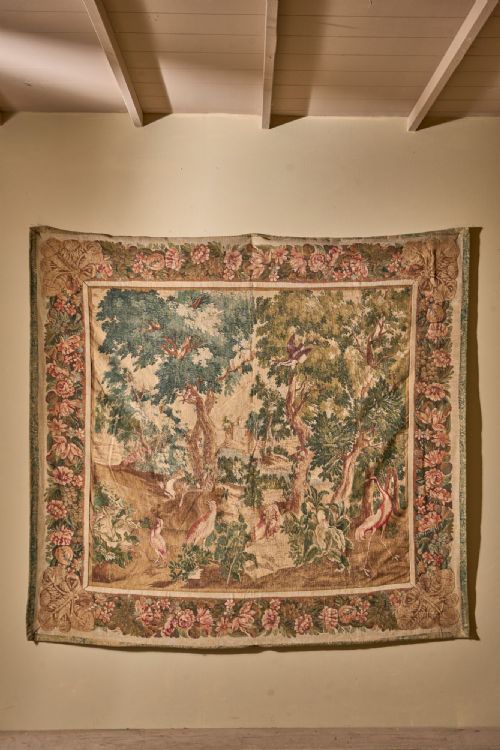
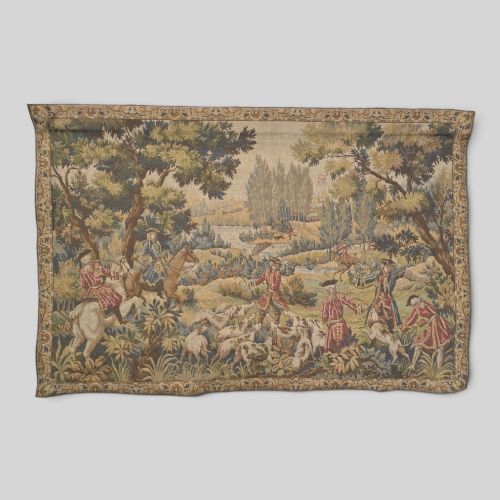
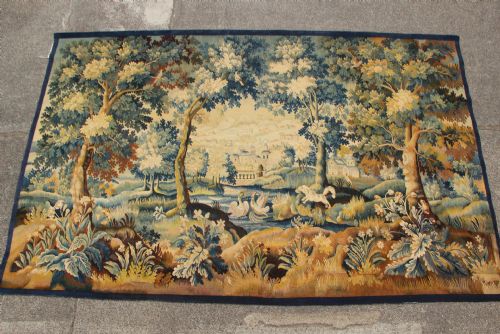
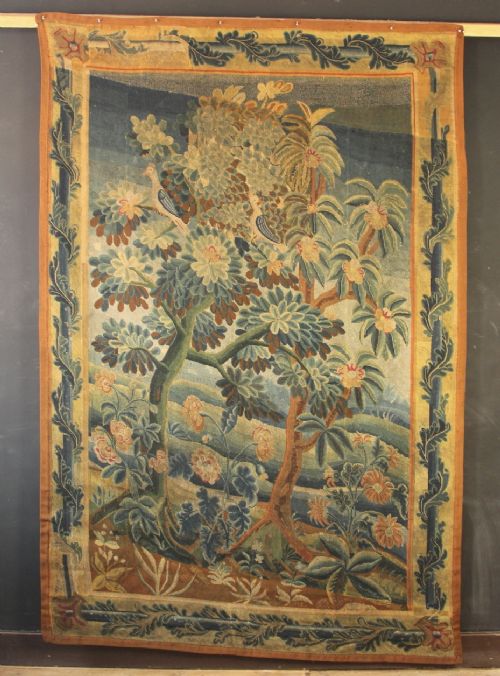
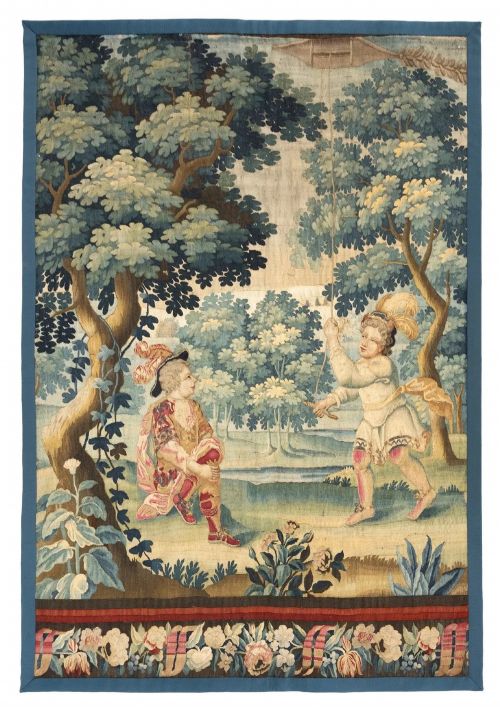
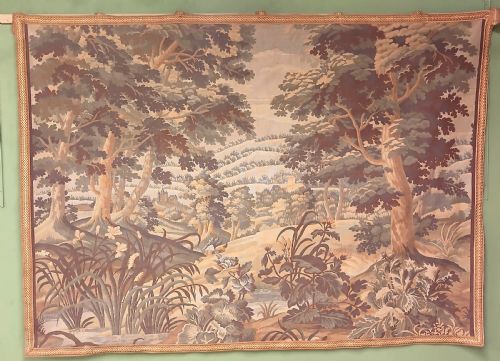
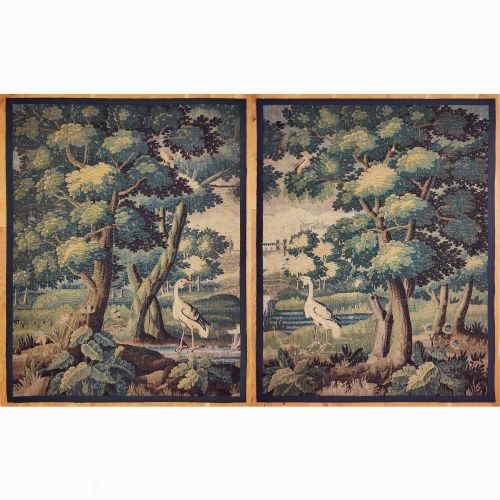
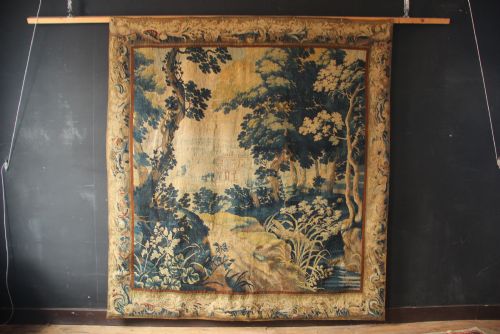
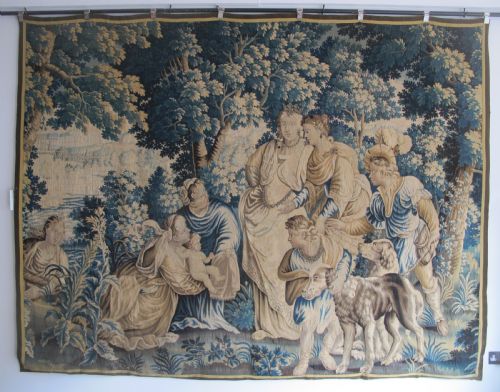
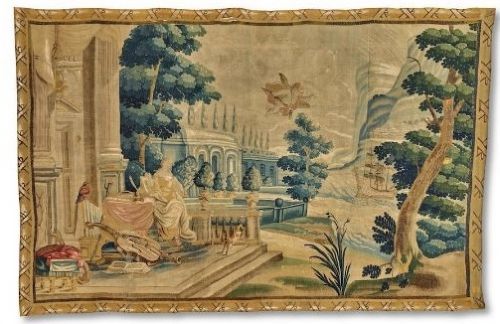
A green woven textile on this page typically manifests as a large wall tapestry, a verdure wall hanging, or a smaller furnishing such as a cushion cover. The green tonalities arise primarily from historic botanical scenes, forest landscapes, and pastoral views depicted in wool and silk.
The selections span centuries, reaching from sixteenth and seventeenth century Flemish and German workshops through to nineteenth century French revivals. Buyers encounter everything from grand scale mythological scenes to folding screens and framed woven panels.
Verdure subjects dominate the category, presenting dense garden foliage, trees, and wildlife woven in subdued woodland shades. Alongside these hangings, collectors find silk textiles, wool blankets, and occasional carpets from European weaving centres.
Materials and construction
The works rely fundamentally on wool and silk fibres, often supported by linen warp threads and occasionally augmented with fabric fringe, wood frames, or brass elements. Weavers employed traditional loom techniques to interlace these organic materials into pictorial surfaces.
Dyes derived from natural sources yielded the characteristic verdure greens, earthy browns, and deep blues seen across the Flemish and French pieces. Over time, these vegetable dyes settle into muted, harmonious palettes that define the visual weight of antique woven textiles.
One unexpected textile captures a stately portrait of Kaiser Wilhelm II woven into a rug.
Assessing quality in antique weaving
Quality rests heavily on the density of the weave and the complexity of the pictorial composition. Finer examples display intricate rendering of foliage, facial expressions in figurative scenes, and a careful tonal gradation within the green areas.
Condition and intact borders also govern the standing of a piece, separating substantial, well-preserved wall panels from heavily fragmented textile sections or later adaptations.
The Green Woven Textile Glossary
- Verdure tapestry
- A tapestry featuring a landscape design dominated by trees, plants, foliage, and often birds or animals. These pieces rely heavily on green and earthy tones.
- Aubusson
- A style of tapestry and carpet woven in the French town of Aubusson, known for pastoral and floral designs. These works often reflect French Baroque and Rococo aesthetics.
- Flemish tapestry
- Woven textiles originating from the Flanders region, celebrated for sixteenth and seventeenth century works depicting grand mythological, biblical, or woodland scenes.
- Needlework tapestry
- A textile created by stitching yarn onto a canvas or woven ground by hand rather than utilising a loom. These pieces offer rich textural detail.
- Silk lampas
- A complex figured fabric woven with supplementary weft threads, creating a raised pattern on a ground of silk. Eighteenth century examples show sophisticated pattern work.
Green Woven Textile: Frequently Asked Questions
What is a verdure tapestry?
A verdure tapestry is a historic wall hanging that depicts a lush landscape filled with trees, foliage, and woodland creatures. These scenes use various shades of green to create a dense forest atmosphere.
Historically, they brought the outside world into grand interiors, serving as both decoration and insulation for stone walls.
How should I hang a large textile?
Large tapestries require even weight distribution to prevent distortion of the historic weave. Using a discreet fabric sleeve stitched to the reverse allows a wooden or metal rod to support the piece.
Keep woven textiles away from direct sunlight to protect the wool and silk fibres from fading.
How do I date a Flemish tapestry?
Dating involves examining the stylistic traits, border designs, and weaving techniques characteristic of seventeenth or eighteenth century workshops. Flemish pieces from this era frequently show characteristic verdure or mythological motifs.
Expert analysis of the dye palette and materials provides further confirmation of the period.
Can these textiles be used as floor coverings?
Most pieces listed as tapestries or wall hangings are structurally unsuited for heavy foot traffic on floors. Their delicate wool and silk construction is intended for vertical display on walls or as decorative cushions and screens.
For floor use, specific woven rugs and carpets are designed to withstand foot pressure.