






Green Woodland Landscape
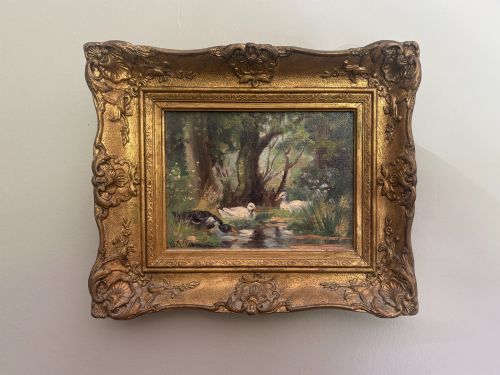
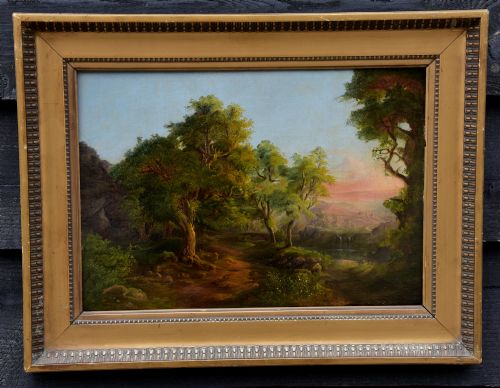
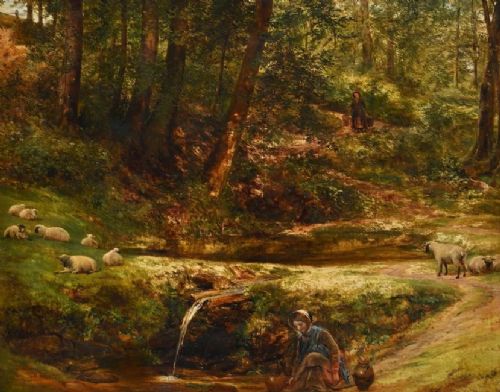
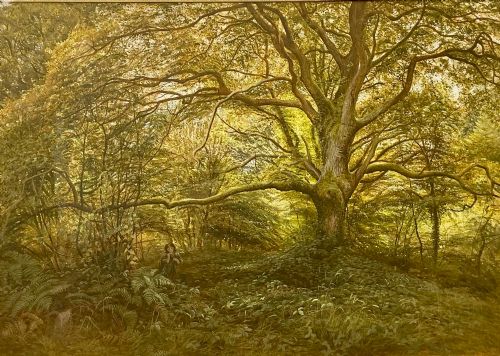
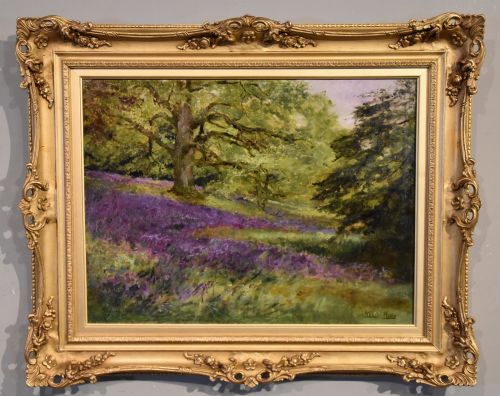
A green woodland landscape captures the quiet intimacy of shaded trees and verdant paths, offering collectors a timeless window into nature.
Green Woodland Landscape
A green woodland landscape represents an enduring artistic fascination with trees, foliage, and shaded pathways set within nature. These works most commonly appear as oil paintings and watercolours, alongside occasional verdant tapestries and prints.
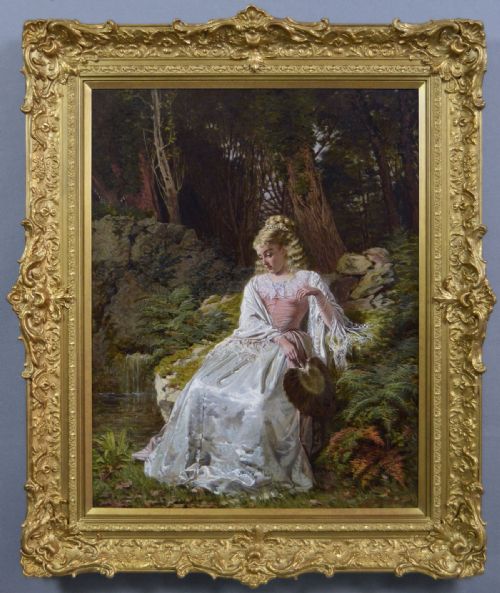
The selections span from the seventeenth century through to the mid-twentieth century, encompassing Victorian interpretations, British Impressionism, and the Barbizon School. Buyers encounter scenes ranging from romantic canopy views to quiet forest paths with figures.
Originating predominantly from British and European hands, these pieces record changing attitudes toward the countryside across several centuries. They serve as historical records of pastoral scenery rendered through traditional artistic mediums.
How They Were Made
Artists built these compositions primarily using oil paint on canvas or board, applying pigment to capture the dense textures of foliage and the play of light through branches. Watercolour on paper was equally prevalent, allowing for fluid washes that rendered the damp atmosphere of forest floors.
Woven wool and silk threads formed larger verdant wall tapestries, constructing deep botanical vistas through intricate loom techniques. Collotype prints later offered a mechanical method of reproducing photographic or illustrated woodland scenes.
Several woodland scenes quietly hide wandering cattle, foraging children, and the occasional bathers deep within the leafy shade.
What Varies in Quality
The success of a green woodland landscape rests upon the artist's ability to manipulate light and shadow beneath a heavy canopy. Superior examples demonstrate a sophisticated handling of depth, where layered tones give weight and realism to the undergrowth.
Brushwork or weave density dictates the tactile richness of the piece, separating mechanical repetition from expressive observation. The harmony of the green palette reveals the maker's skill in distinguishing moss, leaves, and shadow without relying on monotonous hues.
Richard Sebastian Bond·William H Myers·Thomas W Lascelles·Richard Redgrave·Paul Desire Trouillebert·Bonomi Edward Warren·Henry Yeen King·Thomas Bromley Blacklock·William Hoggatt·Thomas Edward Roberts·James Mallard Bromley·Alfred Grey·Henri Joseph Harpignies·John Wright Oakes·James Proudfoot·Rowland Henry Hill·Edmund George Warren·Abraham Hulk Jnr·Alfred W Parsons·Harold Swanwick·William Lucas·Thomas Hollingsworth·Ernest Higgins Rigg·Edward H Holder·George F Wetherbee
The Green Woodland Landscape Glossary
- Barbizon School
- A French movement dedicated to naturalistic landscape painting away from academic convention. Artists worked closely from direct observation of forest and field.
- Verdure Tapestry
- A European wall hanging featuring a stylized landscape dominated by foliage, trees, and occasionally animals or figures. These textiles often utilised muted green tones that aged gracefully over centuries.
- Collotype
- A planigraphic printing process utilising gelatin and photographic negatives. It produces continuous tone reproductions with exceptional detail found in early twentieth-century prints.
- Oil on Canvas
- Pigment suspended in a drying oil applied to stretched woven fabric. This medium allowed painters to build rich textures and deep chromatic layers.
- Watercolour Painting
- Pigments suspended in a water-soluble vehicle applied to paper. The technique relies on the reflective quality of the white paper showing through transparent washes.
Green Woodland Landscape: Frequently Asked Questions
What periods do green woodland landscapes cover?
These works stretch from seventeenth-century Flemish tapestries through nineteenth-century Victorian canvases and into twentieth-century modern interpretations.
Victorian and Edwardian eras dominate the selection, showing a strong academic and impressionistic interest in natural scenery.
How were verdant tapestries used historically?
Large verdant tapestries served as insulation on stone walls in grand European homes, blocking drafts while displaying rich botanical scenes.
Over time, their primary function shifted toward purely decorative wall art within domestic interiors.
How do I distinguish watercolours from oil paintings?
Watercolours utilise translucent washes on paper, often framed under glass to protect the delicate surface from moisture and light damage.
Oil paintings feature thicker pigment applied to canvas or board, possessing a distinct textural relief and greater resilience.
What distinguishes Barbizon school landscapes?
Barbizon painters rejected formal studio landscapes in favour of direct outdoor observation, focusing on atmospheric realism and humble forest views.
Their work emphasises moody lighting, naturalistic greens, and a quiet reverence for rural French topography.