

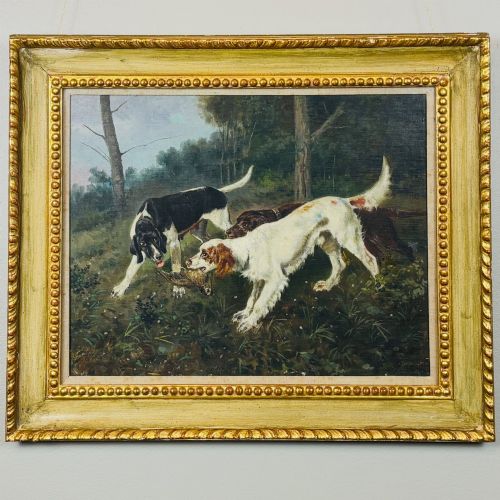
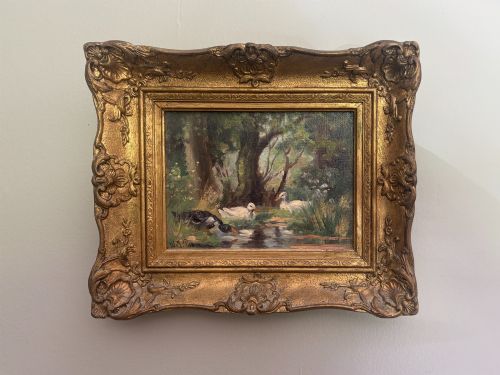

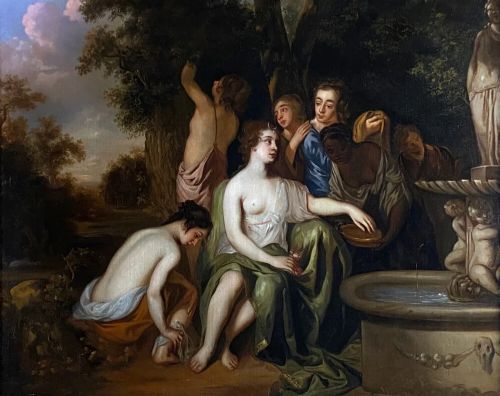
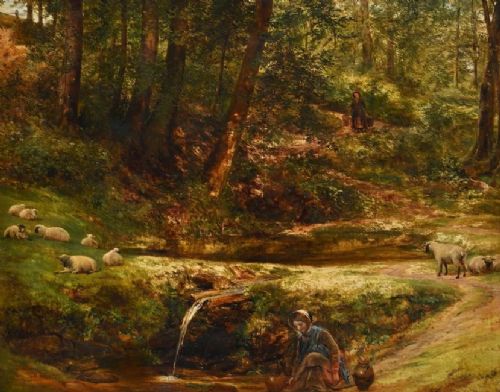

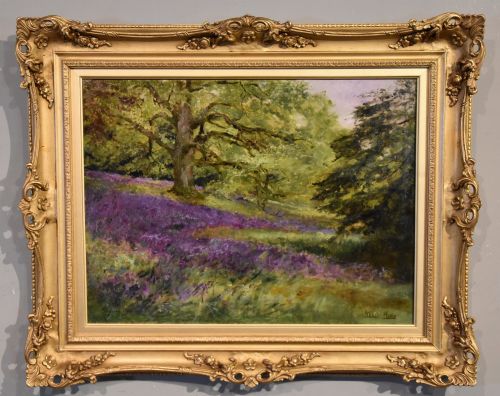
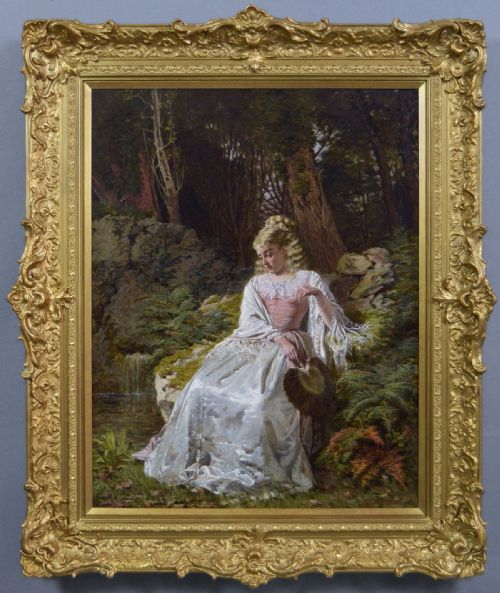


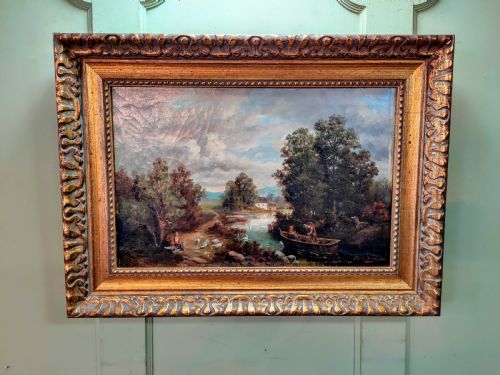
Green Woodland Canvas Painting
These green woodland canvas painting works capture quiet glades and leafy canopies through traditional oil pigments.
Green Woodland Canvas Painting
A green woodland canvas painting brings nineteenth-century and early twentieth-century rustic scenery directly into view. These works primarily take the form of framed oil paintings on canvas depicting trees, shaded paths, and country lanes.
The selection ranges from Victorian forest interiors to Edwardian pastoral views and later twentieth-century impressions. Pieces span multiple periods including the seventeenth, nineteenth, and twentieth centuries, often framed in wood with gesso and gilt details.
The subjects focus heavily on natural British and European landscapes, featuring figures, cattle, or rivers nestled among thick foliage.
Materials and Construction
Every green woodland canvas painting relies on oil paint applied to stretched woven canvas. Pigments are built up in layers to capture the depth of light filtering through branches and onto forest floors.
Support structures typically consist of wooden stretchers housed within heavy wooden frames, frequently enhanced with moulded gesso and gold leaf or gilt finishes. This combination protected the fabric and provided a formal presentation for domestic display.
Green Woodland Canvas Painting Retail Price Guide 2026
Typical asking prices for green woodland canvas painting among the pieces listed under this phrase on Sellingantiques today, from the lower quarter to the upper quarter. They describe what is for sale here now, not the wider market.
Several canvases invite viewers past the trees to find children gathering firewood or cattle resting by woodland pools.
Distinctions in Quality
Quality rests in the handling of light and the subtlety of the brushwork across the canopy and undergrowth. Stronger examples display a confident command of tone that suggests atmosphere and depth rather than mere botanical recording.
The execution of the underlying canvas preparation and the integrity of the original wood framing also separate standard decorative works from accomplished fine art paintings by recognised regional or academic painters.
Richard Sebastian Bond·William H Myers·Thomas W Lascelles·Richard Redgrave·Paul Désiré Trouillebert·Henry Yeen King·Thomas Bromley Blacklock·Thomas Edward Roberts·James Mallard Bromley·John Wright Oakes·James Proudfoot·Abraham Hulk Jnr·Thomas Hollingsworth·Ernest Higgins Rigg·Edward H Holder·George F Wetherbee·Lester Sutcliffe·Walter Emsley·Charles Edmond Rene His·Charles Duval·George Neil·Henri Harpignies
The Green Woodland Canvas Painting Glossary
- Canvas
- A heavy woven fabric used as a surface for oil painting. It is stretched tightly over a wooden frame before pigment is applied.
- Gesso
- A plaster-like mixture applied to wood frames and mouldings to create a smooth surface for gilding and ornamentation.
- Gilt
- A thin layer of gold or gold-like material applied to wooden frames. It adds a reflective finish that complements the tones within the painting.
- Barbizon School
- A nineteenth-century art movement focused on realistic landscape painting. Artists associated with this group worked directly from nature, emphasising mood and natural light.
- Impressionism
- An art style characterised by relatively small, thin yet visible brush strokes and an open composition. It prioritises accurate depiction of light in its changing qualities.
Green Woodland Canvas Painting: Frequently Asked Questions
What periods do these paintings come from?
The works span several centuries, with particular concentrations in the Victorian and Edwardian eras. Painters from the seventeenth through to the mid-twentieth century explored these rustic motifs.
Dates often reflect the active period of the artist or the specific decade when the landscape was committed to canvas.
How should I care for an oil painting on canvas?
Keep the canvas away from direct sunlight and dramatic shifts in temperature or humidity. This prevents the fabric from slackening and protects the oil pigments from fading.
Dust the surface gently with a soft, dry brush and avoid using liquid cleaners on either the canvas or the frame.
How do I identify a Barbizon School influence?
Barbizon-influenced works focus on the unidealised reality of forests, fields, and rural life. They favour earthy green and brown palettes with a strong emphasis on atmospheric weather and moody light.
Artists working in this tradition prioritised direct observation of nature over grand historical narratives.
What is the difference between nineteenth and twentieth century frames?
Nineteenth-century frames frequently employ elaborate moulded gesso with deep profiles and heavy gilt finishes. Twentieth-century examples often lean towards simpler wooden profiles that reflect changing domestic tastes.
The frame can provide valuable contextual clues regarding the age and origin of the artwork.