



Green Tribal Rug
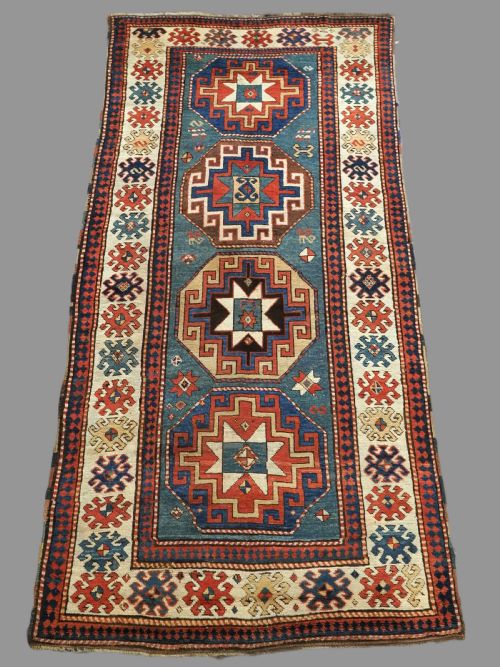
These green tribal rug examples bring character and rich dye work from Caucasian, Anatolian, and Central Asian weaving traditions into a room.
Green Tribal Rug
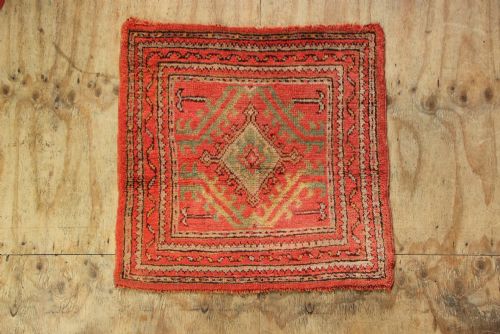
A green tribal rug gathers floor coverings and wall hangings originating from regions such as the Caucasus, Anatolia, and Central Asia during the nineteenth and early twentieth centuries. These pieces display distinct tribal motifs and village patterns woven across runner rugs, long rugs, square formats, and prayer rugs.
How they were made
Weavers constructed these pieces using wool, silk, and cotton foundations and pile yarns, hand-knotting or flat-weaving the textiles on traditional upright looms. Natural dye baths produced deep colour grounds, including the characteristic green tones seen in specific Caucasian and Turkish village rugs.
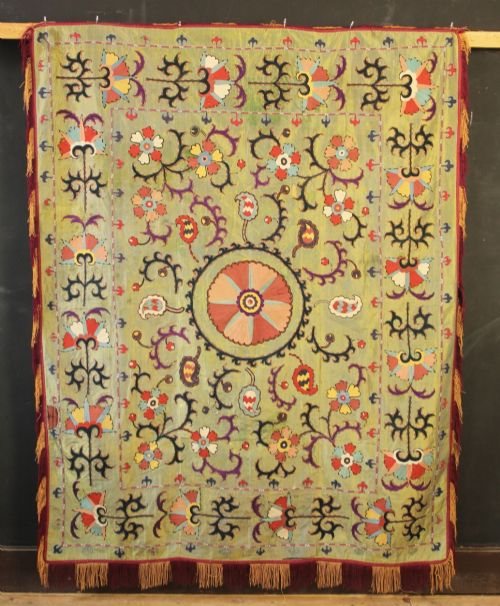
Village and nomadic workshops relied on durable local materials to withstand daily use, utilising wool for warmth and resilience while reserving silk for finer decorative needlework such as Suzani wall hangings.
Green Tribal Rug Retail Price Guide 2026
Typical asking prices for green tribal rug among the pieces listed under this phrase on Sellingantiques today, from the lower quarter to the upper quarter. They describe what is for sale here now, not the wider market.
Styles recorded here include Caucasian, Anatolian Tribal, and Ottoman Village traditions.
What varies in quality
Quality in these textiles rests upon the saturation and longevity of the natural dye palette, with certain green grounds holding greater visual depth than others. The crispness of geometric drawing and the tightness of the knotting further distinguish standard village output from superior collector pieces.
Condition and structural integrity also divide the range, as pieces retaining full pile and original edge finishes demonstrate higher preservation compared to heavily worn examples.
The Green Tribal Rug Glossary
- Pile
- The upright yarn loops forming the soft surface of a carpet. Knotted rugs use this layer for texture and pattern display.
- Kilim
- A flat-woven carpet or wall hanging produced without a raised pile. These items rely on interlocking weft threads to form geometric designs.
- Prayer rug
- A small textile featuring a mihrab or arch design indicating the direction of prayer. These pieces served devotional purposes in domestic settings.
- Ground
- The primary background colour field of a rug upon which medallions and motifs sit. Green ground examples display this tone across the main field.
- Runner
- A long, narrow carpet format designed for corridors or hallways. These pieces balance extended lengths with compact widths.
Green Tribal Rug: Frequently Asked Questions
What is a green tribal rug?
A green tribal rug is a hand-woven textile originating from village or nomadic communities in regions like the Caucasus and Anatolia, featuring a distinct green background colour.
These pieces span the nineteenth and early twentieth centuries, incorporating traditional geometric patterns and motifs unique to their weaving culture.
How do I date an old rug?
Dating relies on examining the structural materials, natural dye characteristics, and specific tribal design motifs typical of particular decades or centuries.
Comparing knot styles and regional weaving structures helps place an item within periods such as the nineteenth century or the early nineteen hundreds.
Where were these rugs made?
These textiles were produced across the Caucasus, Central Asia, and Anatolia by village and nomadic weavers working in traditional regional styles.
Specific weaving centres include areas like Kazak, Oushak, Kirsehir, and Konya, each known for distinct colour palettes and geometric forms.
How do I care for a wool rug?
Wool rugs require gentle maintenance such as regular light vacuuming without a rotating brush to protect the delicate pile and fringe.
Professional cleaning suited for antique textiles preserves the natural lanolin in the wool and prevents dye bleeding in the older fibres.