




Green Textile Wall Art
Green textile wall art brings centuries of woven panels, samplers and embroideries into modern spaces.
Green Textile Wall Art
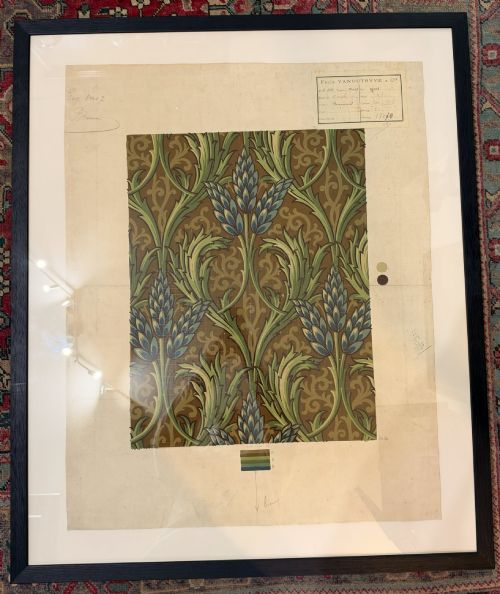
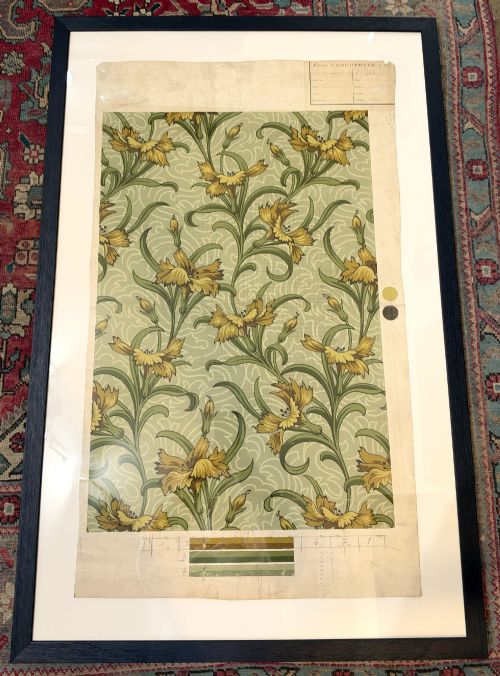
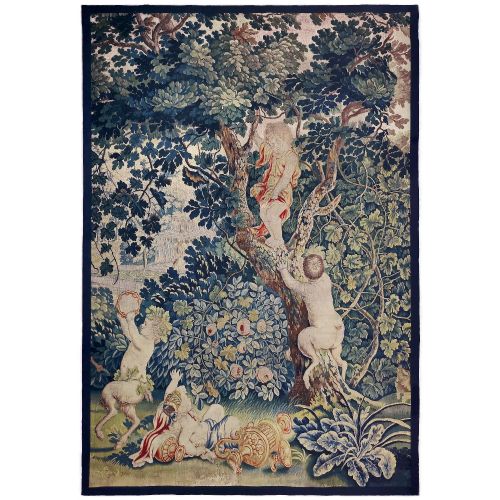
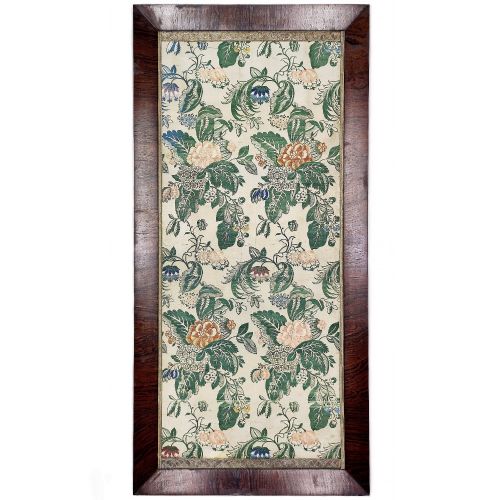
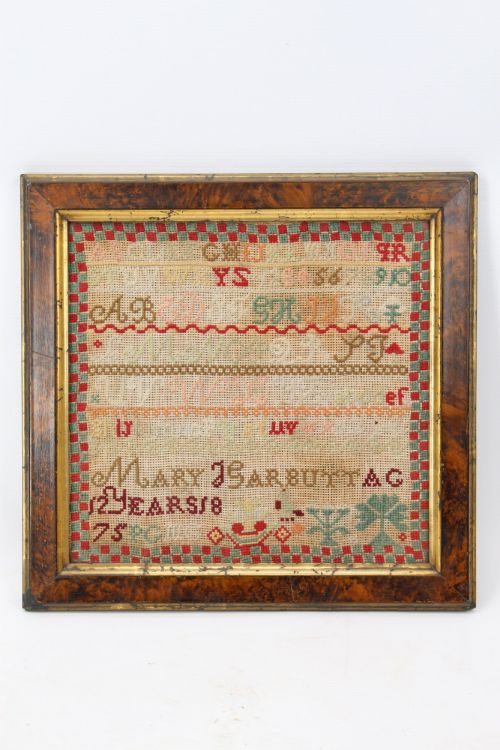
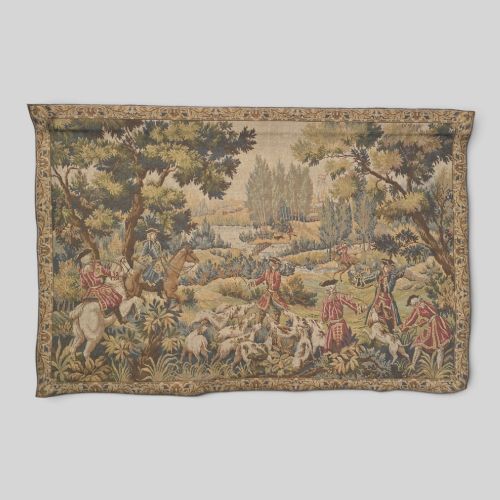
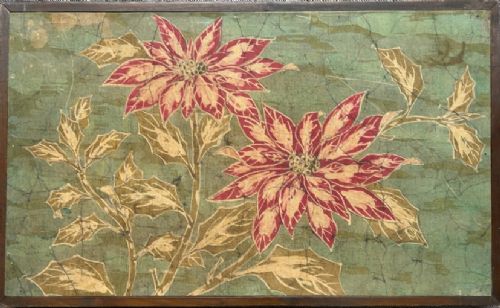
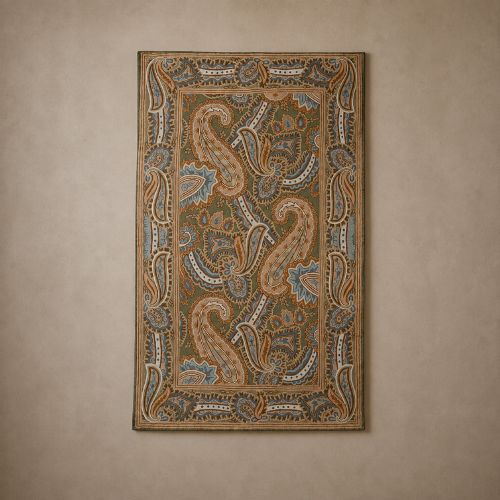
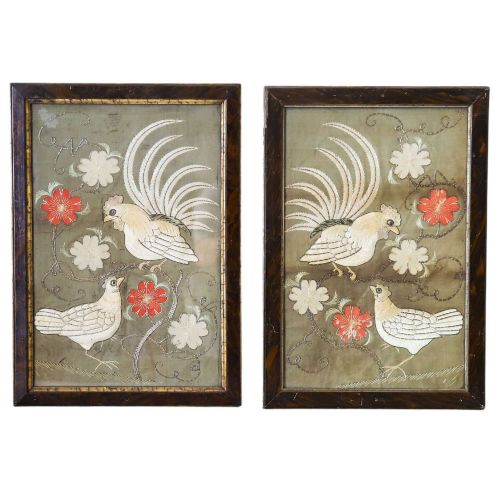
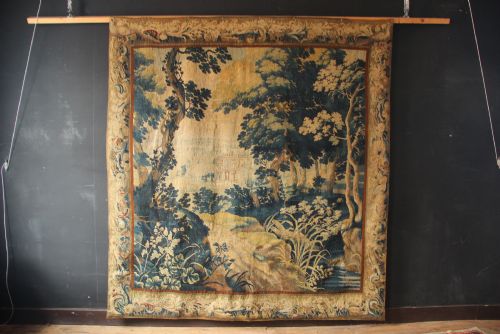
Green textile wall art encompasses centuries of woven tapestries, needlework samplers, and framed fabric panels. These works range from grand Flemish verdure wall hangings to intimate Victorian samplers and mid-century batik panels.
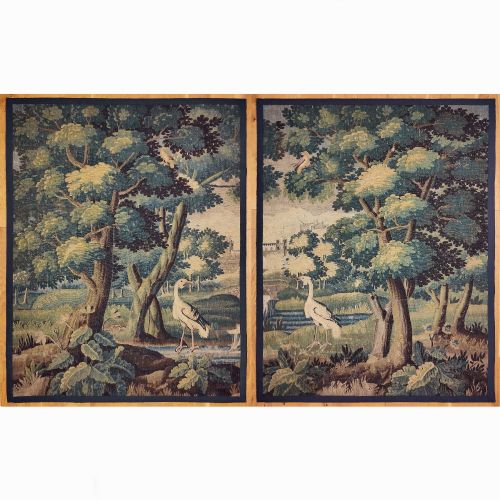
Buyers will most frequently encounter large 17th-century style verdure tapestries, French pastoral wall hangings, and detailed needlework panels. These pieces span periods from the 16th century through to the mid-20th century.
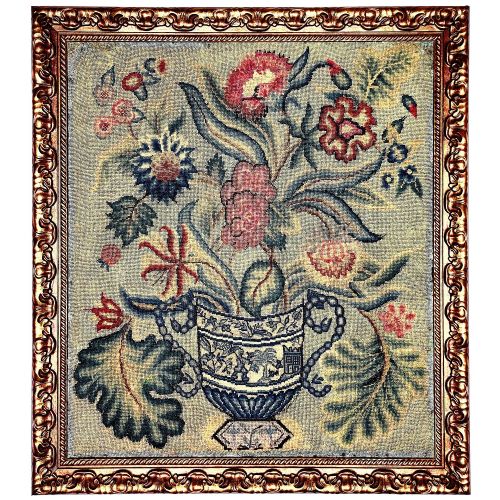
The selection includes woven tapestries, embroidered textiles, crewelwork panels, and painted wall cloths from various European and Asian traditions. Each format offers a distinct texture and visual presence for interior display.
How they were made
These textiles utilise natural fibres such as wool, silk, linen, cotton, and velvet, often combined with pigment on cloth. Artisans worked these materials by hand through weaving, embroidery, crewelwork, and block printing.
Woven tapestries employ complex loom techniques to build pictorial scenes from dyed threads, while needlework pieces rely on precise stitching upon a linen or canvas ground. Painted wall cloths apply pigment directly onto a fabric base.
Support structures range from raw textile panels intended for wall hanging to framed pieces set behind glass with wooden surrounds. Many older fragments have been mounted or conserved to ensure structural stability.
Green Textile Wall Art Retail Price Guide 2026
Typical asking prices for green textile wall art among the pieces listed under this phrase on Sellingantiques today, from the lower quarter to the upper quarter. They describe what is for sale here now, not the wider market.
Listings feature textile art spanning from the 16th century to the 1950s, using wool, silk, linen, cotton, velvet, and wood.
What varies in quality
Quality rests upon the fineness of the weave, the complexity of the design, and the survival of the original pigments and dyes. Tighter stitching and sophisticated colour gradation elevate the execution of woven and embroidered works.
The historical integrity of the piece, including the proportion of original material versus later restoration, dictates its standing. Grand scale works with complete borders and rich iconography sit at the upper end of the medium.
The Green Textile Wall Art Glossary
- Verdure tapestry
- A woven wall hanging dominated by foliage, trees, and landscape scenes, frequently featuring birds or animals amongst the leaves.
- Sampler
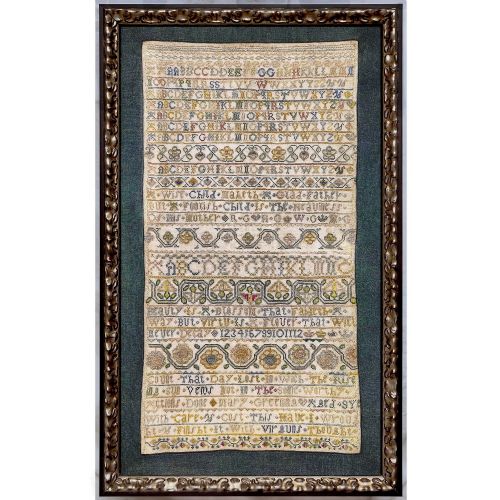
- A piece of needlework demonstrating various stitches and patterns, often worked by young girls and including names, dates, and alphabets.
- Crewelwork
- Embroidery executed with wool yarn on a linen or cotton twill foundation, typically producing textured floral or botanical designs.
- Aubusson
- Woven tapestries produced in the French town of Aubusson, known for pastoral and mythological compositions.
- Rya
- A type of Scandinavian pile rug or wall hanging featuring a thick, knotted wool surface designed for warmth and visual depth.
Green Textile Wall Art: Frequently Asked Questions
How do I hang a heavy textile safely?
Large woven tapestries and heavy wall panels require even weight distribution across a wooden batten or specialised hanging sleeve. Stitching a supportive cotton backing to the top edge prevents the original fabric from stretching under its own mass.
Direct contact with iron nails or unpadded brackets causes permanent distortion and fibre breakage. Professional conservation framing behind UV-filtering glass protects delicate silk and wool pieces from environmental damage.
What is a verdure tapestry?
A verdure tapestry depicts dense woodland, gardens, and pastoral landscapes rather than human figures or historical events. These green-dominant scenes were popular across Flemish and French weaving centres from the seventeenth century onward.
They were originally designed to insulate stone walls and bring the illusion of nature inside grand interiors. Today, their leafy motifs complement both traditional and contemporary room schemes.
How should I clean antique textile art?
Historic textiles cannot tolerate standard washing methods or commercial detergents due to fragile fibres and fugitive natural dyes. Surface dust should be removed very gently using a low-suction vacuum through a protective mesh screen.
Professional textile conservators should handle deep cleaning or structural repairs to avoid destroying centuries of stable wear. Keeping pieces away from direct sunlight prevents the fading of green wool and silk pigments.
How do I date a needlework sampler?
Needlework samplers frequently include the maker's name, age, and a specific year stitched directly into the composition. Lettering styles, border motifs, and the types of linen or wool used offer further clues to the decade of creation.
Comparative analysis with dated examples helps place pieces where the stitched year has worn away or is missing. Victorian samplers often feature tighter alphabets and pictorial borders compared to earlier Georgian styles.