

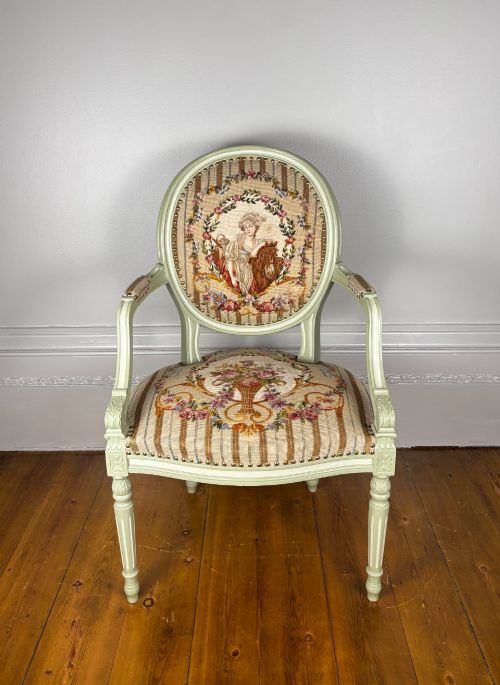
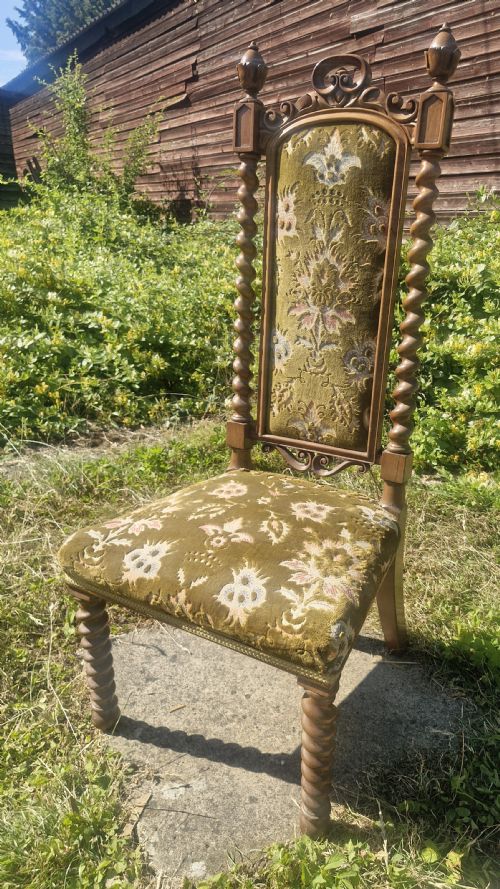


Green Tapestry Seat Chair
A green tapestry seat chair brings warmth and historic textile art directly to your room.
Green Tapestry Seat Chair
A green tapestry seat chair combines traditional woodwork with woven textile covers featuring botanical or pictorial scenes. These seating options span several centuries of craftsmanship and design movements.
You will most frequently encounter Victorian, Edwardian, and nineteenth-century examples on this page. These pieces range from walnut armchairs to mahogany side chairs and occasional seating.
Makers drew on various historic aesthetics, producing items in Louis styles, Jacobean revival, and Arts and Crafts traditions. Each piece offers a distinct silhouette shaped by its original period.
Construction and materials
Frames rely on dense hardwoods such as walnut and mahogany, carved or turned to support the structural weight. Joinery methods varied by era, utilising traditional tenons and reinforced corners.
Upholstery involves woven tapestry fabric and wool textiles, sometimes hand-stitched with needlepoint panels. Brass elements occasionally appear as decorative studs securing the fabric edges to the wooden frame.
Green Tapestry Seat Chair Retail Price Guide 2026
Typical asking prices for green tapestry seat chair among the pieces listed under this phrase on Sellingantiques today, from the lower quarter to the upper quarter. They describe what is for sale here now, not the wider market.
Design influences span across Georgian, Victorian, Edwardian, and Art Deco periods.
Assessing quality and execution
The precision of the wood carving and the density of the timber dictate the baseline quality of the frame. Heavier, tightly grained woods like walnut command higher regard for their durability.
The fineness of the textile work determines the distinction between standard production and superior craftsmanship. Tightly woven wool tapestry panels with intricate detail represent the upper tier of execution.
The Green Tapestry Seat Chair Glossary
- Tapestry
- A thick textile with a woven design on the face, used historically for wall hangings and durable furniture upholstery. It differs from printed cloth by having the pattern built directly into the weave.
- Walnut
- A heavy, dark hardwood prized for its rich grain and strength in chair framing. It was widely used across Victorian and earlier periods.
- Occasional chair
- A light, movable chair intended for use in various rooms rather than a designated permanent spot. These often feature decorative carving or specialised upholstery.
- Scroll back
- A chair back featuring an outward-curving top rail resembling a scroll. This profile is frequently seen on nineteenth-century seating.
- Needlepoint
- Embroidery stitched onto an open-weave canvas ground to form dense pictorial panels. It forms the decorative surface on finer antique seats.
Green Tapestry Seat Chair: Frequently Asked Questions
What periods do these chairs come from?
The inventory spans the Georgian era through the early twentieth century. Victorian and Edwardian examples appear frequently.
Maker styles also reference earlier periods such as Louis XIII and Jacobean revivals.
Are these chairs comfortable for daily use?
Most pieces feature padded upholstery designed for sitting, though seat heights and depths vary by decade. Victorian and Edwardian armchairs offer substantial support.
Side chairs are firmer and generally suited for occasional seating at a desk or hall.
How do I identify the wood type?
Inspect the exposed frame areas under good light to observe the grain pattern and colour. Walnut shows a rich brown tone with intricate figuring, while mahogany tends to be deeper reddish-brown.
Some Edwardian pieces utilise stained woods to mimic rarer timbers.
What is the difference between a side chair and an armchair?
Armchairs include structural supports for the arms and generally provide a wider, more enclosed seat. They suit studies, libraries, and fireside settings.
Side chairs lack arms, making them compact enough for bedrooms, halls, and dining spaces.