
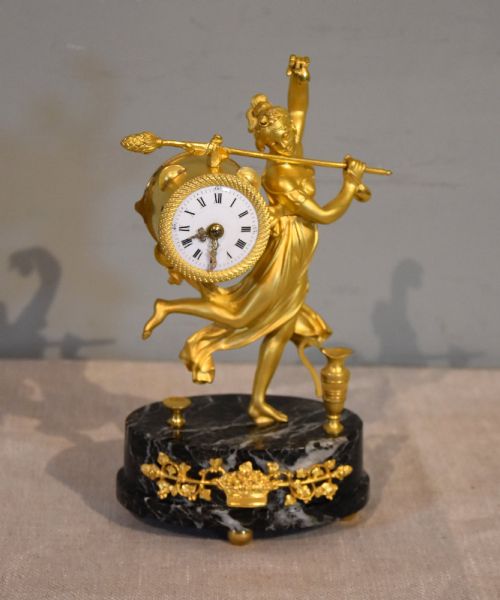


Green Table Clock
A green table clock brings a striking column of verdant stone, glass or lacquer to a mantelpiece, desk or bracket shelf.
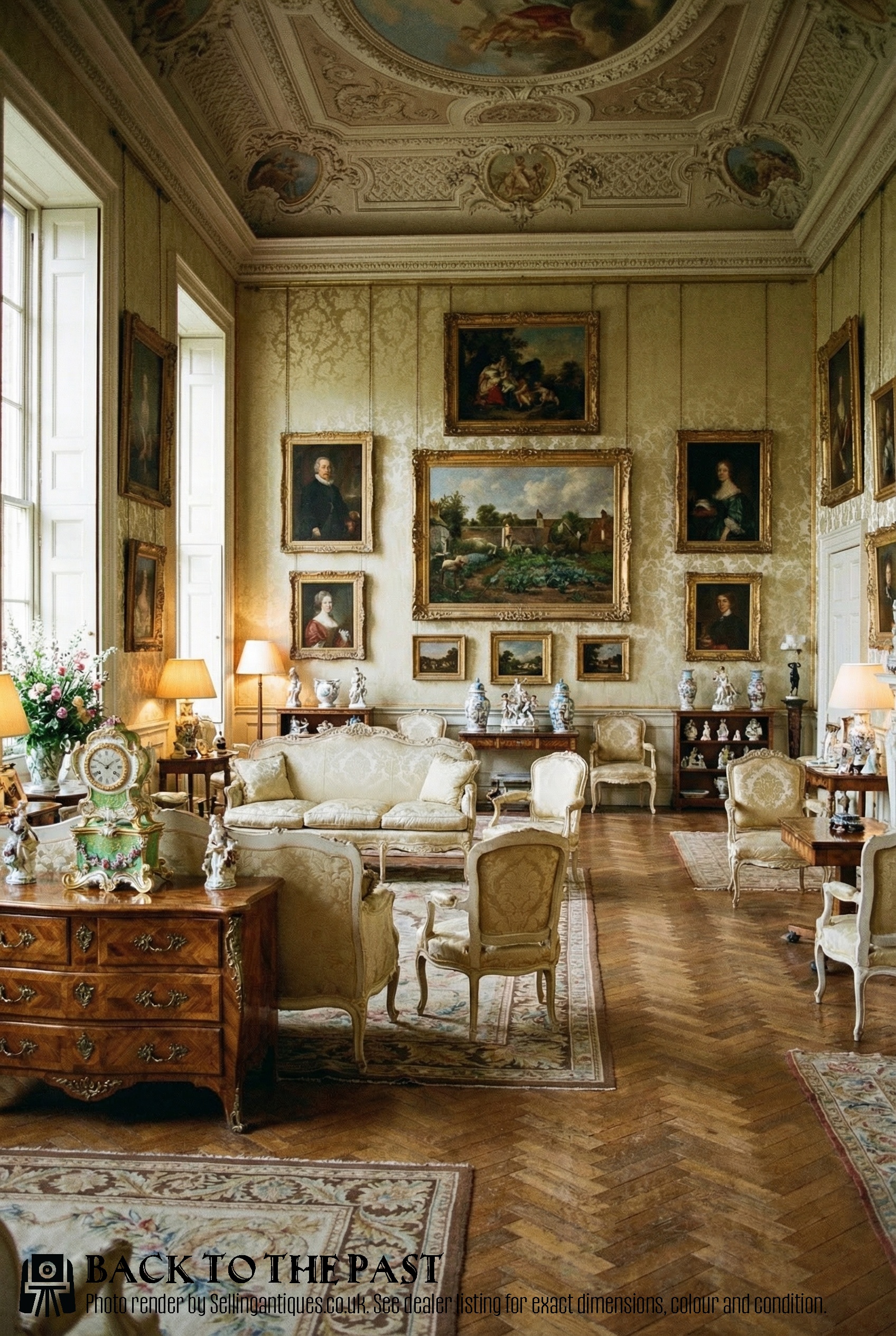
Green Table Clock
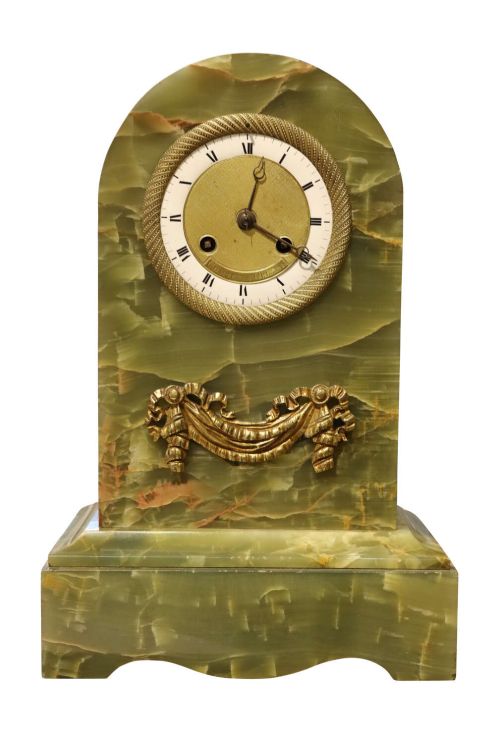
When you search for a green table clock, you encounter timepieces spanning from the nineteenth century into the Art Deco period, taking forms such as mantel clocks, bracket clocks, desk clocks and clock garnitures. The category encompasses French architectural cases in green marble, onyx and malachite, alongside British and continental designs in opaline glass, chrome and lacquer.
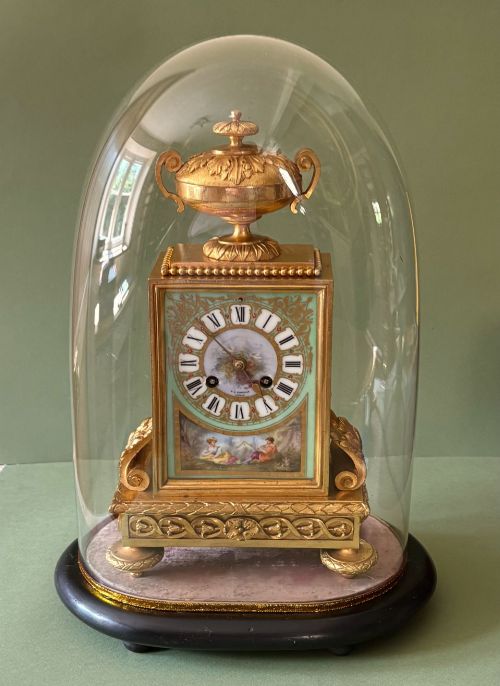
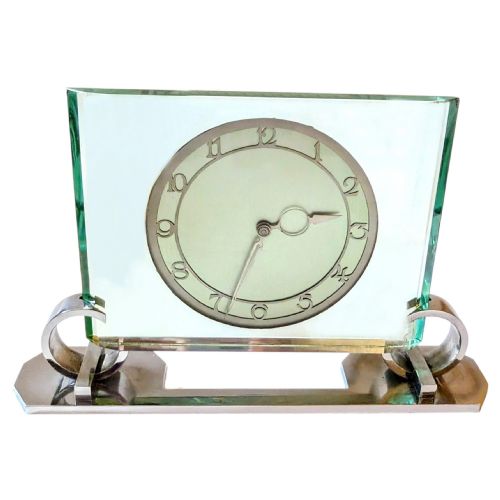
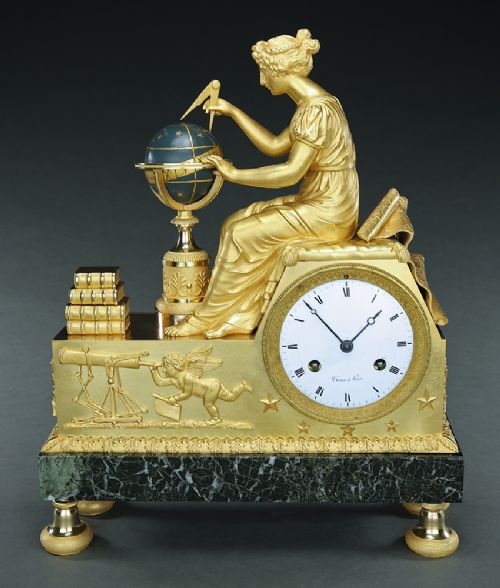
Nineteenth-century examples frequently lean towards classical, Victorian or Rococo Revival aesthetics, pairing green marble or onyx with ormolu mounts and gilt bronze. Art Deco specimens from the 1920s and 1930s utilise modernist geometry, green glass, chrome-plating and enamel to create streamlined silhouettes for the interior.
The selection ranges from ornate antique French garniture sets with pendulum movements to compact desk clocks by notable makers. Buyers find both monumental architectural pieces intended for principal rooms and smaller functional timepieces designed for surfaces throughout the home.
How they were made
Cases draw upon natural mineral slabs such as green marble, onyx and malachite, shaped and polished to display the native veining of the stone. Metalwork employs brass, bronze, gilt ormolu and chrome-plating, cast or hammered into structural mounts, bezels and decorative feet.
Glass techniques manifest in opaline and uranium glass plates, combined with enamel dials and hand-painted porcelain panels. Movement construction relies on mechanical brass gear trains, ranging from eight-day wind-up mechanisms to fusee and silk suspension systems.
Listings feature green table clocks spanning the 18th, 19th and early 20th centuries, executed in marble, onyx, glass, brass and lacquer.
What varies in quality
Distinction across the range rests upon the depth of material selection and the precision of the case assembly. Superior pieces utilise solid blocks of highly figured green marble or genuine malachite combined with heavy, crisply chased ormolu mounts rather than lighter brass platings.
Horological merit separates ordinary production from finer examples, evident in the complexity of the movement, such as striking trains, calendar dials or pendulum suspensions. The integration between the clock face, the metal fittings and the stone housing dictates the overall cohesion of the object.
Smiths Clockmakers·Winterhalder & Hofmeier·Mappin & Webb·Victor Paillard·GEC·Samuel Marti
The Green Table Clock Glossary
- Ormolu
- Gilded bronze used extensively for decorative mounts on nineteenth-century French clock cases. The technique involves applying a mercury and gold amalgam to cast bronze before heating.
- Garniture set
- A matched decorative arrangement consisting of a central clock flanked by matching ornaments such as urns or vases. These suites were designed to display symmetrically on a mantelpiece.
- Fusee
- A conical pulley used in clock movements to maintain an equal pull on the gear train as the mainspring unwinds. This mechanism improves the timekeeping accuracy of the clock.
- Opaline glass
- An opaque or translucent glass popular in nineteenth-century and Art Deco decorative objects. It provides a smooth, milky surface finish often utilised in coloured clock cases.
- Silk suspension
- An early method of hanging a pendulum from a short loop of silk thread within the movement. This delicate system appears on better-quality antique French timepieces.
Green Table Clock: Frequently Asked Questions
Where should I place a green table clock?
These timepieces suit prominent surfaces where their case materials can catch the light, such as a mantelpiece, a sideboard or a study desk. Ensure the furniture is stable and level to support the weight of stone or marble housings.
Keep mechanical clocks away from damp areas, direct sunlight and extreme temperature fluctuations to protect the internal brass movements and delicate enamel or painted dials.
How do I wind a mechanical table clock?
Wind the clock gently using the appropriate key inserted into the winding holes on the dial, turning until you feel moderate resistance. Avoid over-winding, as this can strain the internal spring mechanism.
Different models require attention at varied intervals, ranging from daily wind-ups to eight-day movements that need tending just once a week.
How do I identify an Art Deco green table clock?
Art Deco specimens from the 1920s and 1930s typically feature streamlined geometric forms, stepped cases and contrasting materials like chrome plating, opaline glass and green onyx. They often display minimalist Arabic numerals and stark modernist dials.
In contrast, nineteenth-century Victorian or French Empire pieces lean heavily on ornate classical architectural motifs, heavy marble columns, and elaborate gilt bronze or ormolu mounts.
Can these clocks be repaired if they stop working?
Most mechanical clock movements can be serviced or repaired by a qualified horologist who understands antique gear trains, escapements and suspension springs. Routine cleaning and oiling help maintain reliable timekeeping over the decades.
Even if a movement requires restoration, the stone, glass or metal case remains a sturdy decorative object that retains its visual appeal in an interior scheme.