


Porcelain and Gilt Clock
When you choose a porcelain and gilt clock, you invite nineteenth-century French craftsmanship and hand-painted ceramic art into your home.
Porcelain and Gilt Clock
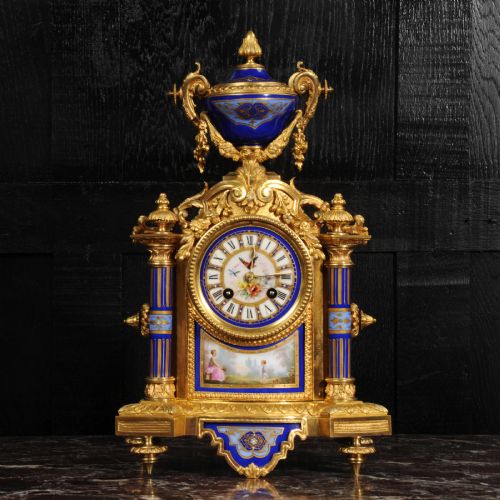
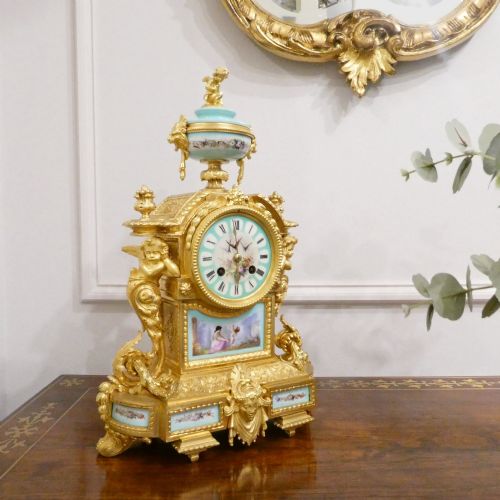
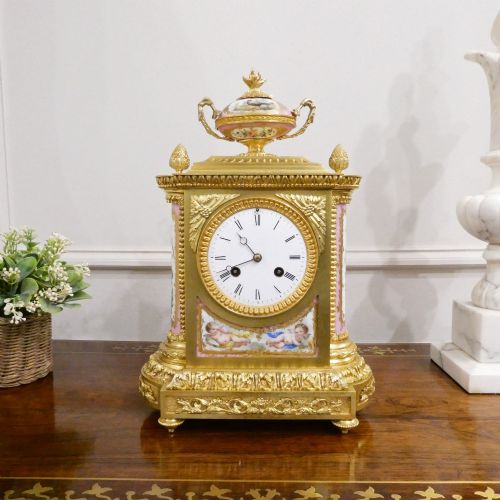
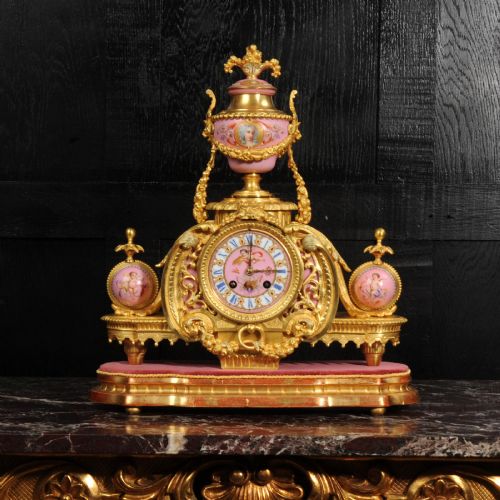
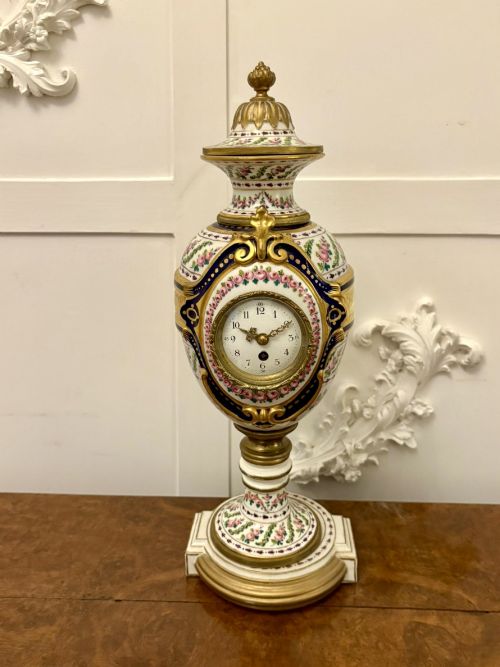
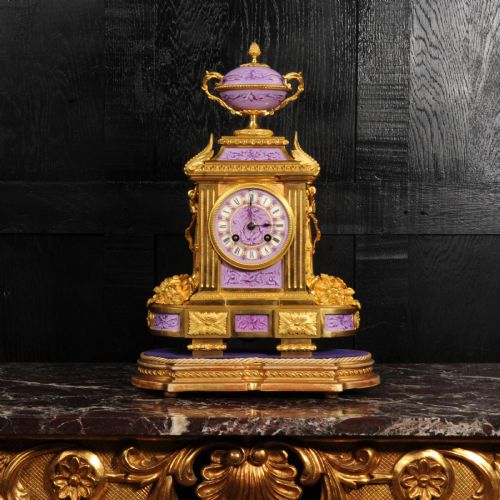
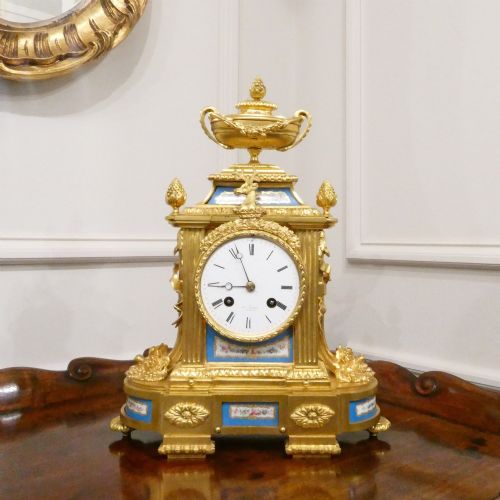
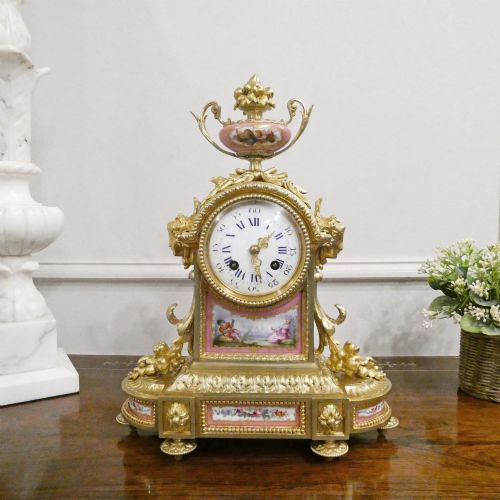
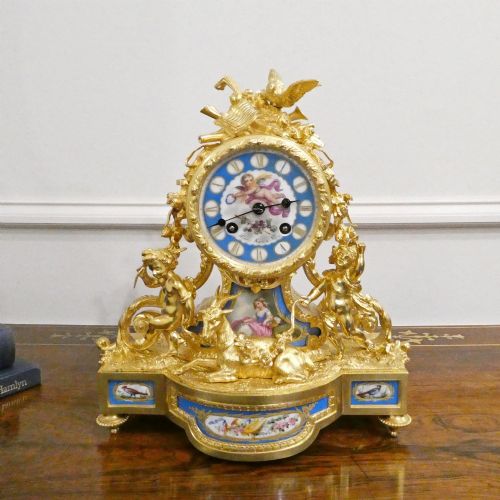
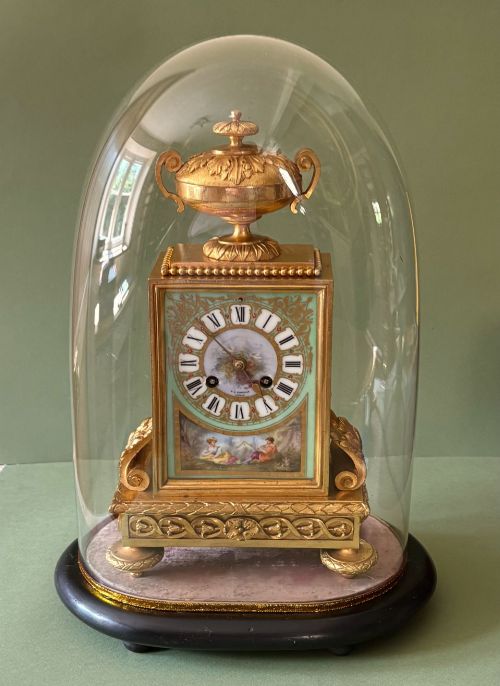
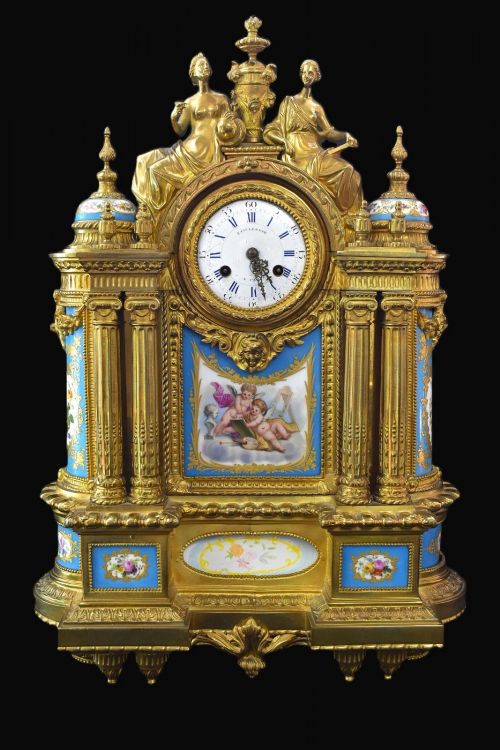
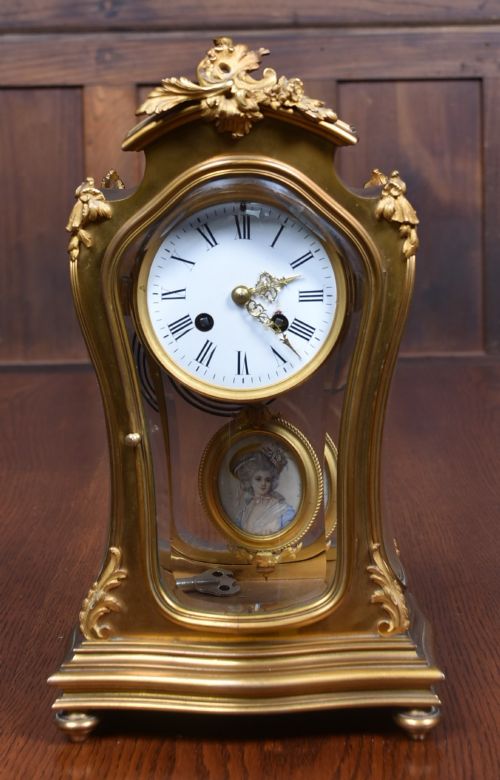
A porcelain and gilt clock combines glazed ceramic components with metallic cases, most frequently originating from nineteenth-century France during the Victorian, Napoleon III, and Second Empire periods.
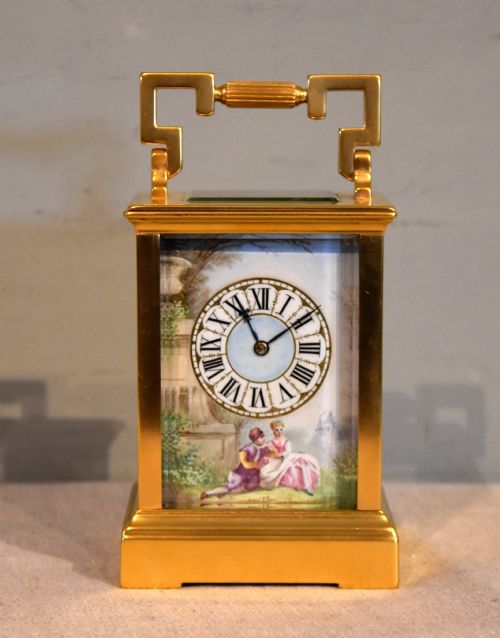
The most common formats found here include mantel clocks, clock garnitures with matching side urns or candelabra, and occasional carriage timepieces.
Stylistically, these pieces draw heavily on Louis XVI, Louis XV, and Rococo revivals, displaying symmetrical or exuberant scrollwork alongside pictorial ceramic panels.
Materials and construction methods
The metallic frames rely on bronze, brass, or cast white metal finished with mercurial gilding, ormolu, or electroplating to achieve a bright golden surface.
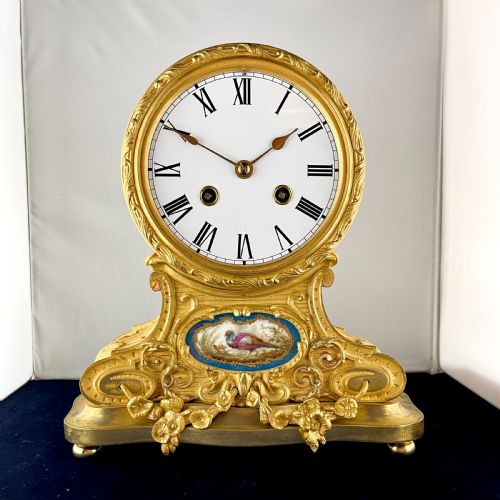
Fitted ceramic sections typically feature hard-paste porcelain, frequently painted by hand with pastoral scenes, floral motifs, or portraits, and framed by enamel chapter rings for the numerals.
Listings feature hard-paste porcelain panels, enamel dials, and fire-gilded bronze housings spanning the Victorian and Napoleon III eras.
Determining quality and execution
The refinement of the cast bronze or ormolu mounts distinguishes standard production from exceptional examples, where chased details show crisp relief and depth.
The artistic merit of the hand-painted porcelain panels, particularly those imitating Sevres styles with rich ground colours and fine miniaturisation, marks the tier of the piece.
Mechanical execution by recognised movement makers adds a layer of horological distinction to the overall decorative achievement.
Japy Freres·Jean-Baptiste Delettrez·Achille Brocot·Henry Marc·Etienne Lenoir·PH Mourey·Drocourt·Le Roy et Fils·Vincenti·Samuel Marti
The Porcelain and Gilt Clock Glossary
- Ormolu
- A technique of applying finely ground high-carat gold to a bronze object, creating a rich golden finish that resists tarnishing. It defines the lustrous metal mounts seen on many nineteenth-century French pieces.
- Garniture
- A set consisting of a central clock flanked by matching decorative objects such as urns or candelabra. These matched ensembles were designed to sit symmetrically on a mantelpiece.
- Drumhead clock
- A timepiece featuring a circular clock case mounted on a simpler base or plinth. This distinctive spherical housing resembles the profile of a side drum.
- Champlevé
- An enamelling technique where troughs or cells are hollowed out of the metal surface and filled with vitreous paste before firing. It provides vibrant colour accents alongside gilt metal.
Porcelain and Gilt Clock: Frequently Asked Questions
How do I wind my clock?
Most mechanical models utilise a key inserted into winding holes on the dial to tension the mainsprings for timekeeping and striking trains.
Care should be taken not to overwind the springs, stopping as soon as resistance is felt.
Where should I place a clock garniture?
These sets are traditionally displayed centrally on a mantelpiece, sideboard, or pier table where the matching side pieces balance the composition.
Ensure the surface is level and stable to support the combined weight of the metal and porcelain components.
How do I identify a Louis XVI style piece?
Look for neoclassical design elements such as straight fluted columns, urn finials, symmetrical laurel wreaths, and classical architectural proportions.
These characteristics contrast strongly with the asymmetrical curves of earlier Rococo revival models.
Are these clocks suitable for daily use?
While fully restored movements can keep accurate time, antique mechanisms require regular professional servicing and gentle handling.
Treating them as heritage decorative objects with functional timekeeping preserves their delicate components.