






Green Silk Textile
A green silk textile brings deep, rich botanical tones and historic handwork into an interior, ranging from grand Flemish tapestries to delicate Central Asian Suzanis.
Green Silk Textile
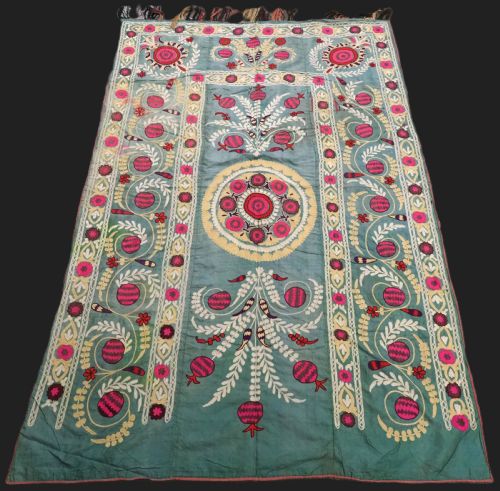
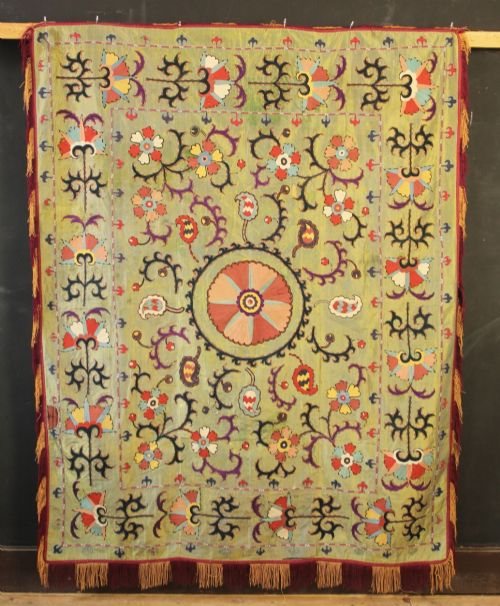
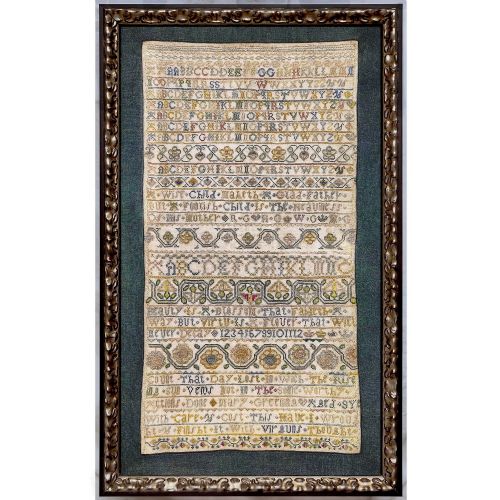
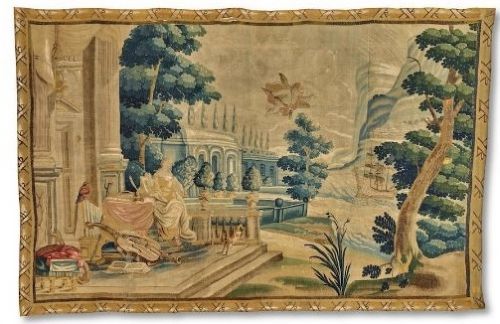
A green silk textile encompasses a diverse group of historical works, including large Flemish and French wall hangings, detailed English band samplers, and vibrant Central Asian bed covers. Buyers seeking this category encounter centuries of textile artistry, from seventeenth-century verdure scenes to nineteenth-century decorative panels and cushions.
The selections available on this page reflect significant stylistic variations, featuring French Baroque compositions, Georgian needlework, and traditional tribal motifs from Central Asia. These pieces utilise silk grounds, threads, and velvets to create lasting texture and colour depth within historic interiors.
What varies in quality
The standard of a green silk textile depends upon the complexity of the design, the density of the needlework, and the survival of the original pile or ground. Finer examples display meticulous stitch control and sophisticated tonal graduation within the verdure or figurative scenes.
Condition and integrity play a major role in establishing the grade of a piece, particularly regarding the preservation of the delicate silk fibres and velvet grounds over centuries. Works that retain their original scale, vibrant dye colours, and structural stability represent the finest achievements of their period.
Green Silk Textile Retail Price Guide 2026
Typical asking prices for green silk textile among the pieces listed under this phrase on Sellingantiques today, from the lower quarter to the upper quarter. They describe what is for sale here now, not the wider market.
Listings feature textiles spanning from the sixteenth century through the Georgian era to the early twentieth century, utilising silk, wool, velvet, and wood.
The Green Silk Textile Glossary
- Verdure tapestry
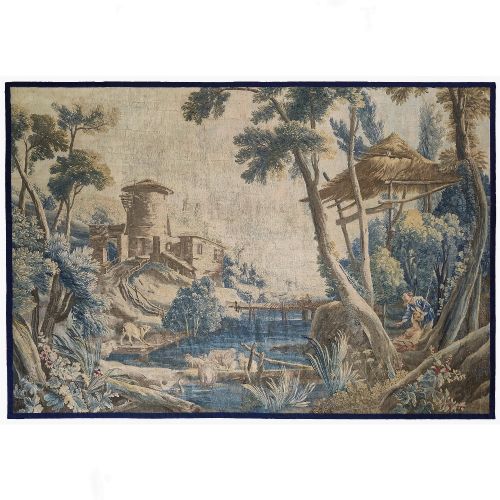
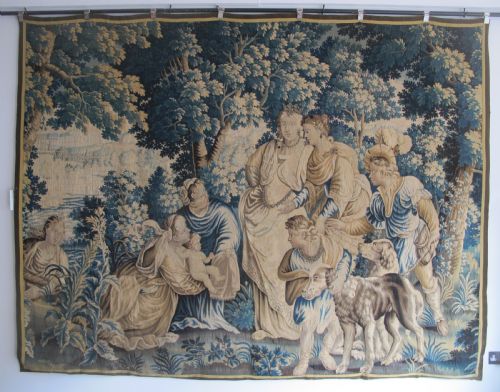
- A wall hanging dominated by stylised foliage, trees, and landscape elements, frequently produced in Flemish and French workshops during the seventeenth century. These scenes often incorporate distant châteaux or hidden animals amongst lush green foliage.
- Suzani
- A type of embroidered tribal bed cover or wall hanging originating from Central Asia, worked with silk thread on silk or cotton foundations. Examples often feature traditional prayer formats or large floral medallions.
- Band sampler
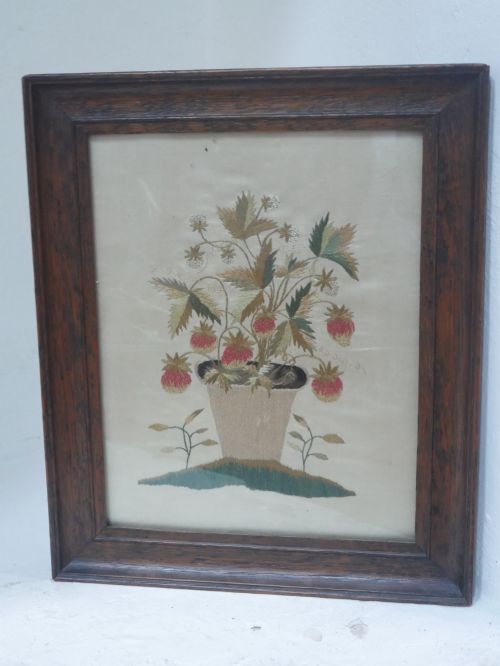
- A narrow strip of linen or silk worked by a needlewoman to demonstrate various stitching techniques and alphabets. These instructional pieces were popular in England during the seventeenth and eighteenth centuries.
- Lampas
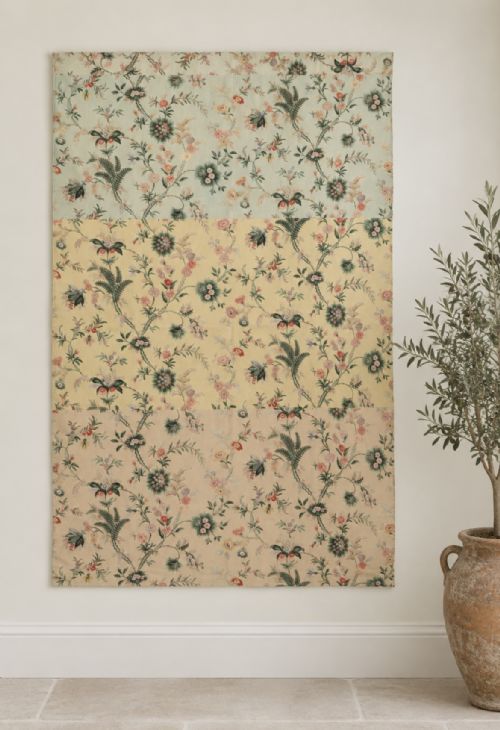
- A complex woven fabric featuring a pattern formed by supplementary warp or weft threads, often associated with luxurious eighteenth-century French designs. Bizarre silk lampas incorporates exotic and fantastical motifs.
Green Silk Textile: Frequently Asked Questions
How should I hang a heavy tapestry?
Large tapestries require professional weight distribution using a hidden batten or a lined sleeve sewn along the upper reverse edge. This prevents the ancient fibres and silk threads from stretching under their own mass.
Ensure the mounting system distributes tension evenly across the entire top width rather than pinning the textile at isolated points. A qualified textile conservator can advise on the safest installation method for fragile sixteenth and seventeenth-century weaves.
Are these textiles suitable for daily use?
Historic silk textiles require careful placement away from direct sunlight, high humidity, and heavy physical contact to preserve their delicate threads. Cushions and wall panels benefit from gentle treatment and low-traffic environments.
While robust items like wool-backed verdure tapestries or sturdy Suzanis handle normal interior display well, antique silk velvet and fine needlework samplers are best reserved for decorative exhibition.
What is the difference between a verdure tapestry and a figural one?
Verdure tapestries focus primarily on botanical landscapes, trees, leaves, and woodland creatures rendered in deep green and earth tones. Figural tapestries place human or mythological subjects at the centre of the composition.
While both share seventeenth-century Flemish or French origins, verdure pieces lean towards atmospheric scenery, whereas figural works tell specific stories from history or classical literature.