


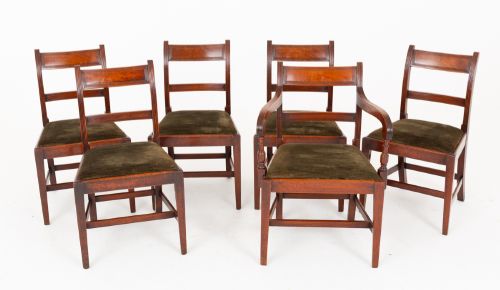
Green Seat Chairs
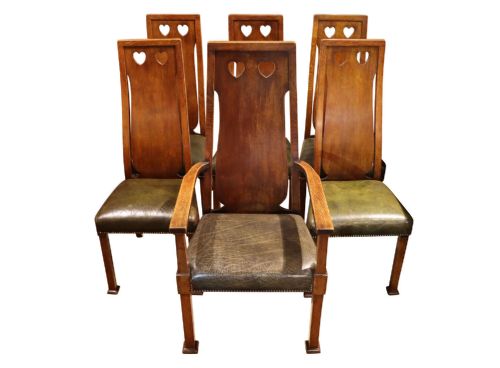
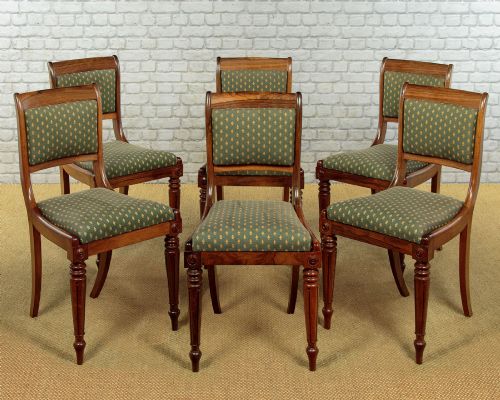
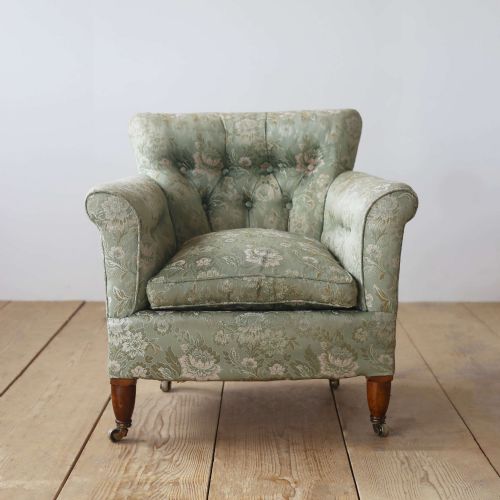
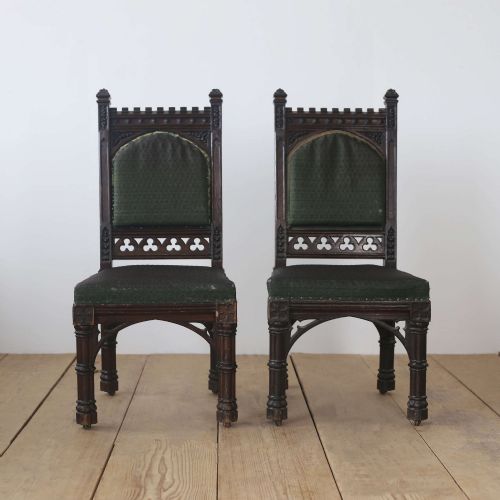
Green seat chairs bring together period timber frames and distinctive upholstery in mahogany, oak, and walnut across dining sets, desks, and armchairs.
Green Seat Chairs
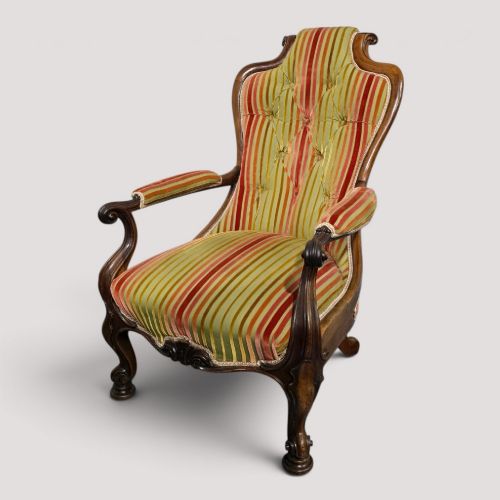
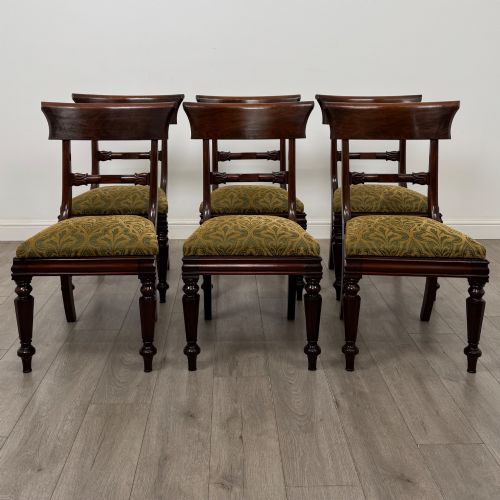
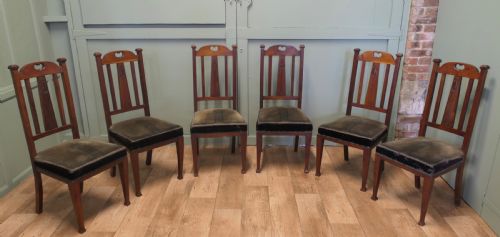
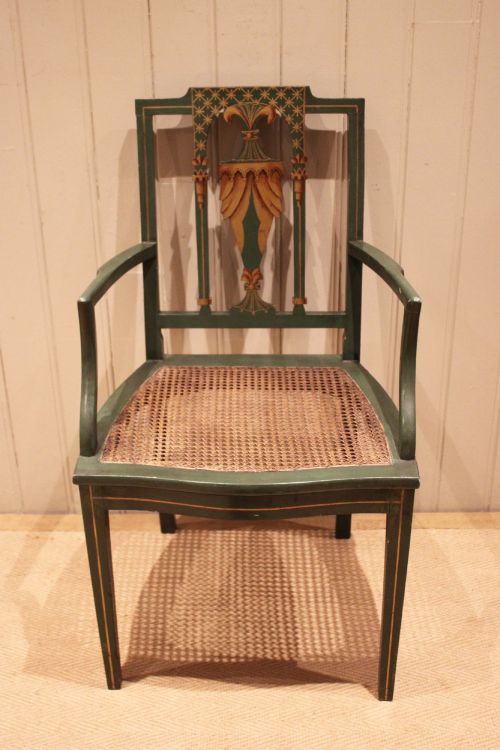
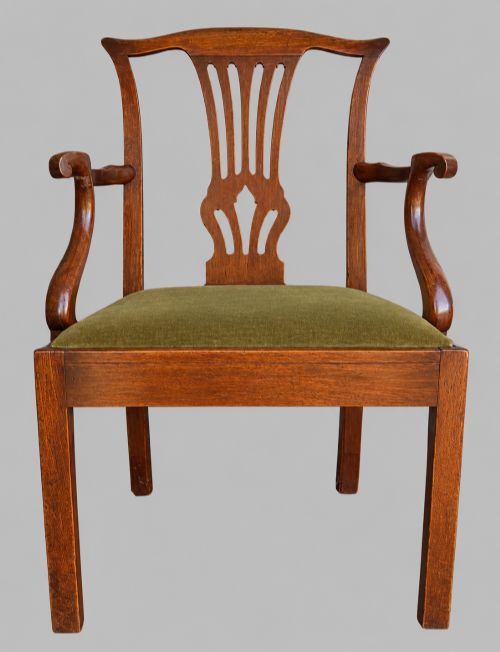
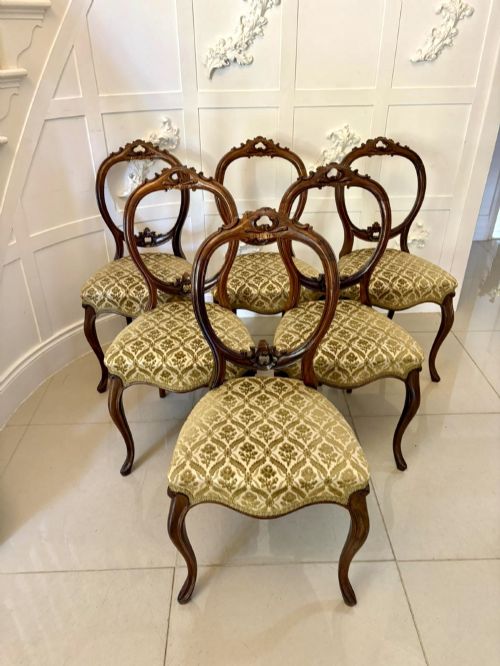
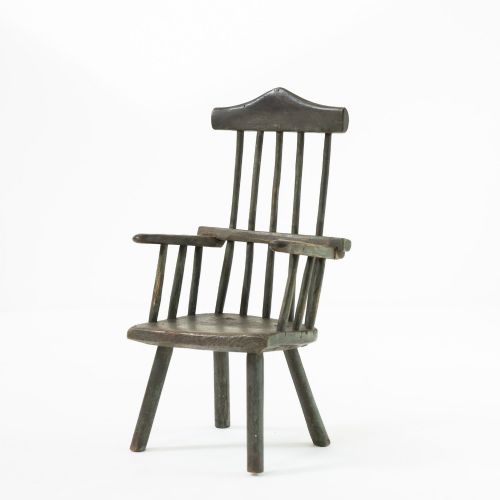
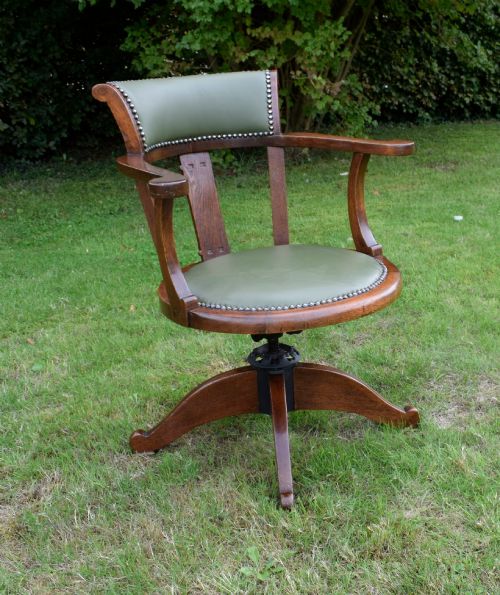
Green seat chairs encompass a wide variety of domestic seating forms spanning the Georgian, Victorian, and Edwardian periods, featuring upholstered pads in leather, leatherette, and fabric. Buyers encounter matching sets of dining chairs alongside individual armchairs, nursing chairs, and swivel desk chairs designed for study or parlour use.
The selection ranges from robust oak and mahogany frames of the eighteenth and nineteenth centuries to lighter Edwardian interpretations. These pieces reflect the functional needs of period interiors, where seating needed to be durable yet refined for daily dining and formal entertaining.
Materials and Construction
Cabinetmakers utilised dense hardwoods such as mahogany, walnut, and oak to construct the structural frames, often employing hand-carved details or turned supports. Joinery techniques varied from traditional mortise and tenon joints in earlier pieces to later production methods.
Upholstery materials included supple leather, velvet, and woven fabrics secured over webbed or stuffed seat foundations. Frame timbers were typically polished or waxed to highlight the natural grain of the wood.
The inventory encompasses dining sets, library armchairs, swivel desk chairs, and low nursing seats from diverse design movements.
Quality and Craftsmanship
The standard of a piece rests upon the crispness of the timber carving and the integrity of the frame construction. Superior examples display precise joinery and well-figured wood grain that has aged with an even surface lustre.
The execution of the upholstery and the retention of original framing elements further distinguish finer examples from standard production. Coherence within matched dining sets also influences the overall desirability of the seating.
Howard and sons
The Green Seat Chairs Glossary
- Mahogany
- A dense, reddish-brown tropical hardwood favoured by cabinetmakers throughout the Georgian and Victorian periods for its strength and fine carving qualities.
- Bergère
- An enclosed upholstered armchair with wooden framing exposed around the sides and back, often featuring cane panels.
- Wing chair
- A high-backed armchair featuring upholstered side panels designed to shield the sitter from draughts near a fireplace.
- Revolving desk chair
- A functional office seat mounted on a central pivot mechanism, frequently constructed in oak with a leather pad.
- Nursing chair
- A low-seated Victorian chair designed for comfort, traditionally used in bedrooms or nurseries.
Green Seat Chairs: Frequently Asked Questions
What periods do these green seat chairs cover?
The available seating spans from the Georgian era through the Victorian and Edwardian periods, extending into early twentieth-century designs. Examples showcase stylistic shifts from eighteenth-century mahogany to later revival styles in oak and walnut.
Buyers will find that construction methods and decorative motifs align closely with these specific eras, helping to establish the age and origin of each piece.
How do I identify the wood used in the frame?
Timber identification relies on examining the grain pattern, colour, and weight of the frame. Mahogany typically exhibits a deep reddish tone with straight or figured grain, while oak displays prominent growth rings and medullary rays.
Walnut offers a richer, darker brown figure that was widely utilised across Victorian and Edwardian salon suites and armchairs.
Were these leather seats added later?
Many period dining and desk chairs have undergone reupholstery during their working lives to maintain usability. Replacement hides and fabrics are standard practice for seating that has survived a century or more of daily domestic use.
Original upholstery remains uncommon on older pieces, though period-appropriate materials are routinely selected during restoration to preserve visual harmony.
How should I care for antique wood and leather?
Maintaining wooden frames involves applying quality beeswax and avoiding direct sunlight to prevent the timber from drying out. Leather seats benefit from occasional conditioning to keep the hide supple and prevent cracking over time.
Regular dusting with a soft cloth preserves the polished surface and protects the natural patina built up over decades of use.