



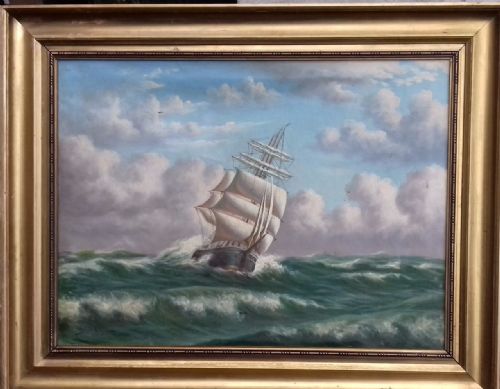


Green Sea Marine Artwork
Green sea marine artwork captures coastal waters and maritime scenes through historical oil paintings and watercolours.
Green Sea Marine Artwork
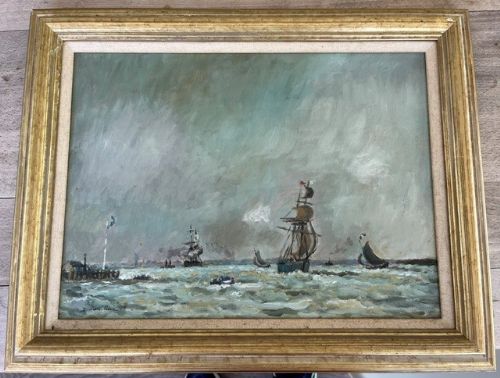
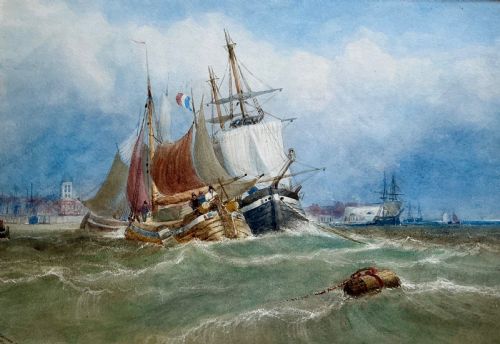
Green sea marine artwork encompasses historical paintings that depict coastal waters, shipping vessels, and maritime scenes. These pieces range from Victorian maritime oils to early twentieth-century watercolours of British and European harbours.
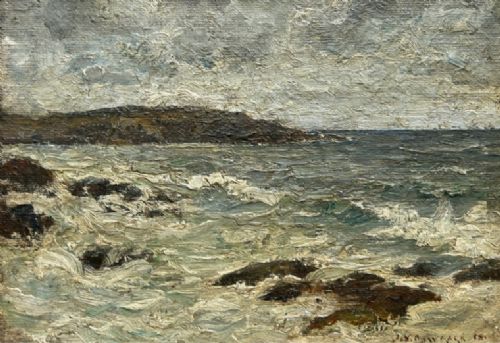
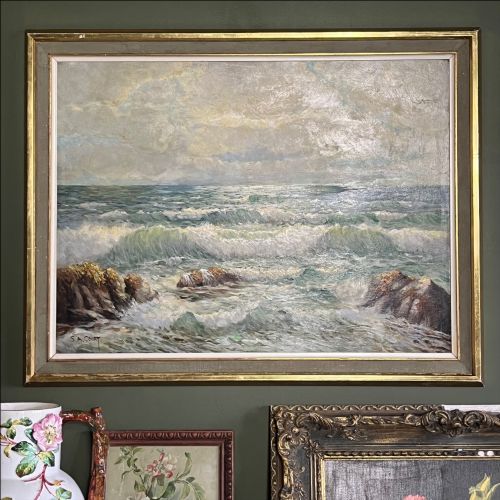
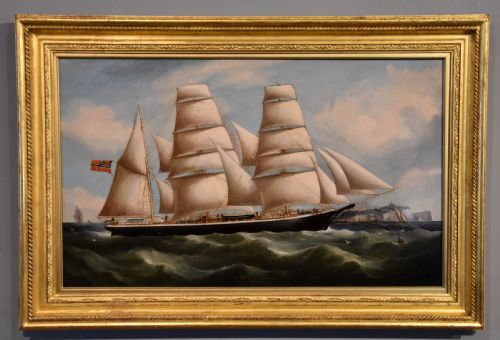
Buyers often encounter nineteenth-century canvases and board paintings showing rocky coastal seascapes, fishing boats, and naval schooners. The selection includes works by named artists alongside pieces from British Impressionist and Modern British traditions.
Materials and methods
Artists painted primarily with oil paint on canvas or wood panels, while others worked in watercolour on paper. Many works utilise impasto techniques to build texture in the depiction of coastal waves and rocky shores.
Frames frequently incorporate wood with gilt or gold leaf finishes, adding traditional presentation to these maritime scenes. En plein air methods allowed painters to capture natural light and coastal conditions directly on location.
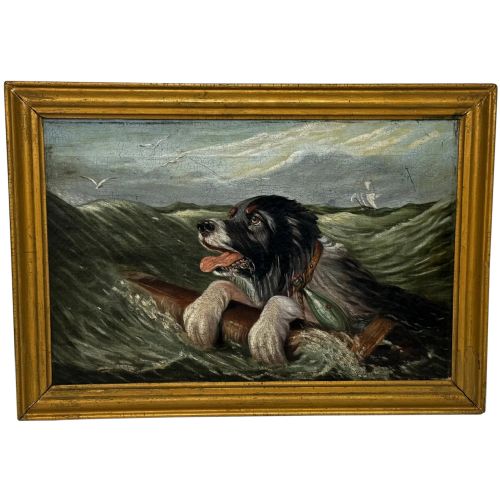
A sturdy St Bernard dog makes a dramatic appearance as a shipwreck survivor approaching New York in one Victorian maritime canvas.
Assessing quality
Quality rests upon the artist's ability to render maritime movement, atmospheric light, and the particular motion of coastal water. Stronger works demonstrate confident brushwork and precise detail in rigging, hulls, and geological formations.
Provenance and attribution to recorded artists elevate certain pieces above anonymous works. The handling of medium, whether the depth of oil paint or the transparency of watercolour, defines the visual success of each composition.
William Broome·Richard B Spencer·Henry Barlow Carter·William Savage Cooper·Charles Martin Powell·Francis Holman
The Green Sea Marine Artwork Glossary
- Impasto
- Paint applied thickly to a canvas or panel, standing out in relief to give texture and three-dimensional form to elements like sea spray or rocks.
- En plein air
- Painting outdoors to capture the actual light, colour, and atmosphere of a coastal scene directly from nature.
- Maritime
- Depicting the sea, ships, and coastal life, forming the central subject of these historical paintings and watercolours.
- Provenance
- The documented history of ownership of a painting, establishing its authenticity and attribution to a specific artist.
Green Sea Marine Artwork: Frequently Asked Questions
What subjects appear in green sea marine artwork?
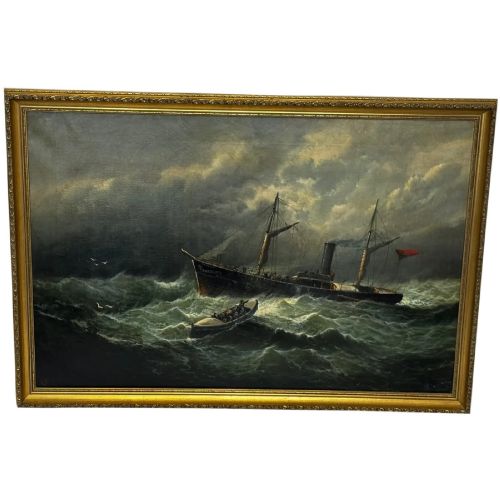
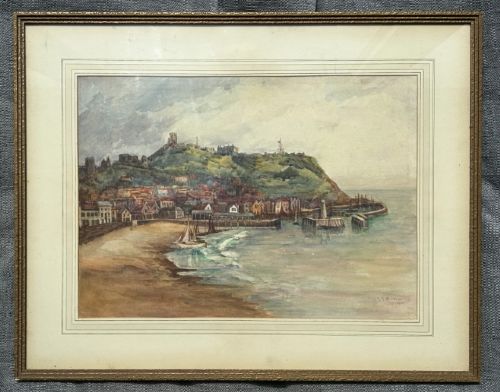
These works display coastal seascapes, shipping vessels, harbour views, and maritime rescue scenes. Artists recorded specific locations such as Scarborough, Cornwall, and the Dutch coast.
Subjects also include fishing boats, naval schooners, and coastal landscapes with figures. The focus remains on the sea and the vessels that navigate it.
How do I date these marine paintings?
Dating relies on stylistic evidence, artist signatures, framing, and canvas stamps or inscriptions on the reverse. Victorian pieces often show distinct romanticism, whereas twentieth-century examples lean towards impressionistic or en plein air techniques.
Period markers also include the type of canvas preparation and the specific rigging details of the ships depicted.
Where should I hang a marine painting?
These artworks suit rooms with natural light that complements the tones of oil paint and watercolour. Traditional spaces, studies, and hallways provide ideal settings for historical maritime scenes.
Keep pieces away from direct sunlight and excessive moisture to protect the canvas, paper, and gilt frames.
How were watercolour paintings protected?
Watercolours on paper required glazing behind glass to prevent environmental damage and fading. Mounts separated the delicate paper surface from the protective glass layer.
Original framing often preserves the historical context of the watercolour and shields the paper from dust.