



Green Reverse Painted Portrait
Green reverse painted portrait works bring remarkable depth and glassy brilliance to interiors, capturing historical likenesses through a delicate backward painting technique.
Green Reverse Painted Portrait
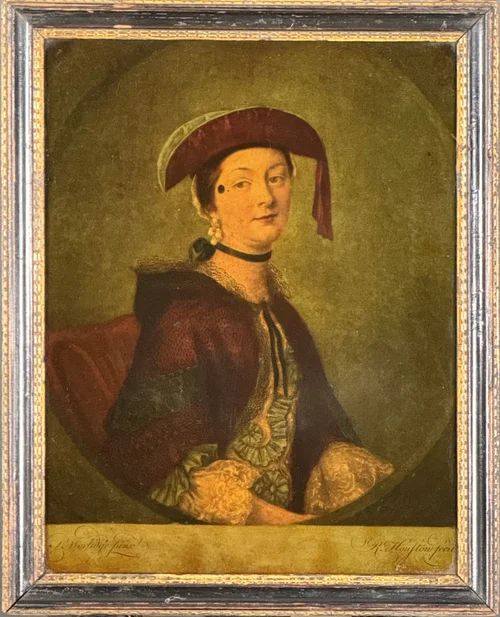
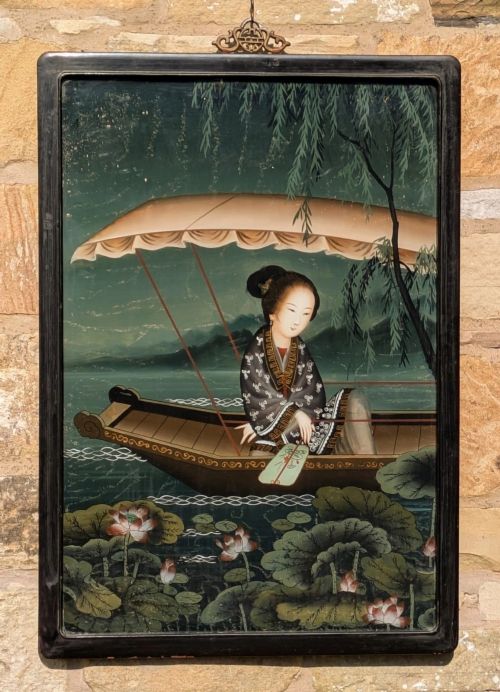
When you search for green reverse painted portrait items, you are looking at delicate images applied directly to the rear of glass panels so the final picture is viewed through the transparent pane. The selection centres heavily on Georgian portrait prints and Chinese export paintings.
You will encounter subjects ranging from British nobility and literary figures such as Mrs Brooks and Elizabeth Farren to large Chinese export panels. Most examples originate from the Georgian period or the nineteenth century, utilising glass as both the protective surface and the primary framing medium.
Materials and construction methods
These works rely on pigment, oil paint, and paper applied directly onto glass panels, often paired with timber frames and brass hangers. Artisans painted fine details in reverse, laying down highlights first before building up darker background tones.
Makers utilised mezzotint prints transferred onto glass or painted directly with oil paint and pigments to achieve a luminous finish. The physical structure typically combines fragile glass sheets housed within wooden surrounds.
Green Reverse Painted Portrait Retail Price Guide 2026
Typical asking prices for green reverse painted portrait among the pieces listed under this phrase on Sellingantiques today, from the lower quarter to the upper quarter. They describe what is for sale here now, not the wider market.
Early glass painters had to paint eyelashes and pupils first, hoping their perspective held true before turning the panel over to look.
Distinguishing quality in portrait glass
Quality rests in the precision of the brushwork and the fidelity of the likeness, distinguishing finely rendered Georgian subjects from simpler decorative pieces. The clarity of the glass and the preservation of the underlying pigment layers dictate the overall visual impact.
Superior execution shows in the handling of facial tones and costume details through reverse glass techniques, whereas lesser examples display stiffness in the portraiture or heavy restoration to the painted surface.
Charles Spooner
The Green Reverse Painted Portrait Glossary
- Reverse glass painting
- A technique where the artist paints directly onto the back of a glass panel so the image is viewed through the front. This method protects the pigment from dust and atmospheric damage while giving a unique sheen.
- Mezzotint
- A printmaking process of the intaglio family where tones are developed from black to white by roughening the copper plate with a rocker. These prints were frequently transferred and painted behind glass.
- Chinese export
- Goods made in China specifically for Western markets, often adopting European portrait or landscape subjects. These pieces combine traditional Eastern glass painting skills with Western aesthetic demands.
- Georgian
- Pertaining to the period of the British kings George I through George IV, spanning the eighteenth and early nineteenth centuries. Items from this era display distinct neoclassical or rococo aesthetic traits.
Green Reverse Painted Portrait: Frequently Asked Questions
What is a green reverse painted portrait?
It is an artwork where the artist paints the likeness of a subject onto the back of a glass panel. The finished portrait is then viewed from the front through the clear glass.
Such pieces frequently date from the Georgian era or the nineteenth century and often depict notable historical figures or noble ladies.
How do you display these artworks safely?
These portraits require secure wall hanging away from direct sunlight, which can fade the underlying pigments and oil paints. Stable indoor temperatures prevent the timber frames and glass panels from experiencing thermal stress.
Careful placement protects the fragile reverse-painted surfaces from accidental impact and moisture.
How do I identify a Georgian glass print?
Georgian examples typically feature period subjects such as Mrs Brooks or Elizabeth Farren rendered through mezzotint transfers or hand painting on glass. The framing materials and paper backing often align with eighteenth or early nineteenth century construction.
Stylistic cues in the sitter's costume and hair also help pinpoint the era.
Why use glass instead of canvas?
Painting on glass provides a glossy, reflective surface that intensifies the pigments and gives the portrait an enamel-like brilliance. This medium also protects the delicate paint layer from airborne dirt and physical wear.
Artists utilised this method to create affordable, highly finished domestic wall art.