



Green Pleated Shade
These green pleated shade pieces combine fabric, brass, and porcelain to form table lamps, ceiling lights, and scientific instruments.
Green Pleated Shade
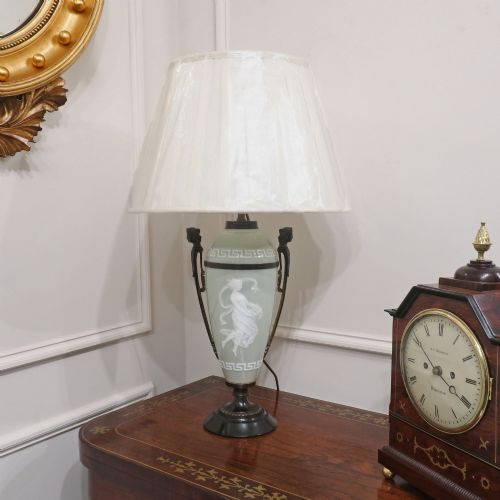
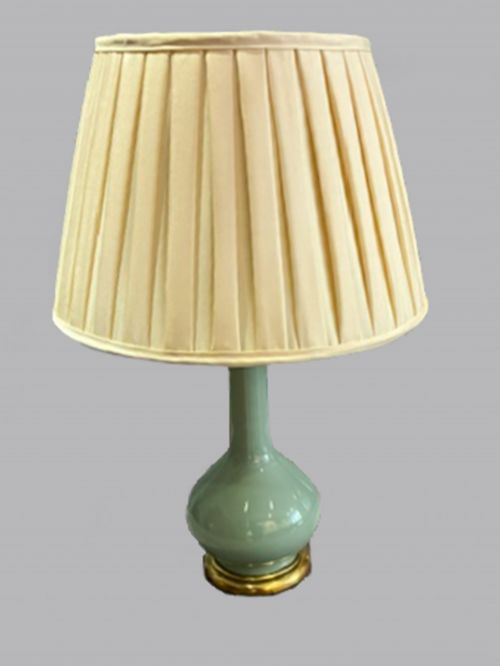
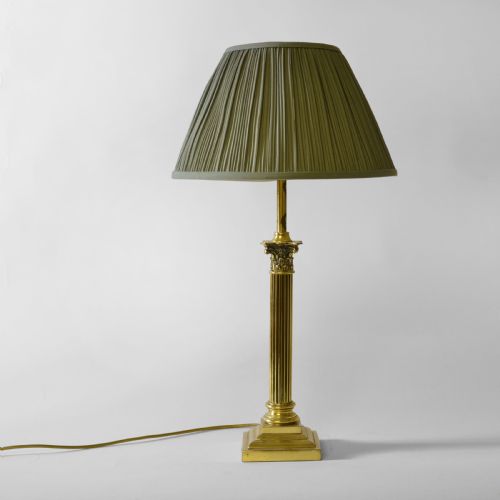
A green pleated shade appears on lighting and scientific instruments spanning the nineteenth century through the art deco period. Buyers hunting for a green pleated shade encounter table lamps and ceiling lights created from varied materials.
The selections on this page draw from Victorian, Edwardian, and twentieth-century workshops. Pieces incorporate styles ranging from French neoclassical to Chinese export and art deco.
Table lamps dominate the selection, utilising bases formed from converted porcelain vases, brass columns, and ceramic bodies. Scientific instruments like microscopy candle shades also surface in period cases.
Materials and construction
Fabric, brass, and porcelain form the primary physical vocabulary of these items. Workshops combined cast and turned brass columns with hand-pleated textiles and fired ceramic bodies.
Pottery elements utilise celadon, majolica, and famillle verte glazes applied to porcelain and ceramic bases. Bronze, velvet, and leather appear alongside painted surfaces on select table lamps.
Green Pleated Shade Retail Price Guide 2026
Typical asking prices for green pleated shade among the pieces listed under this phrase on Sellingantiques today, from the lower quarter to the upper quarter. They describe what is for sale here now, not the wider market.
Materials in these listings include fabric, brass, porcelain, ceramic, metal, bronze, velvet, and leather.
Judging quality and execution
Quality rests in the precision of the brass casting and the refinement of the ceramic body. Finer table lamps show crisp detail in corinthian capitals and carefully potted porcelain vases.
The integrity of original cases on scientific instruments and the preservation of hand-finished surfaces distinguish superior examples. Finer pieces maintain their original material harmony across base and shade components.
The Green Pleated Shade Glossary
- Celadon
- A pale green glaze originating in China, frequently seen on nineteenth-century porcelain vase lamps.
- Famille Verte
- A porcelain palette dominated by green enamel, often found on Chinese export lamp bases.
- Corinthian column
- A classical architectural column style utilised in nineteenth-century brass table lamp design.
- Majolica
- A type of earthenware decorated with opaque coloured glazes, popular during the Victorian and Edwardian eras.
Green Pleated Shade: Frequently Asked Questions
What periods do these lamps come from?
The pieces span the nineteenth century, Victorian era, Edwardian period, and the 1920s and 1930s.
Most items date from the Victorian decades through the early twentieth century.
How were these lamps used originally?
They served as domestic table lighting, billiard room ceiling illumination, and scientific instrument accessories.
Many ceramic bases began as vases before conversion into electric or oil lamps.
Are the shades fabric or hard materials?
The inventory includes textile elements alongside brass, bronze, and porcelain components.
Fabric shades complement the hard ceramic and metal structures of the lamps.
How do I identify a Victorian lamp?
Victorian examples often feature brass corinthian columns, majolica bodies, or converted Chinese porcelain vases.
Construction methods and material choices align with nineteenth-century manufacturing standards.