

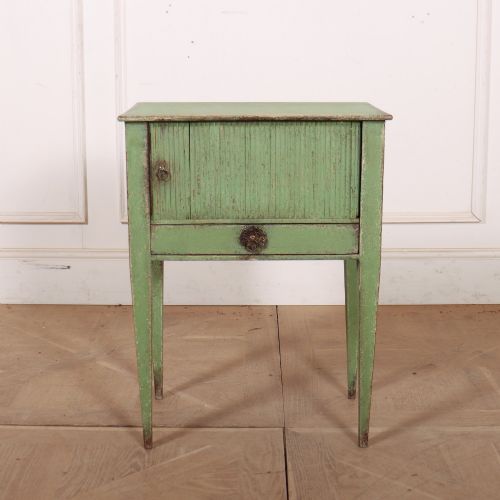


Green Pedestal Side Table
A green pedestal side table brings striking colour and classical form to a room, holding lamps or drinks with ease.
Green Pedestal Side Table
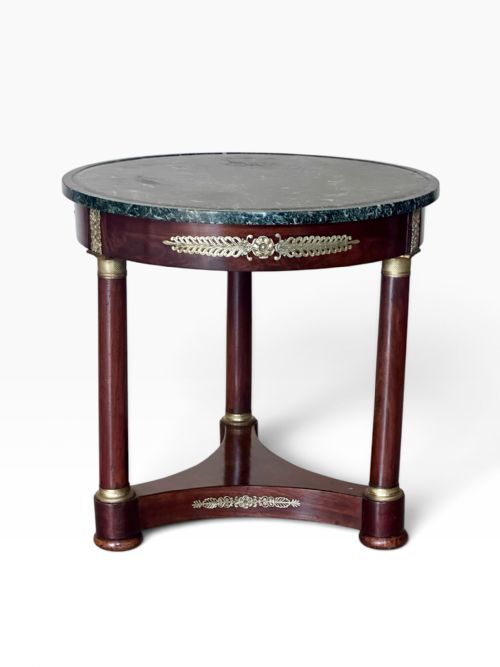
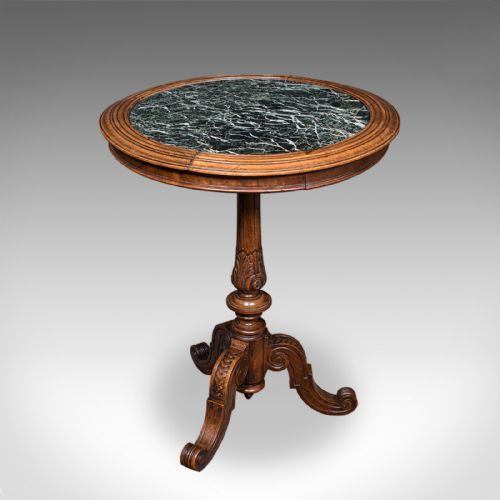
A green pedestal side table sits on a central pillar or tripod base, drawing from nineteenth-century styles including Victorian, Regency and French Empire designs. These pieces often take the form of lamp tables, wine tables or small occasional stands suited to compact spaces.
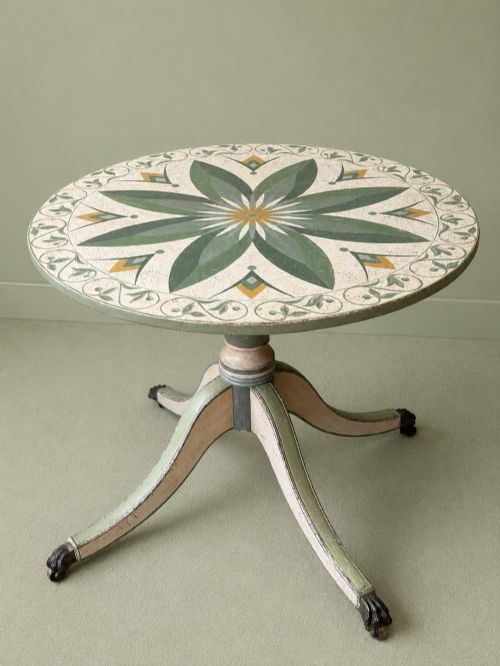
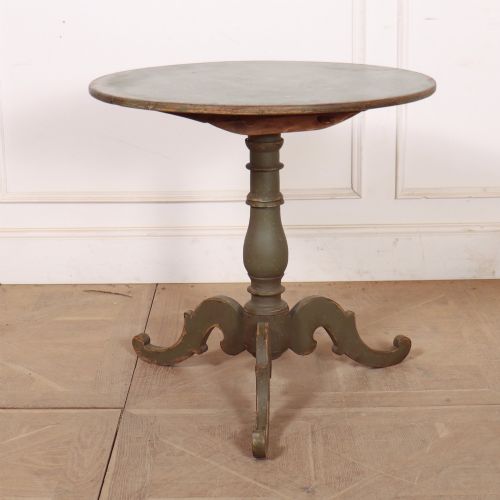
The selection includes painted finishes alongside rich timber surfaces, reflecting both Swedish country aesthetics and neoclassical influences. Buyers will encounter tripod bases and multi-tiered structures designed for functional daily use.
While many examples originate from the Victorian era, the grouping spans the nineteenth and early twentieth centuries. Forms range from simple tilt-top tables to decorative occasional stands.
Materials and construction
Cabinet makers utilised solid timbers such as mahogany, oak and walnut, frequently pairing them with marble tops or painted treatments. Giltwood highlights and brass mounts appear on pieces influenced by French neoclassical and Empire aesthetics.
Surfaces often feature hand-applied paintwork, burr veneers or inset marble panels. Joinery techniques from the nineteenth century ensure stable central pillars and secure tripod or plinth bases.
Several tables include tilt-top mechanisms designed to hide flat against parlour walls when the evening dance began.
Judging quality and craftsmanship
The quality of a piece rests upon the crispness of its carved details, the stability of the central pedestal and the depth of the timber or paint finish. Finer examples display balanced proportions and precise joinery where the pillar meets the base and top.
Later decorations or repainting can alter the character of a piece, so the integrity of the original surface finish remains central to its appeal. Well-preserved mounts, uncompromised marble inserts and sound structural timber distinguish superior examples from standard workshop output.
T Wilson·Edwards & Roberts
The Green Pedestal Side Table Glossary
- Pedestal
- A central vertical support or column holding a table top. This single pillar replaces traditional four-leg configurations.
- Gueridon
- A small French occasional table supported by a central column or figures. These pieces date predominantly from the nineteenth century.
- Tilt-top
- A table top hinged to tilt vertically when not in use. This mechanism allowed furniture to be stored against walls in smaller rooms.
- Neoclassical
- A decorative style inspired by classical Greece and Rome. It employs symmetrical forms, crisp lines and restrained ornamentation.
- Giltwood
- Timber treated with gold leaf or gold paint. This technique highlights carved mouldings and decorative motifs.
Green Pedestal Side Table: Frequently Asked Questions
Where should I place a pedestal table?
These tables fit easily beside armchairs, in narrow hallways or in corners requiring a surface for a lamp or small objects. Their central pillar design allows chairs to tuck neatly underneath without legs obstructing the space.
Because they occupy a small footprint, they suit both principal reception rooms and quieter corners of the home where large furniture would overwhelm the floor plan.
How do I care for marble and wood?
Marble surfaces require prompt wiping of liquid spills to prevent staining, using mild soap and water rather than acidic cleaners. Wood and painted finishes benefit from dusting with a soft cloth and protection from direct sunlight.
Maintaining stable room humidity prevents timber from splitting and keeps painted surfaces from cracking over decades of household use.
Are these tables sturdy enough for daily use?
Nineteenth-century pedestal tables use solid pillars and weighted or tripod bases designed to support daily loads such as lamps, books and drinks. Properly constructed joints ensure the top remains level.
Heavier items should be placed centrally to maintain balance on single-pillar designs, particularly on tripod versions.