



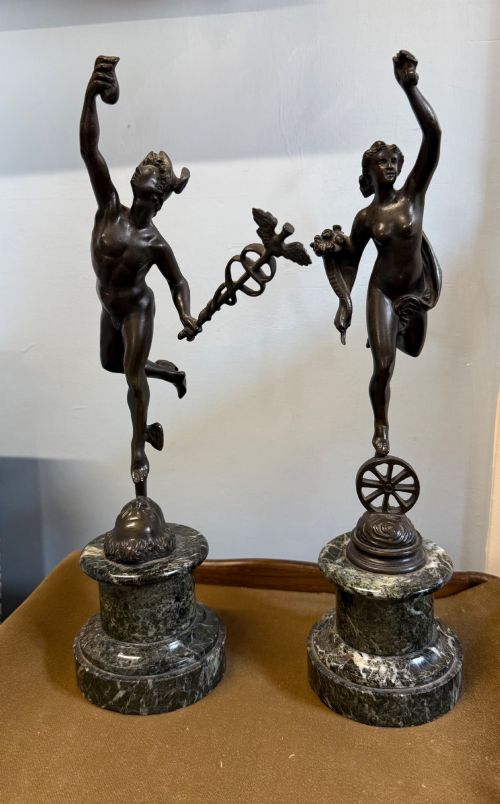
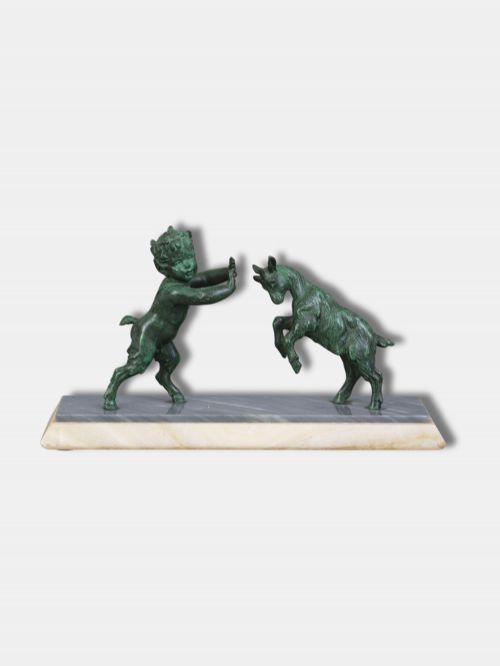
Green Marble Bronze
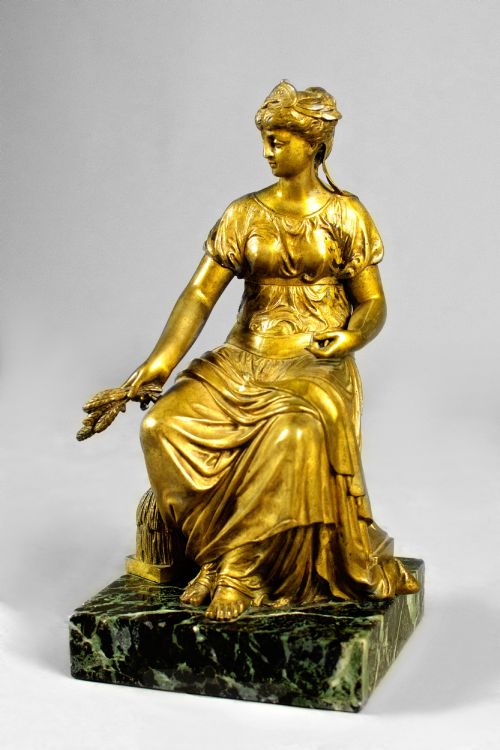
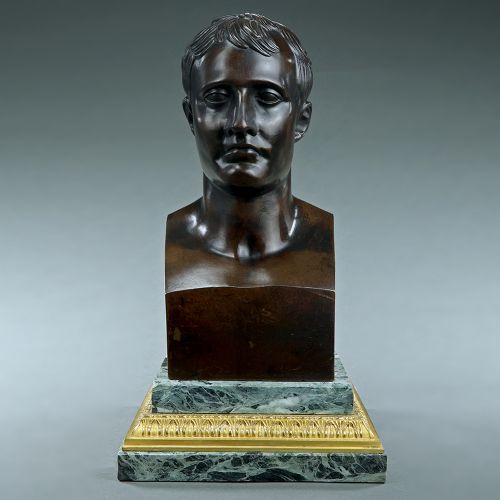
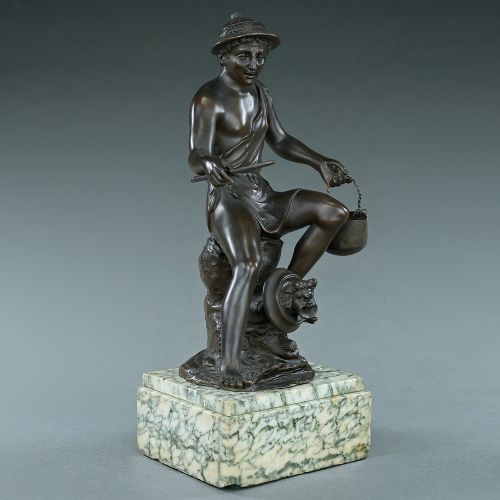
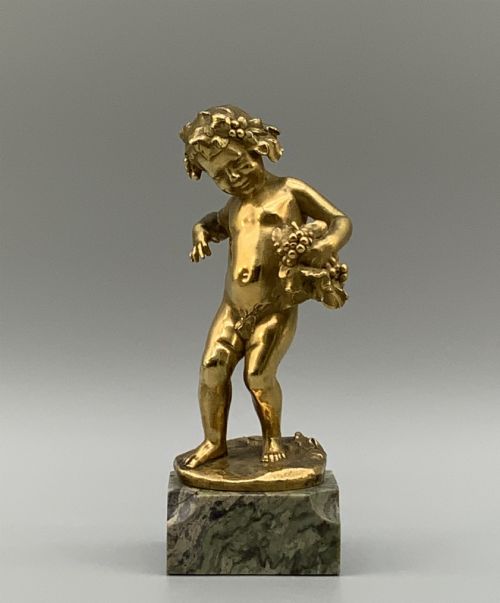
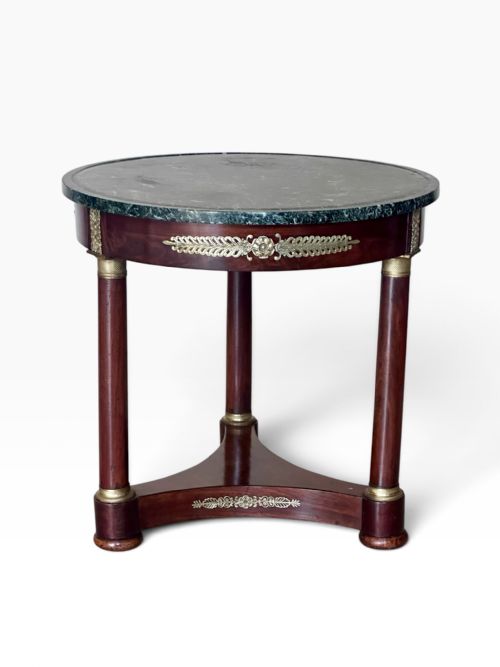
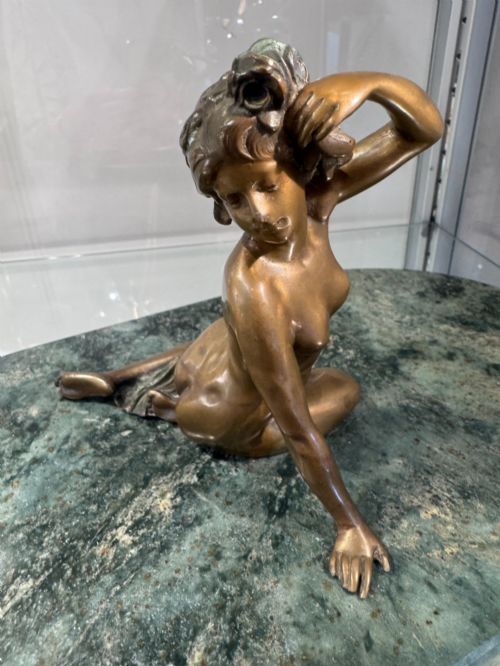
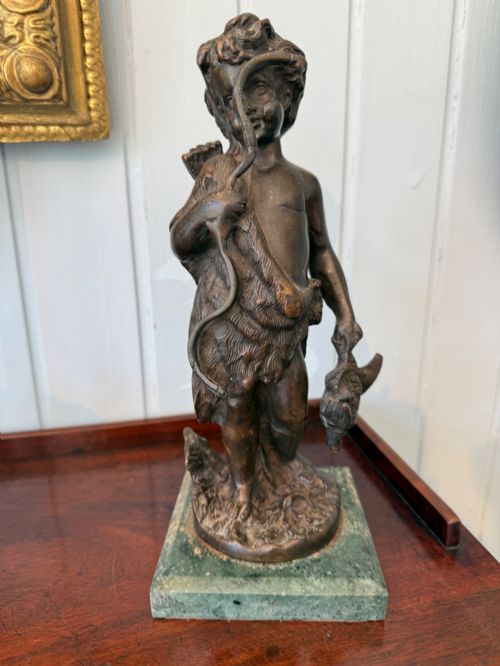
Green marble bronze combinations bring together cold-cast or cast-metal figures with polished stone bases or urns, offering a heavy decorative presence for desks and mantelpieces.
Green Marble Bronze
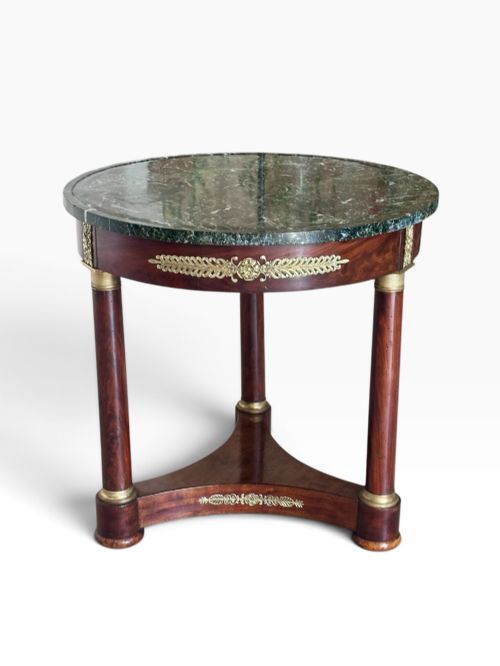
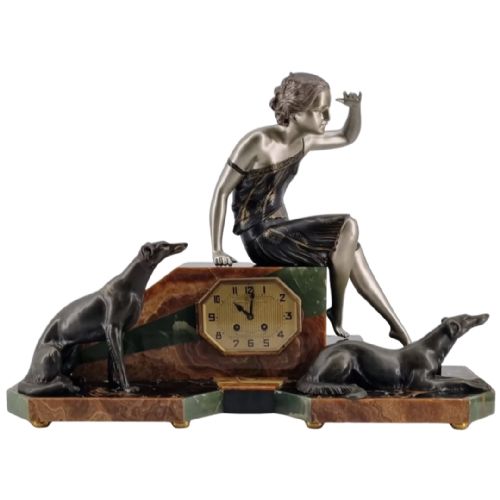
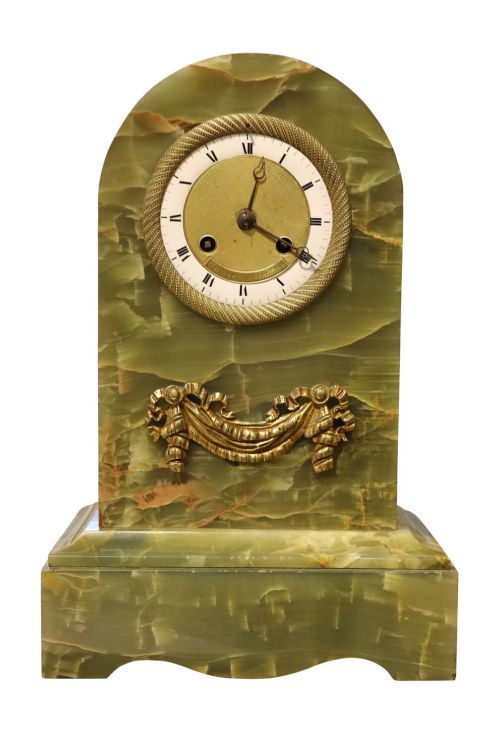
When searching for green marble bronze, buyers encounter items where cast metal figures, clock housings, or lamp mounts sit upon veined green stone bases, plinths, or urn bodies. These pieces span utility objects such as desk tidies and inkstands alongside purely decorative sculptures, mantel clocks, and lamps.
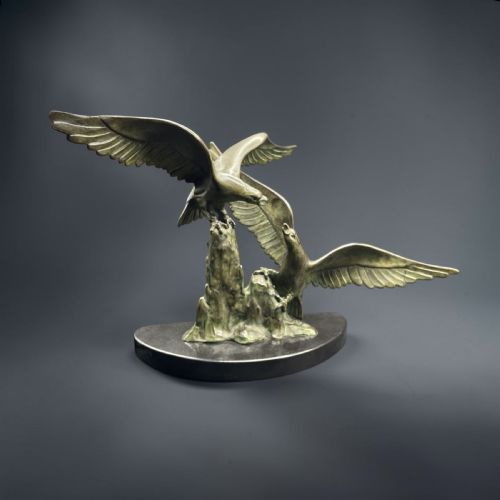
The objects most frequently met on this page originate from nineteenth-century French workshops through to the Art Deco period of the nineteen-twenties and thirties. Figures of animals, human subjects, and classical vases dominate the available forms, reflecting both grand tour tastes and modernist decorative shifts.
Makers and foundries utilised green marble alongside related stones like onyx and grey-green campan vert to provide weight and contrasting colour to bronze, gilt bronze, or spelter castings. These combinations served as domestic ornaments, timepieces, and lighting fixtures in European interiors.
How they were made
Foundries produced the metal elements using traditional lost-wax or sand-casting methods in bronze, or by casting cheaper zinc alloys known as spelter. These metal components often received patination, cold-painted finishes, or gilding in ormolu to highlight the details of figures and decorative mounts.
Stonemasons cut and polished the green marble, onyx, or related mineral bases from quarried blocks to fit the dimensions of the metal sculptures, clocks, or lamp bodies. Metal pins, screws, or adhesives secured the heavy metal castings firmly to the stone plinths.
Craftsmen assembled clock movements, lamp fittings, or cold-painted animal studies onto the prepared stone bases, integrating functional mechanisms with decorative stone and metal housings.
Green Marble Bronze Retail Price Guide 2026
Typical asking prices for green marble bronze among the pieces listed under this phrase on Sellingantiques today, from the lower quarter to the upper quarter. They describe what is for sale here now, not the wider market.
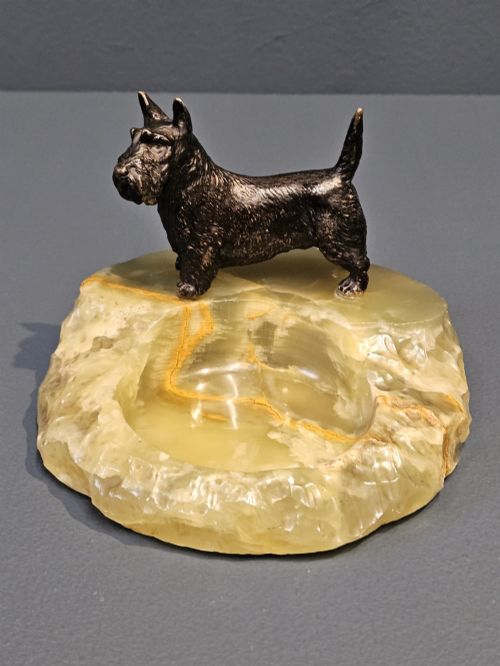
Several pieces feature unexpected companions, from theatrical birds and budgerigars to Scottie dogs and an Oni demon.
What varies in quality
The choice of metal alloy creates a fundamental distinction in quality, with rich bronze and hand-chased ormolu mounts sitting above the lighter, softer spelter castings found in later decorative wares. Fineness in the chisel work of the metal and the subtlety of cold-painted or patinated finishes separate standard production pieces from master-model foundry casts.
The selection and preparation of the stone base affect the overall visual weight, with highly figured green marble and uniform campan vert varieties offering deeper colour contrast than plain or cracked stones. Precision in the joinery between the stone plinth and the metal sculpture indicates the level of care taken during original workshop assembly.
Susse Frères·Emile Carlier·F. De Luca
The Green Marble Bronze Glossary
- Ormolu
- Gilded bronze produced by applying a mercury-gilding amalgam to cast bronze, creating a durable golden surface finish. This technique was widely utilised by French makers on clock mounts and decorative vases.
- Spelter
- A zinc-based alloy used as an economical alternative to bronze in decorative figures, clocks, and lamps, particularly during the Art Deco period. It accepts patination and metallic paint finishes readily.
- Grand Tour
- A nineteenth-century travel tradition where wealthy collectors acquired classical bronzes, marble reductions, and architectural models in Italy. These souvenirs heavily influenced later European sculpture and decorative arts.
- Cassolette
- A decorative vessel, often in marble and ormolu, featuring a reversible lid that functions as a small bowl or urn. They frequently appear in pairs flanking mantel clocks or centrepieces.
- Cold Painted
- A method of applying unfired oil or enamel paints to bronze or spelter figures after casting, common in Austrian and French animalier studies.
Green Marble Bronze: Frequently Asked Questions
Are these items strictly French?
While a large proportion of green marble bronze objects originate from nineteenth-century and Art Deco French workshops, the listings also include Austrian, Italian, and British pieces. French makers particularly excelled in ormolu-mounted clocks and grand tour bronzes.
Other European centres produced distinct regional styles, such as Austrian cold-painted animal studies or Japanese Meiji period metalwork mounted on western stone bases. Examining the casting style, signatures, and material combinations helps identify the likely country of origin.
How can I tell bronze from spelter?
Bronze objects offer greater weight, a resonant metallic sound when lightly tapped, and a warm bronze patina beneath any surface colour. Spelter is softer, lighter, and often reveals a grey or white metal showing through where the paint or finish has rubbed off.
Looking underneath the base or inside hollow castings often reveals the duller, greyer appearance of zinc alloy compared to the reddish-brown tone of true bronze. Magnetic tests are generally unhelpful since neither standard bronze nor spelter is magnetic, but filing marks or casting seams provide clearer clues.
Where should I display these heavy pieces?
Place these substantial combinations of stone and metal on sturdy furniture such as heavy sideboards, mantelpieces, or dedicated console tables that can support their considerable weight. Ensure the surface is level to prevent uneven strain on the marble bases or any attached clock mechanisms.
Keep them away from direct sunlight, which can fade painted or patinated finishes on the metal, and protect them from radiators or damp environments that might affect stone integrity or internal clock springs.