





Green Leather Writing Slope
A green leather writing slope offers a portable workspace lined in traditional hide, combining period craftsmanship with practical desk storage.
Green Leather Writing Slope
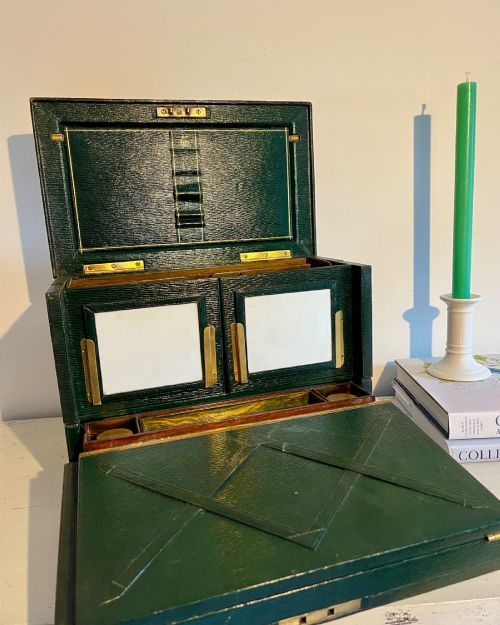
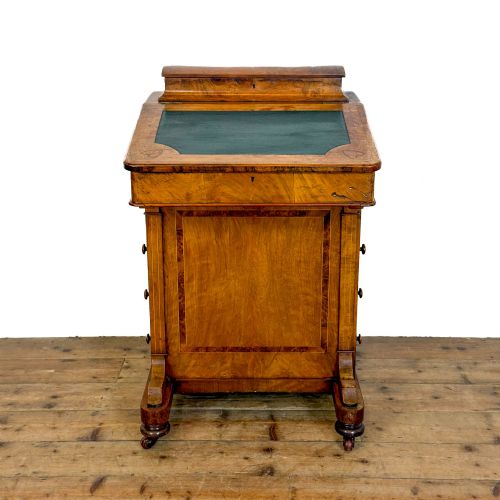
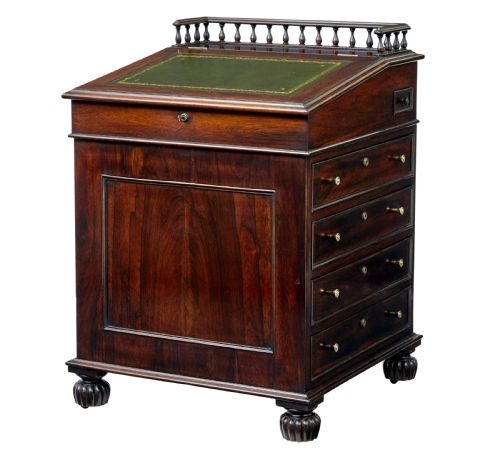
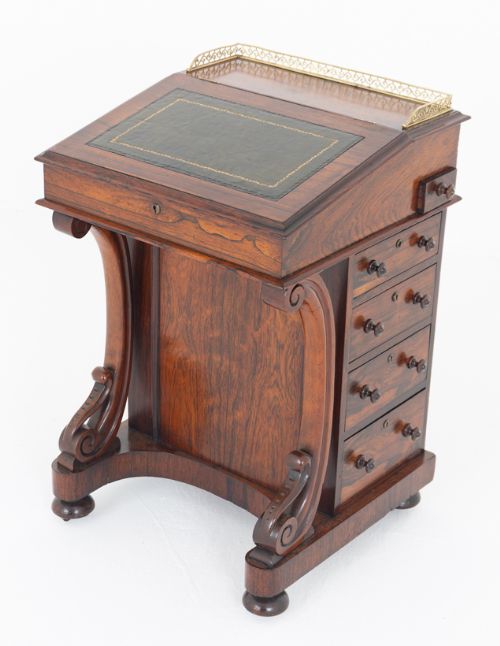
A green leather writing slope brings together portable desk boxes, davenports and campaign pieces spanning the Regency, Victorian and Georgian periods. These items range from compact folding travelling desks to substantial davenports fitted with drawers and sloped writing surfaces.
The materials paired with the green leather surface typically include mahogany, burr walnut, rosewood and oak, often accented with brass banding. Many examples originate from the nineteenth century, reflecting an era when correspondence required dedicated portable cabinetry.
Materials and construction
Cabinet makers utilised dense hardwoods such as mahogany, rosewood and walnut to construct the primary carcase, often selecting burr veneers for decorative grain patterns. Brass corners, banding and inlays were incorporated to reinforce travel cases against heavy use.
Writing surfaces were lined with leather, frequently finished with gold tooling along the perimeter. Internal compartments and stationery sections were meticulously fitted into the timber frame to secure inkwells and papers.
Distinctions in construction and finish
Quality rests upon the selection of timber veneers, such as figured walnut or rosewood, and the precision of the brass hardware integration. Superior pieces display harmonious grain matching across the exterior and robust internal joinery.
Finer examples retain original working locks, keys and carefully tooled leather writing surfaces. The integration of secret drawers and secondary writing mechanisms also separates standard production from workshop-produced commissions.
Simpsons of Kendall·Thomas Turner·Gillows
The Green Leather Writing Slope Glossary
- Writing slope
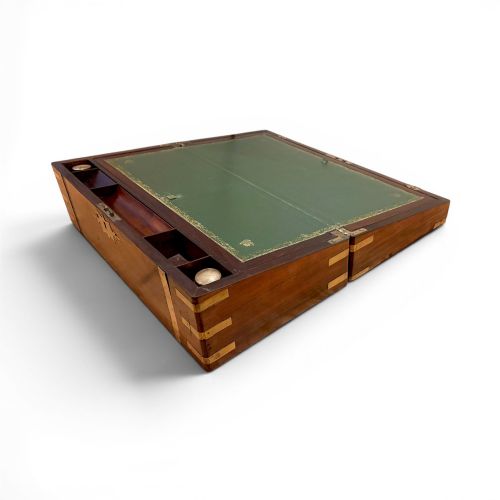
- A portable box with an angled lid designed for correspondence. When opened, it reveals a writing surface and internal storage compartments.
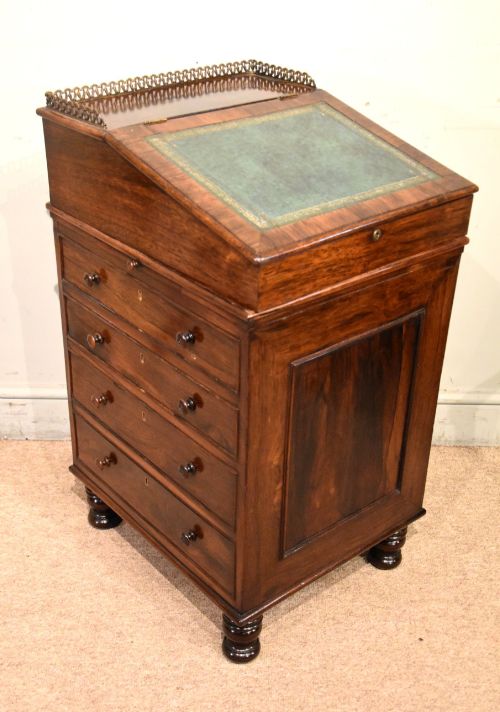
- Davenport desk
- A compact desk featuring a sloped writing surface above a pedestal of drawers. Originating in the Regency period, these often incorporated side drawers and pull-out slides.
- Campaign desk
- Furniture designed for military travel, constructed with brass corners and recessed handles for protection during transport. These pieces dismantle or fold for mobility.
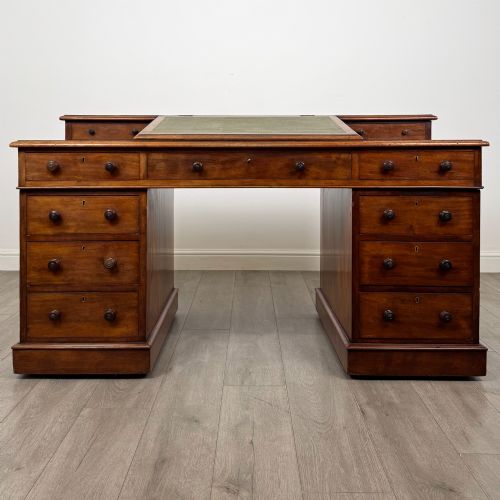
- Dickens desk
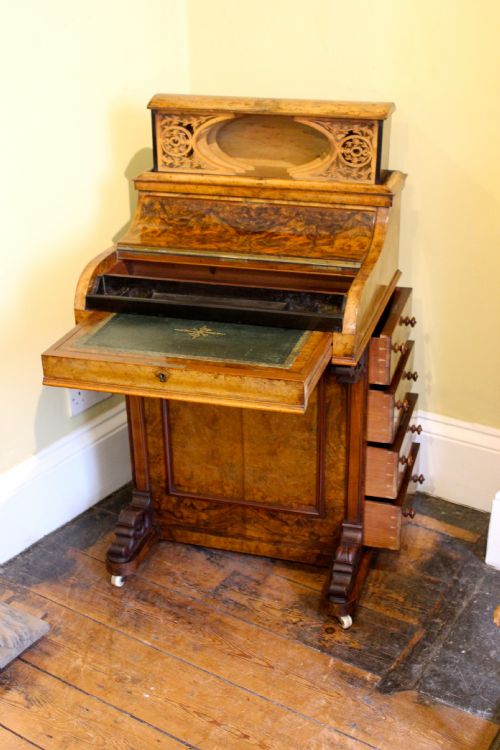
- A pedestal desk featuring a stationery compartment and pigeonholes built into the upper rear section. They date primarily from the Victorian era.
- Satinwood
- A light yellowish timber utilised for contrasting stringing and inlay work on fine period furniture. Cabinet makers favoured it for decorative banding.
Green Leather Writing Slope: Frequently Asked Questions
What is a writing slope?
A writing slope is a portable desk box featuring a hinged, angled lid that opens to reveal compartments for paper, pens and inkwells. The interior often includes a folded leather writing surface.
Historically used for correspondence while travelling or writing away from a main desk, these boxes protect writing materials inside a sturdy timber case.
How do I identify a davenport desk?
A davenport desk is distinguished by its small footprint, comprising a sloping upper writing surface and a pedestal base containing drawers. Many examples feature side drawers and hinged storage compartments.
Cabinet makers produced these compact desks in rosewood, walnut and mahogany during the Regency and Victorian periods.
What materials are used?
These pieces are constructed primarily from hardwoods such as mahogany, rosewood, walnut and oak. Brass is frequently utilised for corner mounts, hinges and campaign handles.
The writing surfaces are lined with leather, often finished with decorative gilt tooling along the edges.