


Brass Strapped Writing Box
A brass strapped writing box offers sturdy campaign-era storage for correspondence, combining rich hardwood construction with metal reinforcement.
Brass Strapped Writing Box
A brass strapped writing box brings together functional nineteenth-century desk storage and durable metal corner protection. These pieces appear most frequently in Victorian iterations spanning the mid to late nineteenth century, including the decades around eighteen-fifty, eighteen-sixty, eighteen-seventy, and eighteen-ninety.
Buyers encountering this search phrase find various forms designed for correspondence and desk organisation. The selection includes traditional writing slopes, stationery boxes, drop-front stationery cabinets, inkstands, and glove boxes alongside campaign chests.
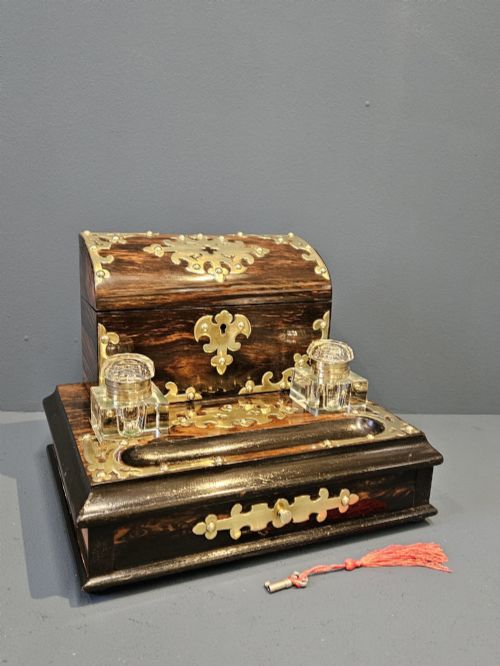
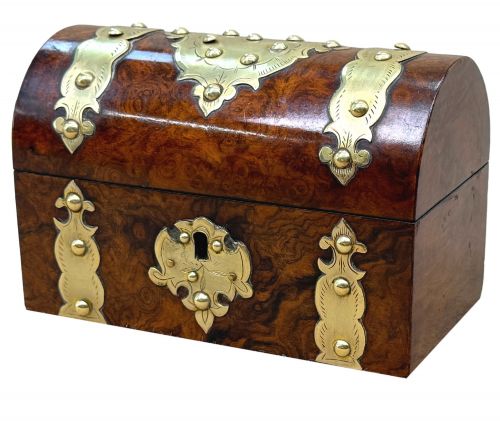
The aesthetic bridges domestic Victorian elegance and military utility. Makers utilised dense exotic timbers such as coromandel and burr walnut alongside traditional mahogany, fitted with secure brass mounts and straps for travel.
Materials and construction
Cabinetmakers constructed these boxes using solid and veneered hardwoods like mahogany, burr walnut, and coromandel wood. These dense timbers provided a stable foundation capable of enduring frequent travel and daily handling.
External brass strapping and corner mounts were rebated flush into the timber and secured with small pins or screws. This metal reinforcement protected vulnerable edges while adding a distinctive linear contrast to the dark wood grain.
Interiors often featured fitted compartments lined with leather or velvet for writing instruments and stationery. Some variants incorporated glass inkwells and delicate decorative inlays such as pietra dura.
Judging quality and execution
The choice of primary timber significantly influences the overall character of each piece. Finely figured burr walnut and exotic coromandel command attention for their rich grain patterns, whereas standard mahogany represents a more utilitarian approach.
The integration of the brass hardware reveals the standard of craftsmanship. Superior examples feature accurately recessed metal straps and flush-fitting shields that sit perfectly level with the surrounding timber surface.
C.G. Hope Hastings
The Brass Strapped Writing Box Glossary
- Brass strapped
- Timber boxes strengthened with exterior metal bands and corner brackets designed to absorb impact during transport.
- Coromandel
- A dense, heavy tropical hardwood prized for its dark brown colour and striking contrasting streaks.
- Writing slope
- A desk accessory hinged to fold open at an inclined angle, creating a slanted surface for writing letters.
- Pietra dura
- An artistic technique using cut and fitted polished coloured stones to create decorative inlay motifs.
Brass Strapped Writing Box: Frequently Asked Questions
What is a brass strapped writing box?
These items are portable nineteenth-century desk accessories built to hold writing materials securely during travel. They combine solid hardwood timber construction with protective exterior metal bands.
Most surviving examples date from the Victorian era and reflect the rigorous travel requirements of the period. Their design prioritised both secure containment and a distinguished appearance for use in homes or temporary quarters.
How were these boxes used?
Owners utilised them to store stationery, inkwells, pens, and personal letters while moving between residences or travelling on duty. The folding lids often doubled as a firm writing surface.
Inside, dedicated compartments kept small items from shifting during transit. Many pieces also incorporated locking mechanisms to protect private correspondence.
How do I care for coromandel wood?
Maintain coromandel surfaces by keeping them away from direct sunlight and sudden temperature shifts. Periodic application of appropriate wax polish helps preserve the natural lustre of the timber.
Avoid excessive moisture during cleaning to protect both the wood veneer and the fitted brass hardware. Gentle dusting with a soft cloth is usually sufficient for routine maintenance.
Are these boxes difficult to date?
Dating relies on observing construction methods, timber choices, and hardware styles associated with the nineteenth century. Victorian pieces frequently exhibit specific lock types and hinge designs characteristic of the period.
Makers occasionally incorporated specific architectural revivals or military campaign specifications that help narrow down the decade of manufacture. Examining internal fittings provides additional clues regarding the era of production.