




Green Kitchen Table
A green kitchen table brings practical utility and character to a home, offering durable surfaces finished in muted paint.
Green Kitchen Table
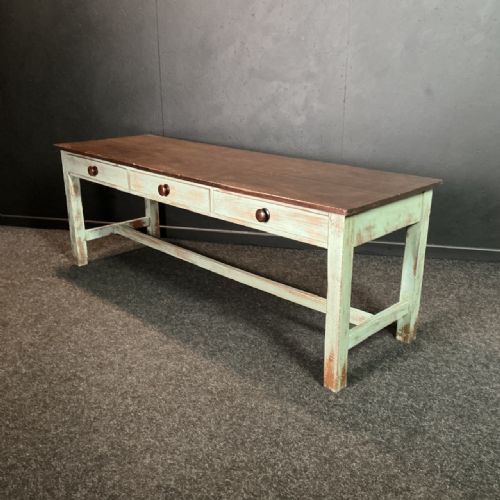
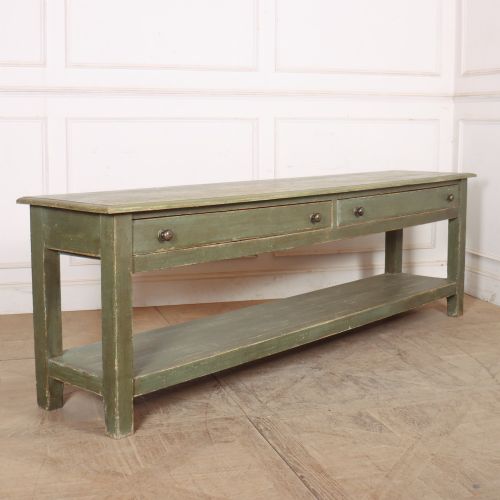
A green kitchen table encompasses various wooden forms designed for daily utility, often found in painted finishes spanning multiple historical periods. Buyers seeking a green kitchen table encounter sturdy pine work tables, rustic farmhouse surfaces, and painted serving tables originating from English, French, and Swedish traditions.
The selection includes pieces associated with country house aesthetics, industrial utility, and regional European workshops. These tables serve multiple domestic functions, combining traditional carpentry with historic painted surfaces.
How they were made
Construction relies primarily on solid pine, oak, and other domestic timbers assembled using traditional joinery methods suited to heavy daily use. Many examples incorporate pot-shelves, drawers, and trestle supports designed to bear substantial weight.
Surfaces frequently display historic layers of paint, ranging from original pigments to aged distressed coatings applied over wood and metal fixtures. Brass and iron hardware, along with occasional bronze details, provide structural reinforcement and functional closure.
Materials recorded across the inventory include pine, oak, painted wood, brass, iron, and bronze.
What varies in quality
Quality rests upon the integrity of the timber frame, the originality of the surface paint, and the balance of proportions. Tables retaining their original structural elements and untouched painted finishes represent the highest standard of craftsmanship.
Secondary attributes include the depth of patination on the wood, the harmonious integration of drawers or potboards, and the restraint shown in historical restorations. Pieces demonstrating integrated regional construction outrank those assembled from disparate components.
The Green Kitchen Table Glossary
- Potboard
- An open lower shelf built into a table or dresser base to store pots and heavy kitchen utensils. This practical addition provides extra stability to the frame.
- Dresser base
- A low wooden sideboard or table featuring drawers and sometimes a lower shelf, traditionally used for food preparation and storage. These pieces form a significant portion of larger country furniture.
- Trestle table
- A table constructed with two or more upright supports connected by a horizontal beam. This design maximises legroom and structural support.
- Patina
- The surface sheen and coloration developed through decades of handling, cleaning, and exposure to light. It indicates the age and authenticity of wooden furniture.
Green Kitchen Table: Frequently Asked Questions
How do I clean a painted wooden table?
Wipe surfaces gently using a soft, dry cloth to remove dust without disturbing historic paint layers. Avoid harsh chemical cleaners or excessive moisture that might damage aged wood and pigments.
For stubborn marks, use a damp cloth with mild soap, drying the area immediately afterwards to preserve the finish.
Are these tables suitable for daily dining?
Most surviving examples were built for heavy domestic labour, making them robust enough for regular use in contemporary kitchens. Their solid timber construction handles daily activities reliably.
Protecting the surface with appropriate coverings helps preserve historic paintwork from excessive wear and moisture.
What distinguishes French country tables from English ones?
French regional tables often incorporate fruitwoods alongside pine, featuring subtle carved details and slender proportions adapted to provincial interiors. English country versions tend to utilise heavier pine or oak structures with simpler, utilitarian lines.
Both traditions prioritize sturdy construction, but regional design preferences shape the leg profiles and drawer configurations.
How can I tell if the paint is original?
Original paint displays natural wear patterns, multiple underlying layers, and consistent fading appropriate to the stated period. Examination under magnification reveals how the pigment has bonded with the wood over generations.
Professional assessment helps confirm whether the surface finish matches the age of the underlying carpentry.